

Edits are by rs21
Banned But Not Beaten: Palestine Action and the State’s Total Lawfare
DK Renton •DK Renton covers the Court of Appeals upholding the Palestine Action ban, the past struggles, and the next steps.
The five judges in Huda Ammori’s case had, in principle, a simple task. They needed to decide if the High Court was right to find the proscription of Palestine Action (PA) had interfered too far with Ammori’s free speech. What made the decision difficult was not law but politics. In our system, it is politicians who decide questions of state policy. The courts hate entering into these topics, are cautious, and for good reason (as they see it). When judges join the fray, they find it hard to stop. The politicians push back. You end up with a system like the one in the US. There, the executive appoints judges to fit parties’ agendas, the courts make decisions on open party lines. If state managers are going to have any chance of using the law as a mechanism to resolve class conflict – an option that usually matters a great deal to them – people need to believe they have a chance of a fair hearing.
Decisions in free speech cases typically start with the judges insisting on the importance of free expression. The courts have called this right an ‘essential foundatio[n] of a democratic society’. It’s ‘the best means for forming an opinion of the ideas and attitudes of political leaders‘. Democracy requires a balance to ensure ‘the fair and proper treatment of minorities‘. Unusually, the Court of Appeal didn’t start there. Their judgment gave little weight to free speech, which it barely mentioned at all. Comparing their judgment against the decisions of the courts which preceded it, it was as if free speech had ceased to be a priority. It has become something of modest weight, a feather compared to a heavy iron weight, the principle of leaving politics to the politicians.
As a society, we accept that people who incite fear are doing something wrong and the state will punish them for it. The state is misusing that principle by invoking it against PA, that group does not take action to make those watching scared. It damages property, not people. Think of the terrorist in a Hollywood film and how they broadcast the news of some atrocity they are about to commit. Palestine Action doesn’t do anything like that.
The judges went along with the fiction that PA are terrorists. They have ignored the term’s ordinary meaning, focusing instead on the statutory definition imposed by Tony Blair in 2000. Under that, a group’s acts are terrorist if it does or threatens serious damage to people or property, to influence a government, and to advance a cause.
The statutory definition is abusive, it treats damage to property as the same as damage to people. It calls defendants terrorists even if they don’t cause fear. It’s wrong to enable the prosecution of people who damage property linked to any state, even North Korea, military run-Egypt, or Trump’s US. In the High Court, Ammori’s team made judges confront the abuse of language involved in the statutory definition. Judges conceded that the statute goes beyond any normal (‘colloquial‘) meaning of the term.
The judges of the Court of Appeal ignored those problems. They refused to admit or still less justify the reality that the state is punishing people for acts which no non-lawyer would recognise as terrorist.
Amori won in the High Court because Palestine Action’s campaign had involved several hundred protests. Only a handful – three – had done such ‘serious’ damage to property to come within the Act. The Home Secretary had asked herself whether she could use the law to ban PA. The question she needed to address was whether she should. That would have required her to look only at those acts where the damage was serious enough to be terrorist. She should have considered their ‘level, scale and persistence’.
The judges in the Court of Appeal took a very different approach. As far as they were concerned, the Home Secretary was right when considering proscription to bear in mind lesser acts of Palestine Action which fell short of terrorism. The malice of that decision should be obvious. We already have a definition of terrorism which has gone far beyond the limits of the word. We now have a legal regime which permits the Home Secretary to ban a group as terrorists for anything that takes up police time, custard pies, jokes, writing letters to a paper, anything.
The case against proscribing Palestine Action is wider than that group. The ban validates a broader trend of the state lurching towards authoritarianism. Our law contains safeguards to stop society from tipping into authoritarianism. One is a rule that the state cannot hold defendants in custody for more than 182 days without trial. Otherwise the state could lock up its opponents without allowing them even the formality of a trial. The rule applies even to murders and to rapists. It does not apply to protesters where criminal damage falls within our statutory definition of ‘terrorism’. In summer 2025, a group of protesters sprayed paint into the engines of two warplanes at Brize Norton. The defendants will have been in prison for a year and a half before they come to trial.
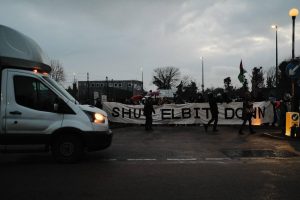
On Friday last week, Judge Jeremy Johnson sentenced the ‘Filton four’ pro-Palestine protesters. He refused to allow lawyers to warn the jury of the heavy sentence he might impose. He found the defendants’ acts of criminal damage satisfied the definition of terrorism. The law entitled him to give them a robust sentence; the damage done is a main factor in how the courts punish criminal damage. The company said that after the protesters had entered their plant, they’d made an insurance claim of over £1 million.
But, what is a harsh sentence for criminal damage? The courts sentence fewer than one in ten people convicted of this offence to an immediate jail term. Of them, one in ten get a sentence of 6 months in prison. That is the threshold at which courts separate out the 1 percent of the worst acts of criminal damage. Because the Filton defendants did damage to stop the war in Gaza, Johnson sentenced them not to 6 months in prison but 6 years.
The last dishonesty in the judgment is the pretence that Palestine Action were unlike the previous generations of direct actions groups on which they were modelled. It would have been a grotesque error, the court accepted, to ban the Suffragettes. But the historic group, to the judges, were different from PA in that they had never kept their actions secret. Never once had the Suffragettes fallen, even briefly even under the pressure of hostile policing, into the great harm of meeting the state’s violence with force of their own.
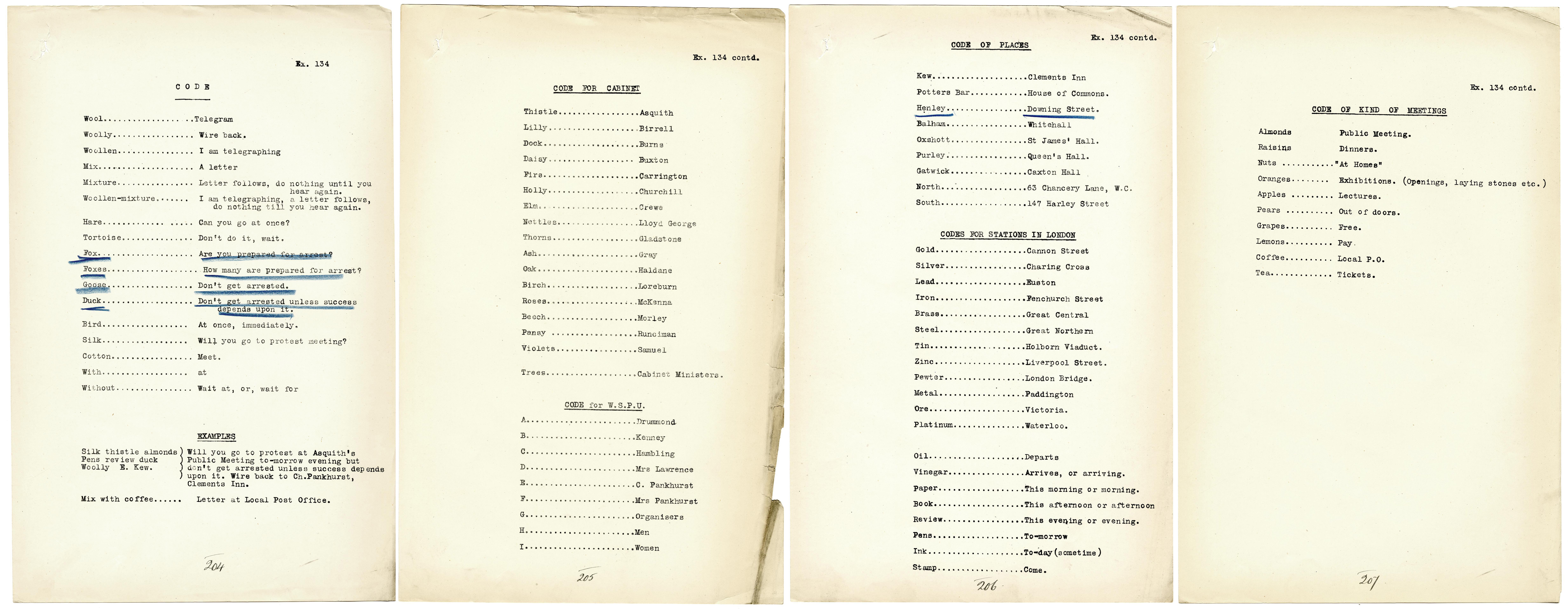
But this is just untrue: the Suffragettes were repeatedly before the courts, accused of widespread violence against people, on an epidemic scale compared to PA. ‘We shall do our bit, even if it is burning down a palace,’ the Suffragettes said. The demand for the vote caused women to start fires on busy theatres and plant bombs. Four people died in Suffragette physical acts. That movement hid its messages in code (‘goose’ for ‘don’t get arrested’, ‘thistle’ for attacks on the Prime Minister), sent its activists out in disguise to hide from the police, and was repeatedly prosecuted for having conspired in secret.
The reason why the state has forgotten that reality is because it suits the judges to deny the lesson of that campaign. A hundred years ago, the state was willing to do anything in its power rather than concede the vote. The judges convicted suffragettes, jailed them repeatedly, and still the protest kept on. The movement won, the state was forced into entreaty with protesters. The judges had to reverse their previous hostility and admit that the demand for the suffrage was just.
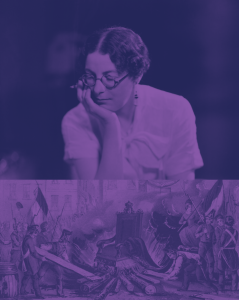
History celebrates the Pankhursts, the courage of Annie Kenney, of Emily Davison and of the hundreds of thousands of women who fought for their cause without relenting. Someday, future generations will say the same of the people fighting for Palestine today.
The answer to today’s decision is what it was a hundred years ago. Protesters need to adapt to the reality of a legal system which is hostile to them. We need to keep on with protests, to win outside the courts and against them.




0 comments