
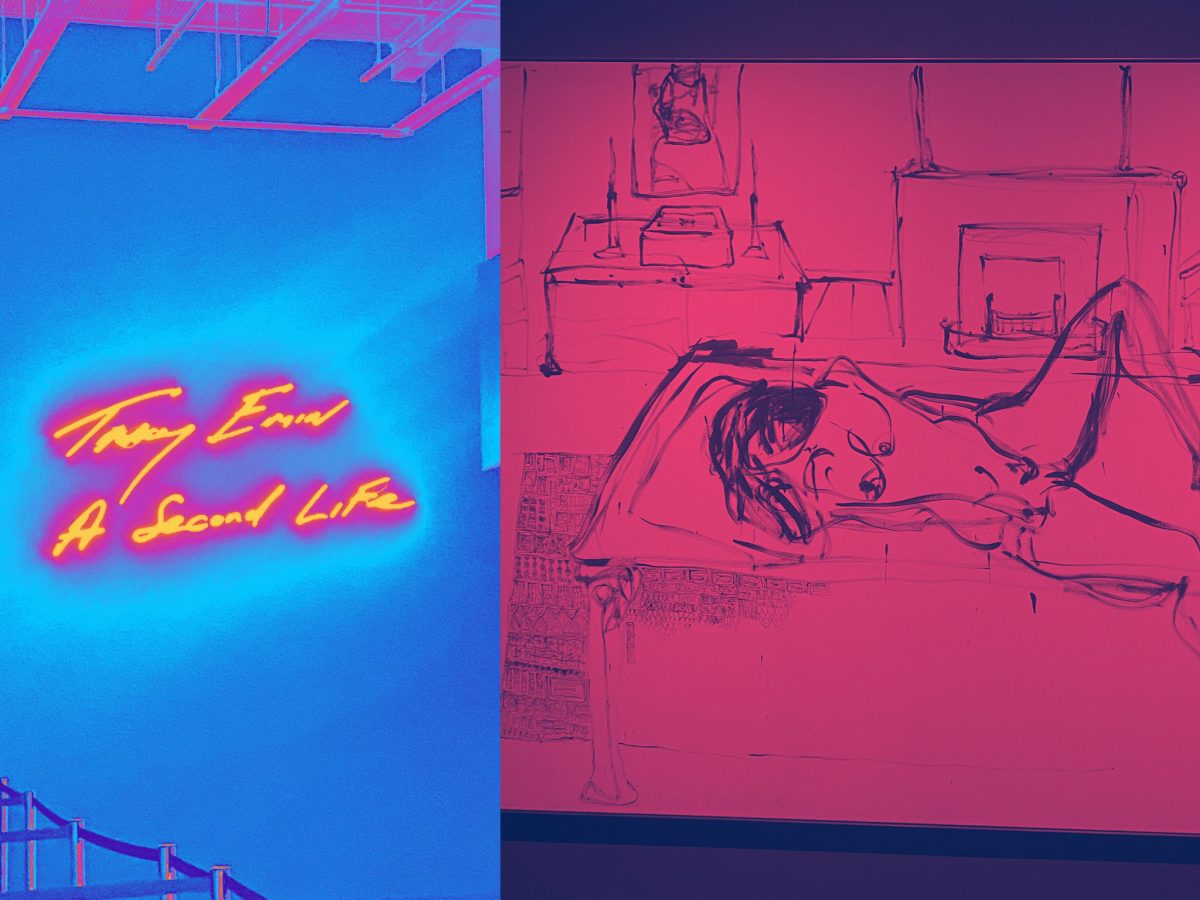
Review | Tracey Emin: A Second Life
Sophie Lunts •Sophie Lunts reviews Tracey Emin’s retrospective at the Tate Modern, covering the contemporary artist’s trailblazing work and its limits.
The Tate Modern’s retrospective of Tracey Emin’s life and career showcases an authenticity that is needed in today’s society. However, the Tate’s own refusal to pay its staff fairly and a recent strike that lasted seven days emphasise the institutional nature that continues to plague the art world, pushing away those who would most benefit from it.
Tracey Emin (b.1963) is an artist who has always drawn from her own personal life. Using the more traditional forms of drawing, painting, sculpture and printmaking through to film, installations, and photography, Emin uses whatever feels right to portray her own complicated history and the often traumatic experiences she has been through. In 1999, she was nominated for the Turner Prize for My Bed (1998): a staged environment of her own bed, preserved in exactly the way it had been left after a period of depression – stains, mess, creases and all. Like the other members of the Young British Artists (YBAs), Emin’s work shocks, sometimes disturbs, and is always courting controversy. With 27 years having passed since My Bed, the depth and emotion of Emin’s work is finally being understood.
In the first room of Tracey Emin: A Second Life, one work sets both the tone for the retrospective’s content and encapsulates Emin’s experience. On the right-hand wall, dwarfed by one of her ‘blankets’ opposite, hang three small frames, together entitled My Future (1993-1994). The triptych comprises three relics of bodily maintenance: an expired passport, a single extracted tooth mounted beside its dentist’s business card, and a handwritten letter, slightly crumpled, recounting the extraction.
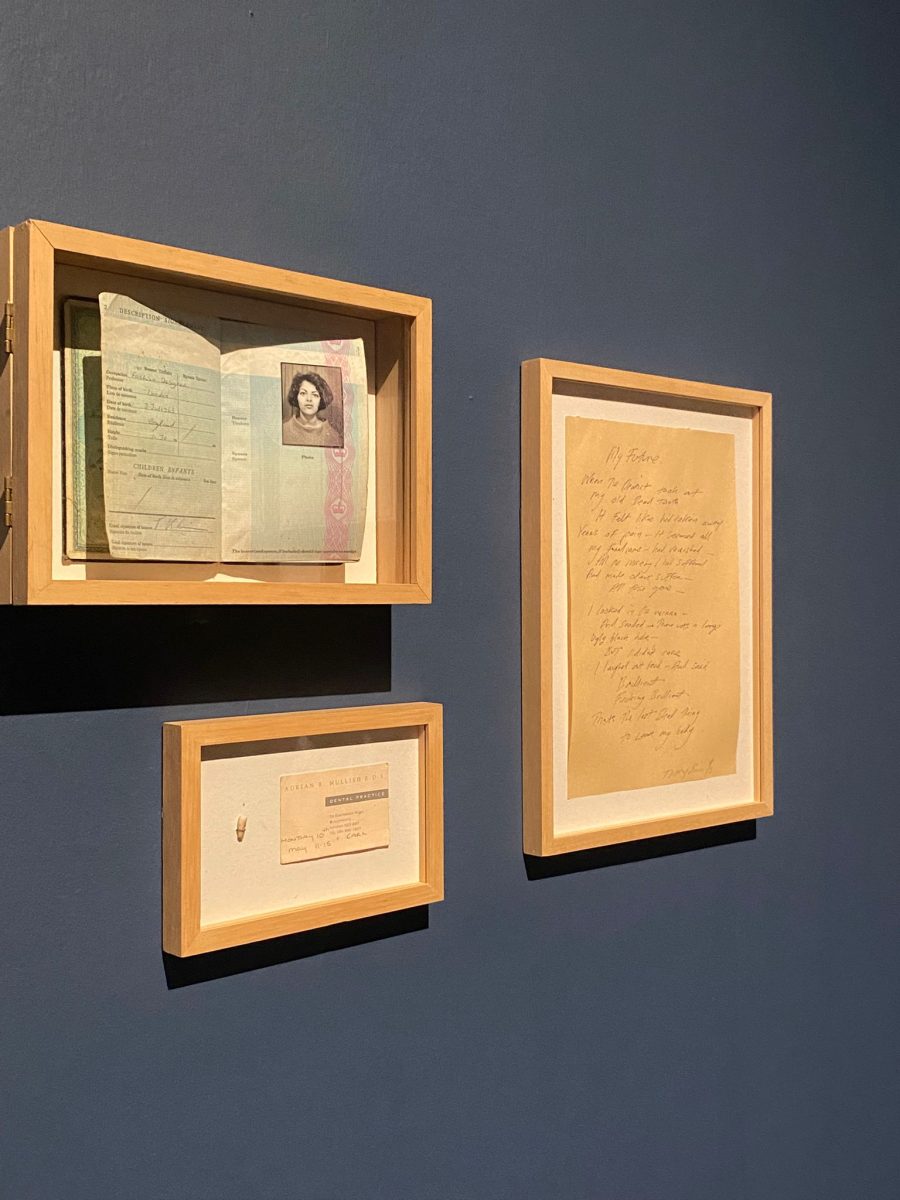
In the act of removing her “old dead tooth”, Emin writes that the dentist had “taken away Years of pain”. She describes looking at the space it left behind in her mouth before writing “Thats the last Dead thing to Leave my body”. In the act of keeping this dead tooth and showing it to us, Emin has introduced her life and work – shaped by trauma, losing herself (often physically), and sacrifice.
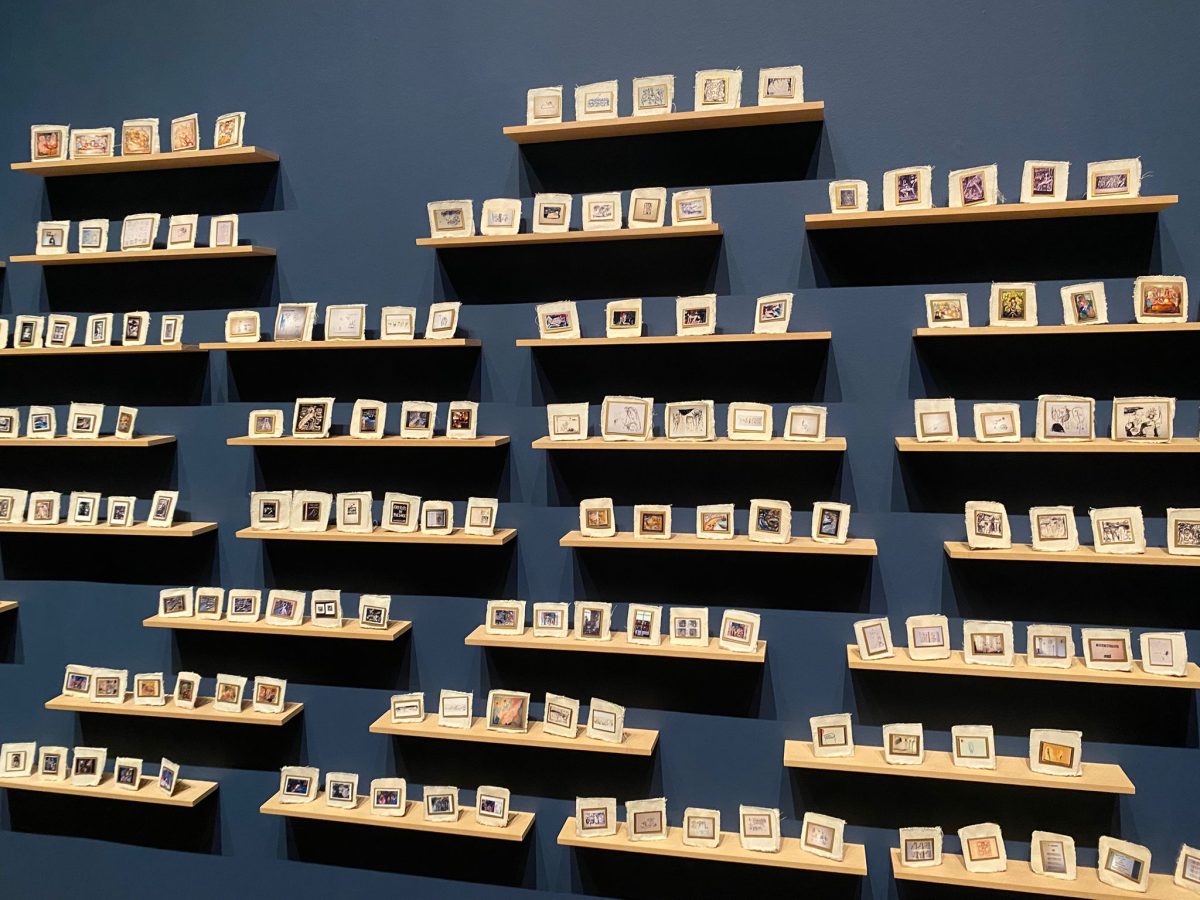
You do not have to look far to find the first ghost – a thick line of ink drawn through the ‘children’ section on her passport. In 1990, Tracey Emin had an abortion while still in art school, and it forever changed her and the work she would create. Turning away from My Future brings you to the wall displaying 180 small photographs of the work she’d created and subsequently destroyed following the abortion, My Major Retrospective II (1982-1992). “I have killed the thing whitch I would love the most”, she wrote in My Abortion (1990) on a paper framed near kept bottles of medication.
In Feeling Pregnant II 1999-2002, she presents a small shelving unit of baby shoes and a five-page letter written about the mixture of sadness and relief of a negative pregnancy test. By creating and showing pieces that portray the conflicting (sometimes simultaneous) barrages of emotions that surround pregnancy, abortion and childbirth, Emin’s expression of these contradicting feelings around reproductive health reveals nuances that political arguments on either side tend to flatten.
These artworks directly and viscerally express the trauma of abortion without advocating for its criminalisation. Emin shows us that these two things can be true: abortion is a right, and it can leave behind a painful mess. In an interview for The Art Newspaper in 2025, she states: “For the record, I’m very pro-choice, but just because you’re pro-choice it doesn’t mean that if you’ve had an abortion, you don’t experience stuff”. Emin gives articulation to a complicated but significant issue because while the procedure is legal in Britain, there is still no aftercare in place for those who have had it.
Yet explanations of Emin’s experience of abortion are written on the same placards that tell us the title of the piece, the date it was made and what materials were used. These significant complexities, that she is not alone in facing, are classified down to what feels like a simple artist’s quirk. The other fundamental topics illustrated by Emin include the racism she experienced growing up, sexual abuse that started at age 13, years of bullying and harassment she endured, and these are all given the same treatment – reduced to shock factor used by a controversial artist. The Tate begins to feel like a paywall to an uncompromising body of work. Can there be a time and place where artworks live and hang amongst our everyday lives? So that we might stumble upon them, sit with them, be informed by them. Where the impact of work like Emin’s is not coded and filed into archives and personal collections.
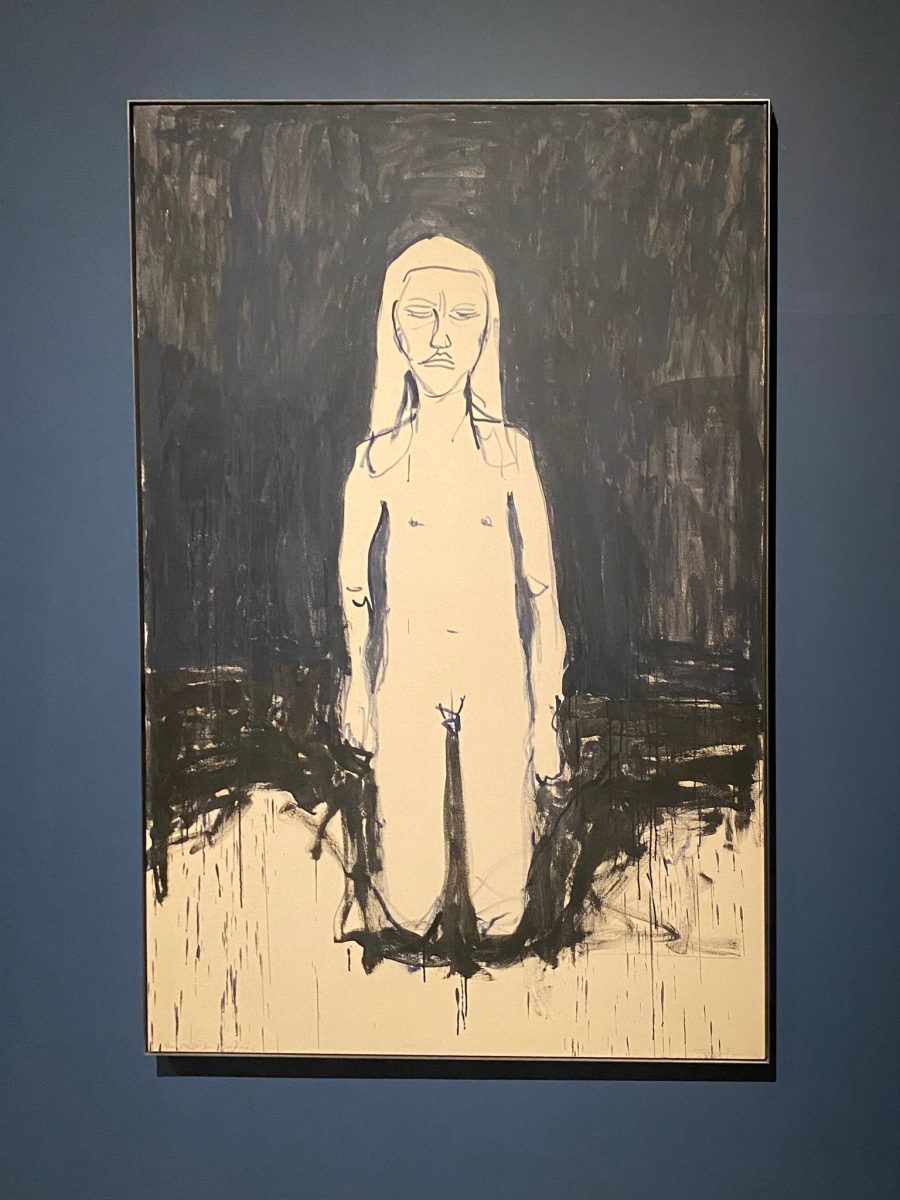
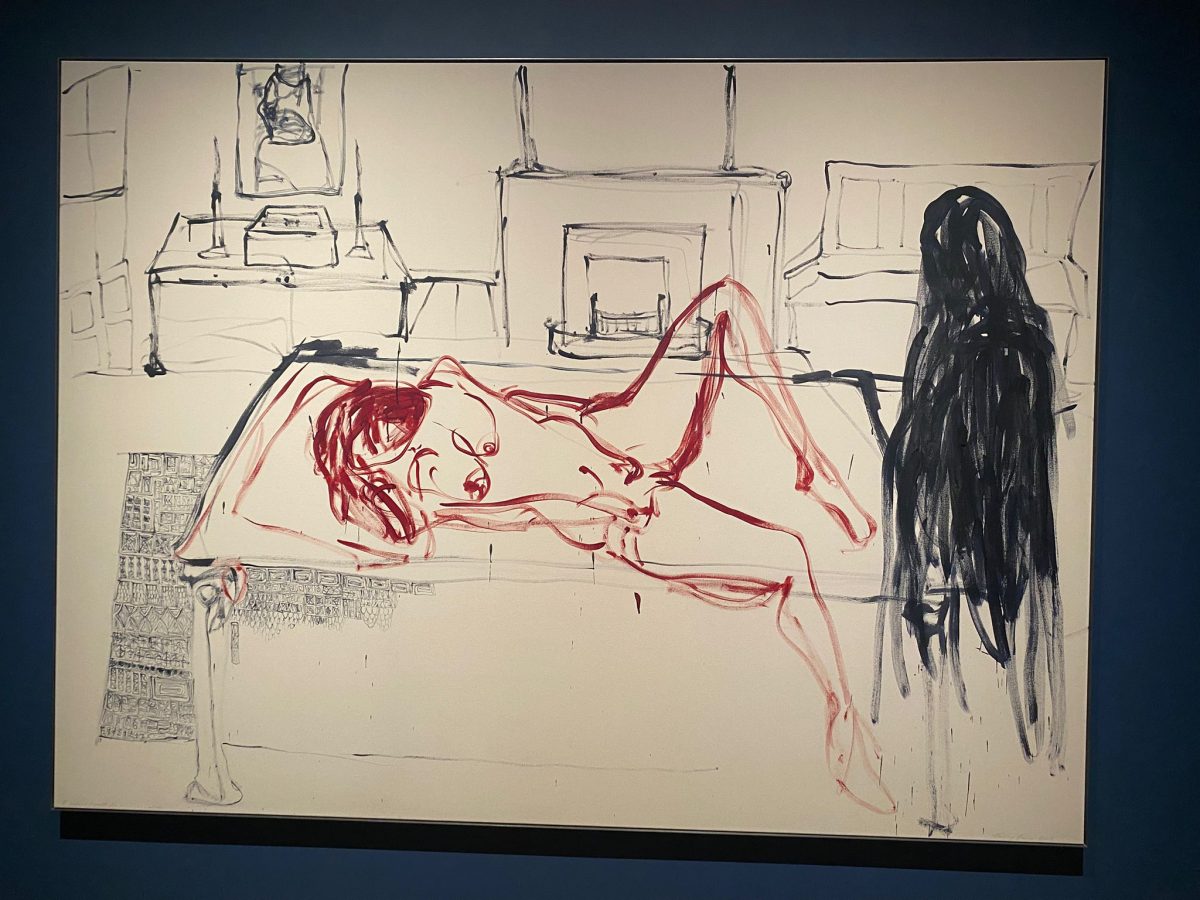
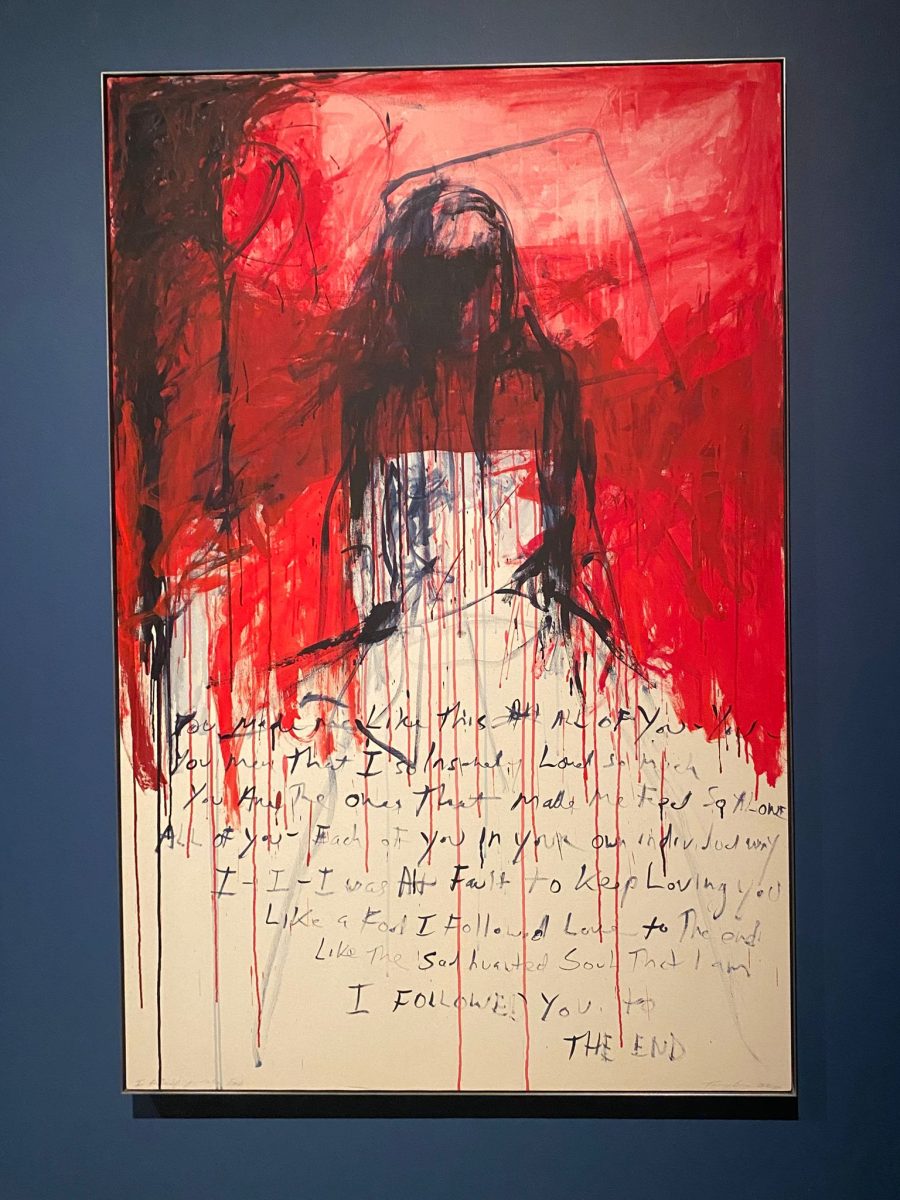
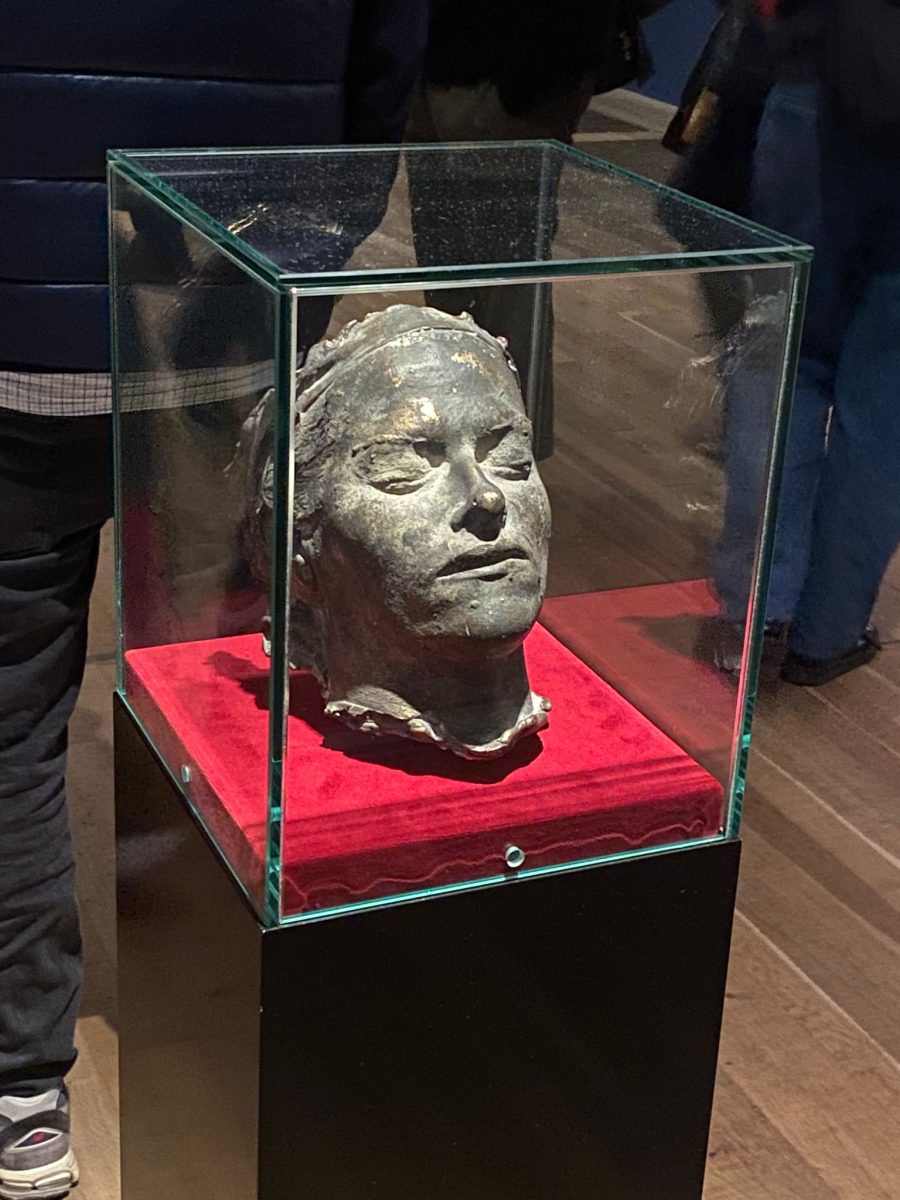
Tracey Emin’s career from 2020 onwards is what titles the retrospective as her ‘second life’. Room 6 introduces this, another ghost, with a display referencing cancer that took another part of her body from her. In a series of photographs that span the entrance to the exit, Emin documents her body in various, painful, and sometimes bloody stages that begin post-surgery. In one photo, a thick line of blood runs from her stoma, right down her leg, calling ahead to the final rooms where she drips red paint down many of her later paintings. The scale of the paintings and castings in this stage of Emin’s career have grown to completely take over the walls and floors of the exhibition rooms. The final room of paintings implodes in dark, thick brushstrokes of red, harsh black and navy-blue lines (like that very first one scored on her passport). Each of these paintings feature a woman: sometimes standing, sometimes lying down, mostly naked, always vulnerable. In You Should have Saved me (2023), she kneels facing us with her hands fallen at her sides and in I Followed you to the end (2024) she lies on her bed her eyes painted out with black and red smeared over her head which drips down the canvas ending at the painted words of the title. In the centre of the room sits the final sculpture of the show and one that shows Emin’s face serene and asleep-like: Tracey Emin, Death Mask (2002). A work that was made in what we would now consider to be Emin’s first life but finds itself belonging in her second. Only one painting in this last room depicts a different subject matter, though displayed amongst the others, The Crucifixion 2022 is her broadly-stroked version of the biblical story and one of sacrifice. There has been a lot of sacrifice in Emin’s life – from her tooth, to parenthood, to her privacy – and from it she has created this body of art.
No matter where you turn, there is Emin – open and vulnerable – baring everything in the open. All of herself (her life, her experiences, her body) has been offered up to the public in every piece of art she has made. Every word is written in her distinctive scrawl (even the neon lights display thought-like sentences in her font) and every piece of fabric has been stitched on by her hand. The films of Emin – Why I Never Became a Dancer (1995) can be heard from the entrance – carry her voice into each room. With all these works brought together, you can feel the accumulation of years; the pressure of an entire lifetime.
But would I have ever seen Tracey Emin’s tooth, and all it represented, if it wasn’t art? Would I have stood in front of a painting that shows an experience I have been through in a way that has made it tangible for the first time if the Tate hadn’t put on this retrospective?
There is a passage in the Aesthetics of Resistance by Peter Weiss that calls a room in which comrades find themselves together “accidental” and I wish these rooms were more “accidental”; I wish these rooms were more accessible. Art has a place in a socialist future – just as Socialist Realism had its place in a socialist past – as a living and mutating archive of what it is like to be alive in that time. Art is the arms that pull people together and it is discussions laid bare for us to build from. We need “accidental” rooms to connect to each other and to display our own hopes, fears, traumas, and desires so that someone else might find themselves standing in front of a depiction of something that they, too, have lived through and see that they are not alone.
I view Tracey Emin’s work as haunting realism – every scrawl, every word, every stitch on her blankets are all real and true. The bed was real and still is. A Second Life is an immersive, sometimes heartbreaking but beautiful autobiography; one that is still being written.





1 comment
What an incredible, powerful, articulate and important review of this artist and her work