
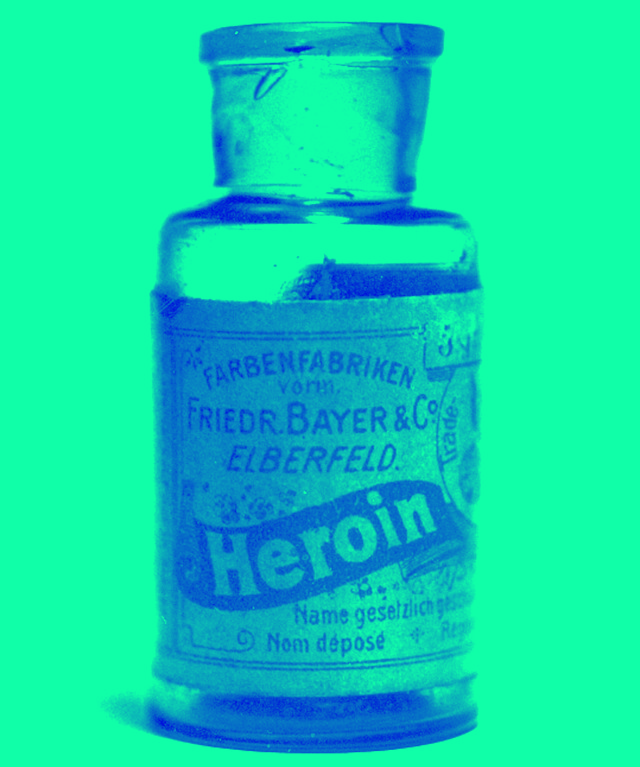
Push that green: Labour’s by-election fearmongering
Thomas Necchi •Thomas Necchi argues that the War on Drugs has failed, and Labour’s attacks on the Greens during the Gorton and Denton by-elections prove they’re happy to keep it that way.
The Greens were a threat; this was the clear consensus across the establishment, reached by both the political class in Westminster and the mainstream media. In Gorton and Denton, before the polls had even opened, the politerati were forced to concede that the now elected MP Hannah Spencer was the most likely to win. The real shock was the margin of victory, with Spencer taking 14,980 votes and 28 per cent of the vote, with Reform a distant second place.
You wouldn’t know it from the way Labour was talking during the election, but their declarations that this was a fight between them and Reform seemed less like it was intended to convince voters and more like an attempt to convince (or delude) themselves. These claims were met with derision from commentators such as Robert Peston, who laughed and told Labour MP Chris Curtis, ‘You don’t believe that for a second,’ when the man claimed emphatically it was a two-way fight. The very effort to dismiss the Greens was a case of the lady protesting too much; instead of bolstering its voters’ confidence, it betrayed exactly how frightened Labour was by the insurgent socialist party.
There was another way to tell just how shaken the government was by Polanski’s left-steering Greens, which now has over 200,000 members. This concerns the government’s efforts to paint the Greens as a different kind of threat by attacking their policies. Particular focus fell on their drugs policy, which states that all drugs should be legalised, starting with ‘a National Commission to agree an evidence-based approach to reform of the UK’s counter-productive drugs laws.’
Labour had tried to open this policy up to ridicule, attacking it a month before the election as ‘extreme and dangerous’. They were so eager to attack the Greens that they did so before they had even selected their candidate. This was a common talking point over the next four weeks, culminating on the day of the election with a van driving around Gorton and Denton announcing in all capital letters:
DO NOT VOTE FOR THE GREENS. THEY WANT TO LEGALISE ALL DRUGS AND TEACH OUR CHILDREN TO USE DRUGS INCLUDING CRACK AND HEROIN AND LET OUR DAUGHTERS BE USED FOR LEGAL PROSTITUTION. NO GREEN MADNESS IN OUR COMMUNITY.
On one level, these attacks are laughable. They weren’t even successful. Even Labour MPs Nadia Whittome and Kate Osborne expressed the view that, far from scaring voters away from the Greens, this rhetoric only alienated the historic voter base of Labour further. But at the same time, to engage in such attacks is to reinforce the ‘common sense’ on drugs in this country, a Frankensteinian politics that merges Victorian morality with fascist ideology. It is, ultimately, just another delusion.
Attacks like the ‘Green Madness’ van are a sign of the Labour right’s longstanding nonsensical approach to the global drug trade. This same approach led New Labour to sack David Nutt for not rubber-stamping their ‘crackdown’ on substances, including reclassifying cannabis to a class B drug. They are, as Dominic Lawson (no socialist by any means) calls out, driven by a ‘craving’ for headlines, a ‘pure, undiluted, desire for popular acclaim: the key to power in a democracy.’ If this was already farcical under New Labour, then the second time around, it is a farce desperately imitating a younger version of itself.
But on another level, these attacks are reinforcements of an insidious ideology, conceding even more ground to the far right. The narratives they perpetuate, of outside influence corrupting the youth, are fascistic. There is no other way around it. And this is no hysterical exaggeration, as some may like to think, but a view grounded in historical precedents. The legal framework for these issues had its prototypes in the mid-19th century response to the Opium War and its birth at the turn of the 20th century. But the place where the rhetoric and severe laws, which took the form of drug prohibition as it exists today, were refined in one place above all: Nazi Germany.
In his seminal work on drugs under the Third Reich, Blitzed, German author and historian Norman Ohler describes how the German economy had long benefitted from involvement in the drug trade. German pharmacists invented several prominent drugs, such as morphine, and exported them to the rest of the world. Germany was ‘the workshop of the world’. Both cocaine and heroin found their primary production and marketplaces there. This naturally entailed a lot of drug consumption within the Weimar Republic itself, something the Nazis used in their propaganda, presenting themselves as clean-cut and straight-edge crusaders against a decadent democracy. When they got into power, they wasted no time enforcing strict drug laws, their ‘Rauschgiftbekämpfung’ (‘the combat of intoxicating poison’). This, Ohler explains, was their equivalent to the War on Drugs.
The laws of drug production weren’t changed so much as the rhetoric and laws around addicts themselves. The state could institutionalise addicts, prohibit them from marrying, and eventually euthanise them if they did not get clean. The narratives surrounding drug use and addiction were so powerful because, to the Nazis, they were entwined with another social force they saw as malign: Judaism.
As Ohler describes it: ‘Jews were equated with bacillae or pathogens. They were seen as foreign bodies and said to be poisoning the Reich, making the healthy social organism ill, so they had to be eradicated or exterminated.’ They claimed Jews were key players in the international drug trade and predisposed to drug addiction because of their ‘excited nerves’. Lamenting that today’s War on Drugs has simply replaced the Jews with other groups—whether that is the US demonising Latin Americans or the overpolicing of black communities in both the US and in Britain—Ohler states, ‘drug dealers were presented as unscrupulous, greedy or alien, drug use as ‘racially inferior’, and so-called drug crime as one of the greatest threats to society.’
For Labour to use such language towards a Jewish socialist, to frame him as corrupting children and prostituting young girls, is a dangerous and irresponsible move. It can only embolden fascists to do the same. But the government is unlikely to turn from it. Just like it did for the Nazis, the drug crisis provides a convenient excuse for the construction and maintenance of a surveillance state in Britain. With paranoid fantasies of ‘family voting’ and fraud coming about the moment the Greens won, it should be clear that, in the eyes of the state, only marginalised communities deserve to be policed harshly.
The rhetoric of drug prohibition has always drawn from moral panics and racism. Crack and heroin have historically been associated with racialised communities, who have borne the brunt of both the drug trade and its policing. But if we take Labour’s stated aim at face value—protecting vulnerable, easily manipulated minors from drugs—while such language might be regrettable, isn’t it worth it to save innocent lives from abuse, exploitation, and death by drug overdose?
This policy fails even on its own terms. In 2024, the UN put out a statement at the Dealing with Drugs II conference, stating that ‘criminalisation and prohibition have failed to reduce drug use and failed to deter drug-related crime. These policies are simply not working – and we are failing some of the most vulnerable groups in our societies.’
As Holly Tarn says in a recent Independent article, ‘evidence shows that the UK’s criminalisation approach is failing. In 2024, there were 5,565 deaths related to drug poisoning registered in England and Wales, the highest number since records began.’ Citing programs such as those in Portugal and Switzerland, she argues that decriminalising drugs in particular will lead to a drop in deaths and drug-related crime. It reduces HIV infections and prevents other conditions from spreading. In short, it would save lives.
Zach Polanski’s proposals are closest to this evidence-based approach. Labour, in a fit of failed opportunism, decides to ignore it. As I have argued in ‘The Right to be an Addict’, drug prohibition has never stopped either drug deaths or addiction in prisons. It creates a black market with a captive audience, one that undergoes unimaginable violence every day at the hands of the carceral state. Both inside and outside prisons, the drug trade helps facilitate a cycle of violence, murder, both social and immediate, and the continued impoverishment of working-class communities. Labour can talk tough all it wants, but the reality is that the cycle is ongoing—and has been for decades. It is hard not to think they are quite happy with this state of affairs.
Now, the Greens’ policy is a welcome challenge to the hegemonic place prohibition has enjoyed in politics, but more needs to be done. If no effort is made to undo the harm done by the War on Drugs, then legalisation will simply leave open wounds to fester. We need to avoid botched legalisations like in the US, where companies make millions selling cannabis and other controlled substances while working-class black people rot in prison on drug charges. Whether it is decriminalisation or legalisation, any policy change that does not pardon those incarcerated under the former laws is worth very little.
In the preface to his novella The Last Day of a Condemned Man, French writer Victor Hugo argued that for a movement to abolish the death penalty to stick, it must ‘take up the outcast’s cause.’ He draws attention to the decision by the political class in 1830 to oppose the death penalty only when four of their own faced it. Hugo writes: had they instead abolished ‘the death penalty for its own sake, without waiting till you were personally involved with the matter, you would be performing more than a political task: you would be performing a social task.’
It is an open secret that MPs frequently take drugs in the Houses of Parliament. Reports are filed, complaints are made, and the police are even called in, but nothing happens. And all of this without getting into their subsidised alcohol consumption and the trouble it has caused. I am not asking for MPs to be policed on their substance use. But it is clear who gets to be policed and who doesn’t.
The unevenness of compassion with drug users follows the same pattern in reverse. Compassion for drug users is not completely absent in our society, but it is distributed according to race and class. What we must argue for now, as part of this public health approach, is for that compassion to become universal. The War on Drugs has failed, and decriminalisation is the only solution.





0 comments