

Imperial machinations, oil and the rebirth of the Monroe Doctrine
Angus McNelly •Angus McNelly argues that what is ultimately at stake in Venezuela is US control over the western hemisphere’s resources.
Latin America is no stranger to US intervention. Indeed, the very notion of Latin America – the successor to the more geographically and politically restrictive Hispanic America – was born in response to an attempt by filibusters led by William Walker to claim Nicaragua for the US during the 1850s. The US has cast a long shadow in the region following the Independence Wars (1808–1833), with the Monroe Doctrine staking out the US sphere of influence in the western hemisphere and justifying intervention in the name of its interests throughout the nineteenth and twentieth centuries.
‘War on Drugs’ mark II
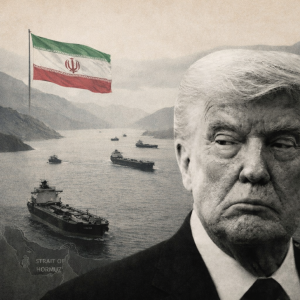
Having turned its gaze towards the Middle East in the wake of 9/11, it appears that the Monroe Doctrine has been revived by the US. This time, however, it is in the guise of the Donroe Doctrine’, the eponymous name given to the recent shifts in US foreign policy coined by, who else, US President Donald Trump. Following months of naval blockade and the amassing of military forces in the Caribbean basin, on 3 January 2026, US forces bombed Caracas and abducted Venezuelan President Nicolás Maduro in the dead of night.
The premise of both the aggression towards Venezuela and the latest brazen breach of international law by the Trump regime was the renewed War on Drugs in the region. Like Nixon, Reagan and others before him, Trump has used the threat of drugs, and the social dissolution conservatives argue accompanies them, as a pretext for US intervention, naming Maduro and his wife as leaders of the infamous Cartel de los Soles (Cartel of the Suns). It is infamous in the United States for being designated a terrorist organisation in 2025, and notorious in Venezuela for being a euphemism, as the Cartel de los Soles is in fact Venezuelan slang for patronage systems within the state. Unsurprisingly, references to the Cartel de los Soles were quickly dropped in charges brought against Maduro in US courts.
Rather than this being some aberration from the proper functioning of US foreign policy or its justice system, this is simply the continuation of a page from the Cold War playbook. During the 1970s and 1980s, the War on Drugs was the pretext for US intervention in Latin America. Ronald Reagan in particular melded his Christian moral politics with anticommunism to mount attacks on poor, racialised communities domestically and left wing governments regionally. Accusing left wing – or anti-US, as the toppling of Panamanian President Manuel Noriega shows – leaders of being ‘narcos’ is a well-established – and finely finessed – tactic used by the US to justify intervention and regime change. In a twist of historical irony, the dirty wars of the 1980s, along with the 1989 US invasion of Panama, were paid for using drug money earned by CIA operatives and fixers working in the cocaine trade. Cocaine was central to the dynamics of the late-twentieth century Latin American left, just not in the ways the US claimed.
Liberal preoccupations
The liberal commentary around the US invasion of Venezuela comprises a lot of hand wringing about international law and fears – tacit or not – about the death of the liberal international order. With regards to the former, it is needless to say this is a flagrant breach of international law and encroachment on Venezuelan sovereignty. With regards to the latter, as one Chinese commentator bluntly states, what liberal international order? Surely the death knell to that particular illusion was the international inaction around Israel’s genocide in Palestine – matched only by the deafening silence around the brutal genocide in Sudan.
However, liberal preoccupations about geopolitics are worth a brief consideration. The US invasion of Venezuela represented the starting gun, the consolidation of the US strategy of reviving gunboat diplomacy and the tightening of its grip over the western hemisphere and its resources. Following his success in capturing Maduro, Trump welded the War on Drugs in the direction of the presidents of Mexico and Colombia, Claudia Sheinbaum and Gustavo Petro respectively. Sheinbaum has lost control of her country, Trump claims, which is now in the hands of the cartels, whilst Petro is himself also accused of being at the heart of a narco conspiracy.
Given this strategy has worked against one (perceived) leader of the Latin American left, it is not surprising that Trump has expressed his desire to simply ‘rinse and repeat’. Moreover, Greenland is firmly in Trump’s sight for ‘security reasons’, alarming European powers and threatening the future of NATO. With this latest move against Denmark, Trump extends the Monroe Doctrine to absorb Greenland and its arctic territories into the western hemisphere. Nevertheless, this is no rupture with Monroe, whose doctrine was concocted to keep European colonial powers at bay as well as dominate Latin America. Ironically, the Monroe Doctrine first moved from rhetoric to geopolitical action in Venezuela, when US gunboats confronted European colonial forces that wanted their debts repaid during the 1903–1904 Venezuela Crisis. However, for all the hand wringing about the rules-based international order and hot air about a new War on Drugs, one thing is clear.
It’s all about oil
Venezuela has the largest proven oil reserves of any country globally, holding roughly 17 per cent of the world’s total. Currently, however, it is responsible for well under one per cent of global production thanks to suffocating US sanctions, decades of economic mismanagement and the mass exodus of technical expertise from the sector following the failed 2003 ‘oil lockout’.
The major investor and purchaser of Venezuelan oil is China. China’s economic interest in Latin America has increased significantly since its consolidation at the turn of the century as the commodity hungry factory of the world at the heart of production networks globally. China and Venezuela agreed to a 6 billion US dollars funding agreement for the Venezuelan oil industry in 2007, and Chinese companies have invested 2.1 billion US dollars in the Venezuelan oil industry since 2016. However, Chinese investment in the sector has been limited since 2019.
With Venezuelan oil imports accounting for less than one per cent of Chinese oil imports in recent years, the US invasion of Venezuela will not greatly affect trade and investment between the two countries. Rather than entering into competition with US firms, the Chinese financial press has reported that Chinese capital is concentrating on minimising potential losses to existing assets and investments. The same cannot be said about the US state and capital.
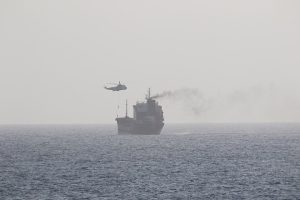
For his part, Trump has made no secret that he is keen to get his hands on that oil and pass it, in turn, onto the US oil majors. US oil firms ConocoPhillips and ExxonMobil claim to be owed billions of US dollars following the nationalisation of their assets by Hugo Chávez in 2007. Chevron, the one US firm currently operating in Venezuela, has positioned itself as the firm ready to turn on the taps. Trump is adamant that Venezuela will pay its debts (and more) through the sale of 50 million barrels of sanctioned oil. Tankers boarded in November and December of last year are being redirected to US ports and refineries, moves the Chinese government states ‘infringe upon Venezuela’s sovereignty, and harm the rights of the Venezuelan people’.
Petro dreams
The economics of Venezuelan oil has been questioned by financial analysts and Marxist critics alike. Most Venezuelan oil is found in the Orinoco basin to the east of the country. It is, importantly, heavy crude that, in industry parlance, is ‘sour’ (high in sulphur). There are several consequences to this. On the one hand, Venezuelan oil needs to be mixed with lighter hydrocarbons to be transported and refined, making it expensive (if not technically difficult) to get out of the ground and to consumers. Whilst there is no established price at which Venezuelan oil becomes profitable to extract (and therefore a reserve asset rather than a resource), Matt Huber estimates this to be well above the current market price of between 60-65 US dollars for a barrel. In short, Venezuelan oil may very well, under current conditions, stay in the ground for the foreseeable future.
On the other hand, because of its natural properties, Venezuelan oil requires speciality refineries and produces diesel, bitumen, asphalt and fuels for heavy equipment such as bunker fuel for ships – fuels that are currently in short supply globally and, importantly, power military machines like tanks, warships and aircraft carriers. US refineries on the Gulf Coast were constructed to process heavy oils like that of Venezuela (and Mexico) in the 1970s before the shale revolution. So, if economic incentives do change and US capital manages to get the aging, dilapidated Venezuelan oil infrastructure into production, a ready-made hemispheric infrastructural network is there waiting for Venezuelan oil.
This points to the real significance of Venezuelan oil in US calculations. Whilst US hedge funds are circling around Venezuela’s previously defaulted sovereign debt and more esoteric forms of private debt, this is a secondary result of US intervention. Despite US oil and gas majors being significant members of Trump’s coalition and responding positively to the Donroe Doctrine, again, the wants and needs of fossil capital are not the central driver of US actions. The central driver is quite simply, as Trump states, the Donroe Doctrine itself.
What is at stake here is US control over all strategic resources in the western hemisphere. The ability for the US to run an isolationist, war economy from the Americas. One only has to take a cursory look at Latin America’s involvement in the two World Wars to see as much. During both conflicts, but particularly during World War Two, Latin America and its resources were fed into the Anglo-American war machine, as much to keep them out of the hands of its enemies – first the fascists allied with Argentina then the Communists allied with Russia – as to power its war effort.
Trump wants Venezuelan oil not for production but for control. None of this is new. Mazen Labban observes US imperialism in Iran and Russia has been about restricting (rather than expanding) oil production globally. Timothy Mitchell comes to similar conclusions in his work on the history of oil in the Middle East. Capturing Venezuelan oil is as much about keeping it in the ground as extracting it, although having plentiful oil to lubricate the US war machine is a further factor, especially given the heavy nature of Venezuelan oil. With the rapid rise of China in the early twentieth century and the belligerent Russia making plays in the arctic, the US could be getting its ducks in a row in the case of a future war with competing geopolitical powers (namely China).
How should the left respond
First and foremost, we need to demonstrate solidarity with Venezuela and its people; and to condemn the flagrant violation of its sovereignty and the abduction of Maduro. It should not have to be said that this can go hand in hand with a fierce criticism of the Maduro regime, which stopped being progressive or having any resemblance to socialism a long time ago.
The collapse of Venezuela is a toxic mix of political and economic mismanagement, the end of the commodities boom underpinning Chávismo and imperial interventions by European and North American powers. US sanctions are the straw that broke the camel’s back and are a major factor in the country’s spiral into social decomposition, violence and the gravest economic crisis in the country’s history. They, along with the recent naval blockade, must be lifted immediately.
The British government illegally confiscated £1.4 billion of Venezuelan gold which was being stored in the vaults of the Bank of England at the behest of the US. The government refuses to return the gold as it demands a transition to democracy (a demand that the Trump regime has been careful not to make). The Venezuelan government should be given access to their gold, whoever is in power.
Finally, we need to demand an end to military intervention in Latin America and respect for the sovereignty of its people. We can oppose Maduro and even view his government as illegitimate without impeding its sovereignty. Sadly, Chávismo as a political vehicle is dead, a zombie political form that has survived on patronage and vested interests. Newly anointed Venezuelan President Delcy Rodríguez may be a shrewd political operator, but she lacks a popular base to pursue a progressive platform. Crackdowns on dissidents by state-based paramilitaries known as ‘colectivos’ following Rodríguez’s ascent to power, suggest that her regime has maintained the hard edge of Maduro’s regime, whilst also signalling a willingness to implement US policy prerogatives.
The only chance for democratic renewal must come from within Venezuela and popular movements. Solidarity movements must demand free and fair elections and stake out space for domestic working-class and Indigenous movements within Venezuela. The former alone is not enough, as the right wing opposition to Maduro led by the Nobel Peace Prize winner María Corina Machado is also making the same demands. Corina Machado, however, is no democrat. She was one of the architects of the 2002 CIA-led coup d’état against Hugo Chávez and spent much of 2025 demanding a US invasion of Venezuela. Following her snub by the Trump regime, which facilitated Rodríguez’s assumption of power, Corina Machado has gone as far as to offer Trump her Nobel Peace Prize in exchange for power in Venezuela. This is why we also need to mark out political space for grassroots movements and working-class social forces to regroup and movements to reform without handing power back to a vindictive anti-chávista opposition.
However, we also must not lose sight of the fact that the US invasion of Venezuela was not really about Venezuela. The major movements were to consolidate US control over the western hemisphere and prepare the ground for a potential geopolitical conflict with China. This, it goes without saying, would be catastrophic. A future world war is the symptom of a great power in decline and will be started, most likely, by the US. China, for its part, after the horrors of the revolutions, famines and political massacres of the twentieth century, only recently feels like it got on its feet. It certainly will not welcome the prospect of war with the West. We need to be attentive to the ways that an increasingly militarised western bloc will weaponise their actions to justify confrontation with China, whilst also remaining critical of increasing authoritarian tendencies within China.
Finally, there is the climate question. If we are to avoid a hothouse earth, Venezuela’s oil needs to stay in the ground. However, since its discovery some one hundred years ago, it has been the motor force behind Venezuela’s development dynamics – for better or worse – and Venezuela’s integration into global capitalism, like Latin America more generally, has been as a source of natural resources. Resource nationalism does not offer a route out of this dependency or a sustainable route towards eco-socialism, but as long as the world system remains capitalist, it is difficult to see how the Venezuelan oil industry will be shut down. Calls for respecting Venezuelan sovereignty could end up pulling megatons of carbon into our atmosphere in the name of sovereignty, independence, development or, dare I say it, socialism. However, Venezuelan sovereignty should not be held hostage to climate mitigation precisely because the climate crisis cannot be solved by a single state. It can only be solved through a coordinated, global shift away from capitalism, something that in 2026 feels a long way away.
Angus McNelly is the author of Now We Are in Power: The Politics of Passive Revolution in Twenty-First-Century Bolivia, published by University of Pittsburgh Press.



0 comments