
Six pointers for antifascists after the 21 June attacks in Tottenham
rs21 •

See also: Antifascist vigil attracts 200 in show of unity and defiance
- On Saturday night a free music festival in Tottenham, north London, was violently attacked by a racist gang targeting audience members in general and, judging from media reports, Jews in particular. North London Antifascists has details, including video and evidence pointing to Zjednoczeni Emigranci, a Polish hooligan outfit with links to fascism and radical Polish nationalism, as the culprits. See also the Evening Standard report and the UAF facebook page for the vigil, 6pm tonight (Monday) at Tottenham Green.
- The suddenness of this attack and the speed of the response follow a similar pattern to a year ago. The murder of Lee Rigby sparked a wave of unprecedented Islamophobic violence, but also a rapid, well organised and well reported response in the form of vigils, solidarity statements, condemnations of anti-Muslim racism etc. We can expect similar flare-ups and similar rapid responses in the foreseeable future, especially as prospects for another BNP or EDL style formation on the far right seem at present remote. At this moment we are seeing an Islamophobic storm around the Trojan Horse affair, combined with Britain First attacking mosques.
- So antifascism will have to tighten up its understanding of racist oppression and also take a turn to the streets. This is happening already. What’s more, the community and autonomous antifascist groups that have sprung up in recent years have sharpened up their politics in two crucial respects. The influence of the Millbank generation of student activists has finally drilled in the importance of anti-oppression politics to a scene that until recently was prone to dismissing such concerns as middle class political correctness. Allied to this, an understanding of safe spaces, disability politics and so on has blunted a former sectarianism towards big, broad demonstrations (including those called by UAF of late).
- It is to the credit of the far left that it has not let the bruising internal battles of recent years spill over into disrupting antifascist unity on the ground. These habits should be encouraged. Antifascism in the next few years will involve a patchwork of local groups or distinctive political currents, rather than a one-size-fits-all front. UAF will continue to be useful as an umbrella organisation (and it is what the Nazis will call us regardless of what we do). But the work in terms of developing theory and practice will take place on the ground and have to fight its way up.
- The details of Saturday’s attack defy any common sense understanding of racism that tries to fit it into a narrative of early 1990s antiracist politics in Britain. Polish immigrants are oppressed by racism, despite “looking white”. Yet here are Polish immigrants who react by turning to an “old fashioned” fascism that violently targets Jews. In a similar manner the BNP has been trying to link up with Jobbik supporters in Britain. On the other side, many if not most of those now mobilising against ZE and in solidarity with their victims are black and/or Muslim. So a political good sense can cut through the common sense confusion over what is going on here.
- The dynamic of solidarity and cooperation is a step forward but it brings dangers with it. Imagine what UKIP’s explanation of Saturday’s events could be: “This shows that Eastern European immigrants are different, they bring a dangerous extremism with them that threatens established ethnic communities. We need tighter immigration controls to protect our British minorities.” Antifascist solidarity has to be built hand-in-hand with Eastern European workers and their genuine organisations. That involves challenging Fortress Europe, challenging the immigration cops, and challenging the border police mentality found in common across UKIP and the three main parties.
signed 23 June 2014: Shanice McBean, Anindya Bhattacharyya, Mona D, Jan LadziÅ„ski, Sherrl Yanowitz Rogall, Amy Gilligan, Nathan Bolton, Dan Swain, Ruth Lorimer, Robin Burrett, Nick Evans, Charlie Hore, Matt Collins, John G Walker, Charlotte Bence, Neil Rogall, Dane Smith, Colin Wilson, Bettina Trabant, Matt Grabham, Roderick C, Sam B, Sølvi Goard, Rob Owen, Joe Hayns, Rachel Eborall
We welcome signatures from everyone. If you’d like to add your name please email in your details (including how you want your signature to appear in public) to revolutionarysocialism21@gmail.com




2 comments
** REPORT **
Around 200 people attended the Haringey UAF called solidarity gathering in Tottenham Green which was supported by many militant anti-fascists and locals.
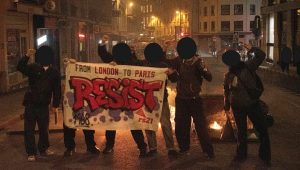
Around 80-100 of us then marched through Tottenham shouting anti-fascist slogans, ripping down neo-nazi stickers and covering the area with 161 Crew Polish anti-fascist and London Anti-Fascist stickers. North London Anti-fascists were also active earlier cleaning up the area of racist graffiti and far-right stickers.
The march ended in Markfield Park were last Saturdays attack and stabbing happened.
Another demonstration has been called by various anti-fascist groups for 3pm at Markfield Park on Saturday 28th June. We will maintain a presence and co-ordinate with the many anti-fascist polish and local community in Tottenham that turned out this evening and ensure that Tottenham becomes another solid antifa area.
Thanks for everyone that turned up at such short notice!
“UAF’s continued advocacy of multiculturalism – the cross-class politics of celebrating difference and looking to ‘community leaders’ to represent their flock along ethnic lines – will not do the trick. Readers may be surprised to learn that the UAF London demonstration for UN Anti-Racism Day 2014 was joined by [Polish far-right organisation] Patriae Fidelis chair Jerzy Byczynski”
http://weeklyworker.co.uk/worker/1017/christ-of-nations-in-london/