
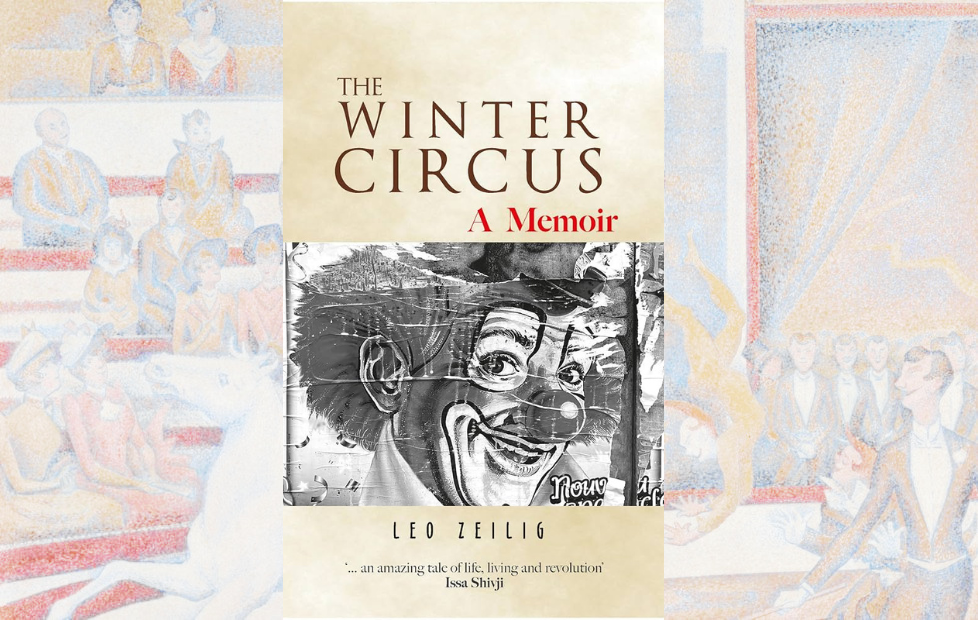
Review | The Winter Circus: A Memoir by Leo Zeilig
Andrew Stone •Leo Zeilig is a longstanding Marxist author and activist who has written extensively on African politics in particular, his works including biographies of Patrice Lumumba and Franz Fanon. He has translated this knowledge very effectively to fictional works such as An Ounce of Practice, much of which is set in Zimbabwe, and ‘The World Turned Upside Down’, which tells the story of Bianca Ndour, a radical academic and the ‘One Percent Murders’ of the corporate elites. The Winter Circus is loosely connected to the latter, and Ndour is mentioned in passing, but much like the better MCU movies you can still appreciate it as a standalone.
All three novels consider the relationship between flawed individuals and the challenges of revolutionary struggle, from a small-scale cleaners strike to, in The Winter Circus, a semi-spontaneous mass movement taking root in West Africa, where popular forces exert collective control over their societies. As described in the preface:
Neighbourhood groups and worker cooperatives had seized control of the entire extractive machinery, and in coordination with other groups and liberated areas ran production for local consumption. No exports to Europe, North America or China of oil, cocoa, gold, bauxite or coffee. The textile industry – broken up by years of cheap imports from the north – was now producing clothing solely for regional use.
This movement then spreads to southern and central Europe, fighting off the interests of corporations and militarism to create transformed ‘liberated zones’ where revolutionary leadership is exercised, somewhat bizarrely, by assorted groups of astrologers and circus performers (hence the book’s title).
It’s a heady prospect for those sick of the brutality and waste of the world we live in. The Winter Circus is a novel prepared to address the existential issues facing us as a species. It contains moments of real beauty and insight. You might expect the alternative it describes to galvanise the four central protagonists, all of whom either participated in, or at least passively sympathised with, socialist activism in their youth. (Recruited by a fiery little old Jewish man who some older readers may well recognise from their own lives.)
But now in late middle-age, Louis, Patrice, Bhaskar and Ivan have all to some extent succumbed to neuroses and pessimism. They fret about their sex lives, their families, their creeping mortality. Their drinking slogan may be ‘LTD’ (Long Time Dead) but it’s not apparently motivating them to use the time available to them effectively. This isn’t to say that they aren’t talking a good fight. They do quite a bit of declaiming the evils of the system, but it all feels a bit empty and for show. I think we’ve all been in those meetings.
None of these characters are going to front a Hallmark movie. They are flawed, often selfish and introspective, wading through what Marx called ‘the muck of ages’. They are all too plausible. Zeilig may not be writing a conventional memoir as the title suggests, but he knows his milieu, and makes no attempt to romanticise it.
The movement also addresses the mortal challenge posed by a world ravaged by war and catastrophic climate change. ‘Go On Or Die’, it is called. As Andy Dufresne said in The Shawshank Redemption, ‘It comes down to a simple choice, really: get busy living, or get busy dying.’
What this means for each character varies. All are invited to ‘The Winter Circus’, the heart of a liberated space where futures are waiting to be born. They all receive some kind of epiphany, an opportunity to shift their lives onto a different track.
The most extreme choice is made by Louis, who joins a radical vigilante cult, carrying out individualised acts of violence against fascists and corporate villains. I was expecting this thread to have a clearer resolution – a Luigi Mangione moment, perhaps. But we leave his story, and that of his comrades, still in flux – which in itself is a radical departure from the stagnation in which we first meet them.
The Winter Circus presents a plausible, though not fully articulated world that is informed by a deep knowledge of Marxist politics and political activism. In foregrounding the effects this might have on a group of individuals it encourages the reader to reflect on their own lives and ambitions. This mixture of the macro and micro struggle is a difficult tightrope for an author to walk, but Zeilig pulls it off.



0 comments