
Echoes of 1905
Wing L •Wing L compares the 1905 defeat of Russia at Port Arthur to the Strait of Hormuz, asking us to consider the implications for both the US, and Iran.
As the war in the Gulf came close to an end with its first ceasefire, one couldn’t help but look back from this so-called Iran War to another significant conflict 120 years ago. Pundits are often quick to point to Vietnam as the type of war whenever a conflict involving the US does not go as expected. But what I believe to be the correct inference in this case is not Vietnam, not counterinsurgency efforts of the Global War on Terror (GWOT) or even any other war the United States had participated in. Rather, the parallel should be drawn between now and the Russo-Japanese war in 1905. It was a conflict at the turn of the century ending in a shocking defeat for a Western hegemon by a seemingly middling power in the East, one that was even more incredulous for observers at the time. The humiliation had not been inflicted by some ragtag insurgency as in the case of the British in Afghanistan or South Africa, but done so in a conventional setting.
Even prior to 1905, seeds of the war had long been planted by the Russians. While Russia had long exerted control over their far-Eastern Siberian holdings, a renewed interest following the declining Qing Empire had since made them pivot towards their Eastern frontier, notably in their growing economic interests in the Far East and the construction of the Trans-Siberian Railroad in the turn of the 19th-20th Century. The eyes of the Russian imperial project had culminated in acquiring Manchuria as the new economic dominion for the Tsar. However, there remained a pressing issue in Russian domination of Northern Asia: Japan. A rapidly modernising nation emulating her Western counterparts in not just their technological advancement but also their imperial ambition, Japan had in three decades already become the preeminent power in East Asia, going from conquest to conquest: Okinawa 1879; Formosa 1894; Economic concessions in China 1900; growing economic control over Korea in the years leading up to 1905.
While initially cordial, Russian diplomatic efforts during 1895 to block their imperial ambitions in China had gradually led to deep-seated resentment in the Japanese public and wariness in the ever-powerful staff of the military. Still, for some of the elites in Petersburg and Tokyo, there was a belief that a negotiated settlement could still be achieved. Fearing the financial damage a war with a European power would bring, there was hope that a negotiation with the Russians could at least secure Korea for Japan in exchange for Russian domination in Manchuria. But despite the efforts of the Japanese negotiators. Russian encroachment into Manchuria and Korea continued. Nicholas, ever egged on by the rantings of his German cousin to ‘defend the white race’ eventually came to believe that it was the duty of the Russian Tsar to defend and defeat this rising oriental empire.
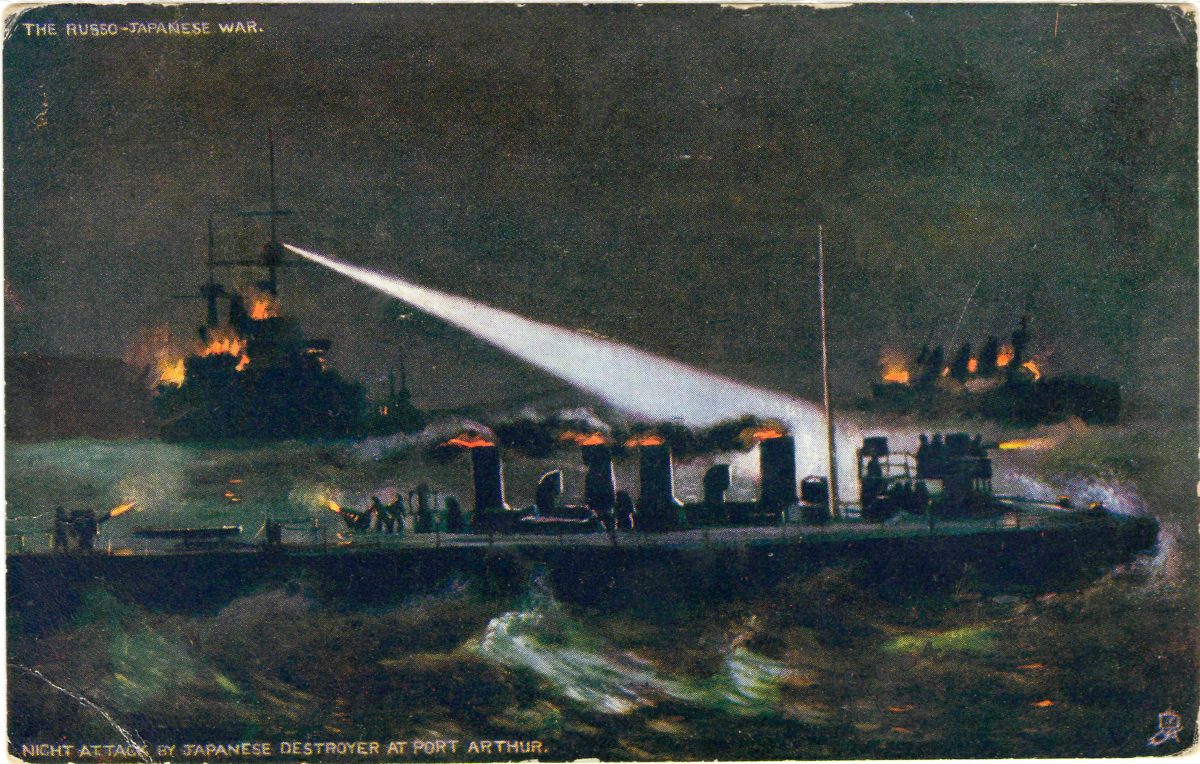
War ultimately came in the early hours of February 8th 1904. With the IJN striking at the Russian Pacific Fleet. With the battleships Tsesarevich and Retvizan sustaining heavy damage, all the Russians could do was to be forced back into Port Arthur and languish in a blockade. With the element of surprise and a strong geographic advantage, the main contingent of the IJA quickly landed in Korea, landing a series of defeats on the Russians, first on the Yalu before advancing into Southern Manchuria. Even after such successes, many throughout the world still held the belief that in one way or another, the war would end in a decisive Russian victory. Be it due to the superiority of the Tsarist war machine or simply in the belief that Western Civilisation would always triumph. As for the rest of 1904, the Japanese would spend slowly capturing Southern Manchuria and laying siege to Port Arthur. The Russians, needing a fleet in the Far East to relieve the blockade, hurriedly prepared for their odyssey. The Baltic fleet now renamed the ‘Second Pacific Squadron’ set sail from their Atlantic home in October 1904. Along the way, they managed to kill several British fishermen and nearly start a war with their future allies. Some of the ‘lucky sailors’ whose ships were small enough to fit through the Suez soon made it to the Indian ocean by late 1904. As for the rest of the fleet, they would have to sail around Africa. Down the Sahel, then the Congo, past the Cape of Good Hope and finally to their rendezvous point in Madagascar. Finally in March of 1905, did they finally set sail to save their ‘First Pacific Squadron’.
This was complicated by the fact their brothers in the first squadron were already dead. Port Arthur fell on January 2nd, 1905. With heavy losses, the Japanese finally took what is now infamously known as Hill 203. Now overlooking the remaining fleet rusting for months in the Bay of Korea, the Japanese opened fire and ended the misery of the First Squadron. Mukden followed 3 months later, falling in April. And with that, the offensive land campaign for the Japanese came to a close. All that was left was to wait for the ‘Second Squadron’ to arrive. That day came on May 27th 1905. As commanding admiral Tōgō Heihachirō would observe on that day, ‘Weather today fine but high waves’. History has an ironic sense of humour. As it would once again be at the Straits of Tsushima where Japan would achieve its greatest naval achievement. The same strait where, in 1265, the Mongol fleet was supposedly swept away in the legendary Typhoon Kamikaze. But unlike 1265, what carried the day in Tsushima was merely military competence. In the ensuing battle, the fleet’s admiral was knocked unconscious, the Russians lost all of their heavy warships, and suffered losses of 5,000 dead and 6,000 captured. Faced with defeat on land and sea, they had no choice but to sue for peace.
Russia never completely recovered from the war, with the humiliation of the conflict simmering over to a wave of discontent in 1905 and subsequent cracks within the Tsarist autocracy spreading over the country. These finally shattered in 1917.
With all this in mind, many of the comparisons between the two are easy to make. For starters, the war was triggered after a period of diplomacy between the two parties, in part due to bad faith negotiations by the actor that supposedly held the upper hand. Secondly, it is the war itself. Like in 1904, many in 2026 had originally assumed the superiority of the United States military might would simply roll over Iran, quickly achieving a decisive victory against the theocracy. Members of the monarchist diaspora had cultivated the mistaken belief the people were waiting to rise up en masse against the state. This arrogance was also shared by the men within the administration as well. And to a similar degree as Nicholas, it was egged on by their own racist assumptions.
This did seem the case in the early months of the war when the United States were able to achieve significant successes in decapitating the Iranian leadership. But as the war dragged on, Iran demonstrated that they were also capable of inflicting heavy material and economic losses on the US. Likewise, military incompetence on the part of the Americans also significantly hampered any success in their conflict. Of note, are the parallels between the redeployment of military assets such as THAAD from far-away theatres, only to be destroyed shortly after deployment. Just like the ill-fated journey of the ‘Second Pacific Squadron’. At the time of writing, there was a consensus the war had resulted in defeat, and the US would have to sue for peace. Even as fighting continues, there remains significant doubt President Trump can achieve anything.
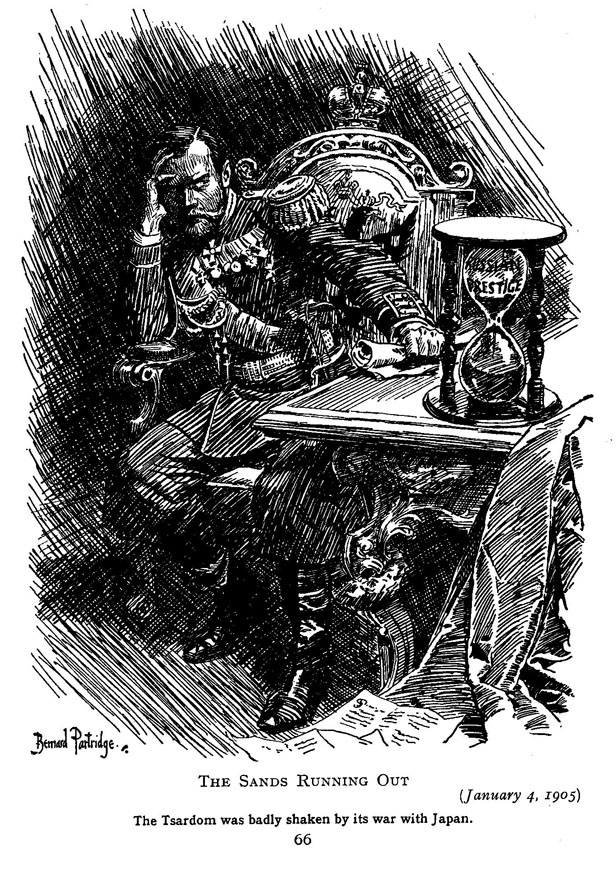
This therefore leaves the implications of what happens next. We Marxists often like to predict the decline of the ‘American Empire’ whenever military defeat is suffered. Most of the time such defeats came from insurgent groups in far-flung corners of the world. Sure, counter-insurgent conflicts are often humiliating and bruising for imperial powers, be it Vietnam and Afghanistan for the United States, the Boer Wars for the British Empire, or even the Peninsula Campaign for the French. Such brushfire conflicts rarely spell the end of an imperial power. Rather, as shown in the Russo-Japanese War, the catalyst for such a collapse comes from conventional military defeats, and where victory and defeat are enforced by treaty.
As for the theocratic republic, the increasingly likely victory over the United States may ultimately be a hollow one. Looking back to the immediate years after the victory over Russia. Japan had at the time almost bankrupted itself and was tethered to collapse, facing a revanchist domestic situation with the public seeing the lack of concrete gains over Russia despite their sacrifice as yet another source of humiliation by the Great Powers. These very same revanchist and nationalistic tendencies then furthered their own future imperial ambitions. Whether this could be the same for Iran is hard to say. But it’s worth considering the possible avenues of development for a rising power in the region fresh off a pyrrhic victory over a hegemonic enemy
Of course, we cannot read the tea leaves, especially when the water hasn’t even finished boiling. Yet as the tapestry of history has shown, the combined pressures of an external war and an increasingly unstable domestic front can present serious challenges to imperialist power. These factors have been an ever-present theme in the second Trump administration, which means the results of this war and how the world reacts towards it could have seismic consequences.
This article was originally published on Substack. It has been edited for style and clarity.



2 comments
Interesting, but the reference to “the construction of the Trans-Siberian Railroad in the turn of the 18th-19th Century” should be amended, since the railway had not even been invented at the turn of the 18th-19th Century. I think the author meant the turn of the 19th-20th Centuries.
Hi John,
Thanks for pointing that out. We have amended it.