
Party, class and the event: Interview with Phil A. Neel
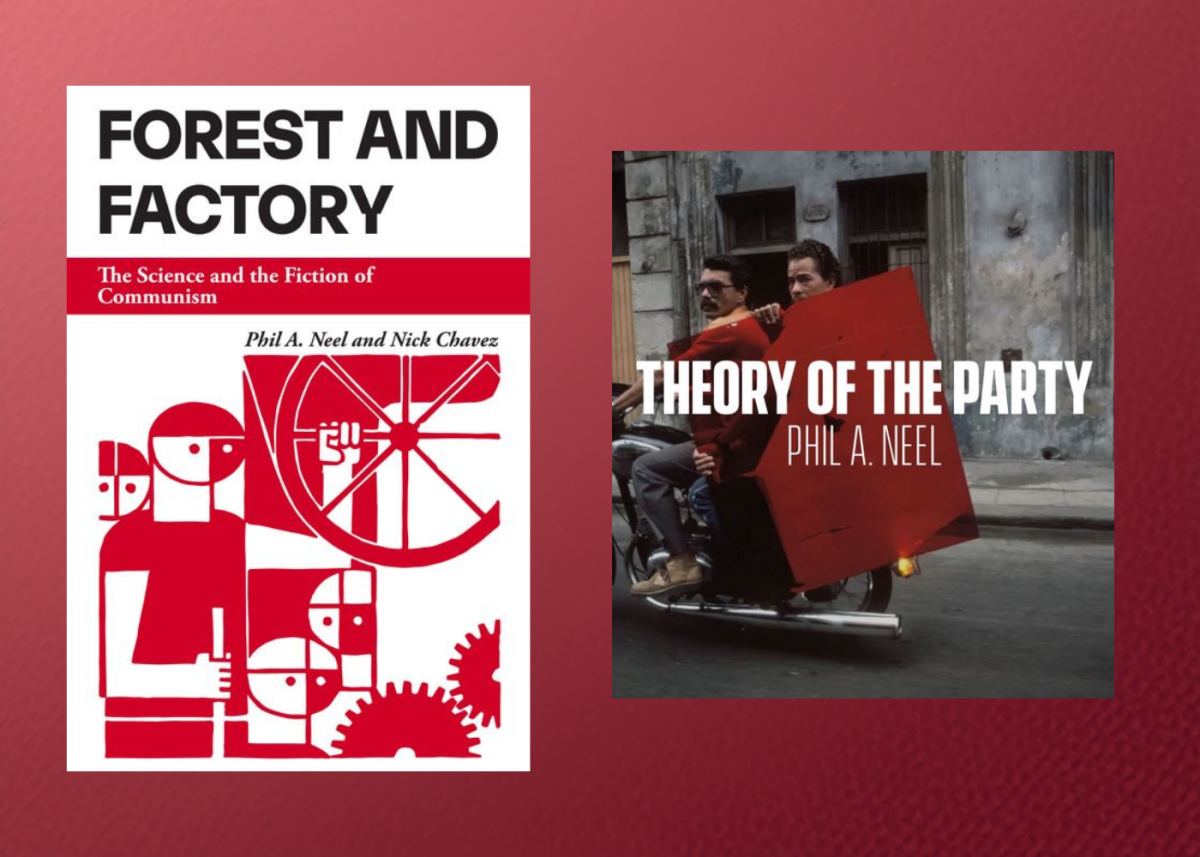
Phil A. Neel •Phil A. Neel is a communist geographer and author of Hinterland: America’s New Landscape of Class and Conflict and Hellworld: The Human Species and the Planetary Factory. In the second part of our interview, the conversation turns to strategy and communist organisation, taking in Neel’s essay ‘Theory of the Party‘, and ‘Forest and Factory‘ written with Nick Chavez
Q: In the discussion of your latest book, Hellworld, at the Historical Materialism conference in London 2025, you suggested that the left may need to reconsider the idea that there may be stages in a transition to communism. What phases, or conditions, do you see the communist left going through to achieve the kind of mass politics typical of early 20th-century communism before Stalinisation?
Phil A. Neel: These are kind of two different questions, actually. At the conference, what I was mentioning was more the issue of how we conceive the post-revolutionary situation. I gestured toward the text that Nick Chavez and I wrote together, ‘Forest and Factory,’ where we critique other attempts to imagine what communism itself might look like and offer our own speculative vision with more strict requirements, what we call an ‘anti-utopian utopia.’ And I was pointing out that this exercise really skips over the hard part, in a way. Though one of the piece’s main points is that we need to remember that communism will be anthropologically alien to us and, therefore, difficult to even describe in familiar terms, the much more substantial problem of conceptualising what communism might look like is that its true conditions can only emerge through a protracted process of global revolutionary civil war, with all its associated contingencies, and social transformations. We refer to this very broadly as the process of ‘communist construction’ and, by placing our fictional account ‘after’ this process, we avoid the troublesome issue of what exactly it looks like.
The second question you pose is the issue of how to regain some sort of mass politics, which is the necessary step preceding and making it possible to initiate any sort of revolutionary transformation of society. I’ll talk more about the second question below, but let’s focus here on the first question. Basically, if we recognise that communist construction emerges from a period of revolutionary warfare, we have to acknowledge:
- First: the process will begin sooner in some places and later in others. Geographic constraints therefore produce forms of scarcity and defensive needs not present in later phases. This will also generate the recurrent debate about whether it is possible or desirable to construct a socialist society in one locale as a shining example to the world or whether the revolution requires expansion to survive. Neither, in my opinion, are quite correct – but this needs to be theorised more systematically, with a better speculative idea of what the conditions of modern revolutionary warfare and social transformation might actually be.
- Second: social transformation begins in the course of the revolutionary conflict, rather than simply following after it. This alone means that social transformation has to be understood sequentially, moving forward in iterations. None of the ‘communist measures’ that give life to the revolution are themselves examples of ‘communism,’ in the sense of representing communist social relationships. They’re ‘communist’ in the aspirational, experimental, and dynamic sense that they are seeking communism through iterative social reinvention. Altogether, these iterations of social transformation are measured by their progress toward the long-run upending of capitalist social relationships. In and of itself, however, each iteration is also forced to re-revolutionise the new social conditions produced by the last iteration. But there is also no waiting. Trying to constrain social transformation to a future ‘stage’ of the revolution is doomed to fail and is, in fact, one of the many paths taken by the counterrevolution.
- Third, and following from these first two: there will be long periods in which social transformation will coexist in some fashion with capitalist relations both internally, as they are in the process of being dissolved, and externally, as they are preserved beyond the barricades of the revolutionary front. This then requires communist measures that somehow interact with capitalist social forms in order to suppress them. And this poses the sort of classic difficulties faced by revolutions in history: how do you engage with the world market, how do you address having key goods sanctioned, how do you prevent the formation of an internal capitalist class out of the bureaucracy or military, etc.
Overall, the basic idea is that we actually need to return to these intricate debates that emerged from revolutionary history and reappraise them in the face of contemporary material conditions, particularly with regard to what social transformation actually looks like. What changes to our surrounding material conditions might be important enough to force new strategic paths? To take one example: without an embedded peasantry and instead dependent on an industrial-agricultural system fully linked into global supply chains, how would any given revolutionary locale actually obtain food? How many harvest seasons could you get with just the fertiliser, gasoline, equipment, etc. on hand, were it all to be cut off from global supply chains? How fast could you create alternatives and how intensive would the inputs of labour be to do so? Would you be forced to rely on the market? Would you be able to, under sanctions? Which market actors might be favourable enough to deal with, out of necessity? And how could that necessity not turn into dependency?
This is all deeply dependent on geography and geographers can play a key role in this sort of revolutionary speculation. For example, perhaps it is possible to categorise different locales (whether internal regions, countries, groups of countries, etc.) according to some sort of multidimensional metabolic measure that captures embedded agroecological capacity, industrial infrastructure, density of local input-output linkages, etc. in order to understand the degree to which a revolutionary movement in that locale would be dependent on external inputs and which specific material flows would be the most susceptible. But there’s also a degree to which this is simply not the sort of speculation that individuals can do alone. Instead, we need mass forms of imagination and experimentation, with input from people who have relevant experience in these industries. We have to remember that the production of ‘theory’ is always a collective effort that draws from myriad people with very different backgrounds. Moreover, it also requires forms of praxis to learn from. And that’s why it’s equally important to study the sort of problems that smaller-scale revolutionary experiments have run into recently.
Now, as for your other question about mass politics, we’re also dealing with an iterative process through which the communist party is constructed out of various apolitical, pre-political, and militant organisational currents constantly being created, reappraised, and destroyed in sequences of mass struggle. The big problem, as I see it, is that many people look at the sort of organisational practices that were useful toward the end of the last historic sequence of this sort of mass politics and imagine that, if they could simply reconstruct organisations that match this or that pattern drawn from the high tide of class struggle (however they define that), then the result would be a magical mobilisation of the class itself. But this gets things completely backwards. The intricate, embedded, militant organisations of mass political struggle that we saw at different moments in the 20th century emerged from and depended on these much longer histories of class organisation. These decades were also relatively unique: the earlier stage of the 20th century saw rapid buildups in industrial employment that would never again be repeated at that same population scale, even in subsequent industrial booms, while the later decades saw a unique moment of postwar prosperity and global decolonisation. Are these moments that similar to our own? I don’t really think so. In fact, we’re probably much closer to 19th century conditions today than 20th century ones, in certain key respects.
Q: There is a lot of discussion going on right now about the appropriate forms for socialist organising. How does your ‘Theory of the Party’ article for Ill Will contribute to these discussions and what was your motivation in writing it?
PN: This follows nicely from the question above, so let’s just continue that thread. Basically, instead of looking at these mythologised moments and trying to replicate formal organisations that somehow resemble those parties, at the superficial level, we should consider what our conditions actually look like and appraise organising in a functional sense. We all know the type of ‘socialist organisation’ that seems to do basically nothing other than reproduce its own formal existence. Every event it holds is, ultimately, a recruiting event and any intervention into any living struggle (even these will be rare) seems to simply be geared toward better branding and more recruitment. But what is it doing with all these recruits? Nothing more than recruiting more to reproduce itself, of course. And it must always do this because people will always get bored with this – or perhaps even be expelled for engaging in actual organising, or for questioning key aspects of the supposed ‘strategy’ – and they’ll get shed from the organisation. So, this is an example where the ‘formal’ aspect of organising is just this sort of shell propped up over nothingness. Formality is all there is for many of the sect-like organisations of the left. At best, you finally discover that their sole form of “organising” is running (usually failed) electoral campaigns or, even worse, ‘pressuring’ the mainstream liberal parties in an attempt to ‘push them left’ (what a joke!).
My ‘Theory of the Party’ piece, alongside a forthcoming piece on the question of organisation from Heatwave magazine, offer appraisals of these questions at two different levels. The Theory of the Party piece is largely focused on more abstract questions of political philosophy and how we conceive of partisan activity in general. The basic argument is that there is a partisan undercurrent in history itself, continually regenerated by the domination and dispossession of capitalist society itself, which (drawing from Bordiga and Marx) I refer to as the ‘historical party.’ This historical party subsists beneath the surface of the constant simmer of class conflict, but it only really becomes visible when it bursts through in some sort of ‘mass’ form as an uprising, a strike wave, etc. In these moments, masses of people are thrown into motion and, in so doing, they actualise class power. Even if this is done in an inchoate and unconscious fashion, it raises concrete questions of how to build power that are not raised in day-to-day subsistence struggles. Similarly, its mass scale raises deeper questions about the nature of the social order itself.
I draw from Badiou to call these uprisings political ‘events.’ And, in a piece on my substack, I note that they distinguish themselves from day-to-day struggles by the fact that they are:
- intensive in the sense that they serve as a platform for extreme forms of ethical action that entail deep emotional commitment to an expansive idea of social transformation.
- conflictual in the sense that they are not presented as petitions to those in power or as social movements ‘advocating’ for adequate legislation or discursive representation but instead exert their own independent power, presented as a rejection of the present order, and are therefore thrown into a local power conflict with the forces of that order.
- massive in the sense that they involve masses of people, as described above, which means that the uprising generalises beyond individual subsistence struggles focused on any single demographic and beyond any activist subculture to draw in broader segments of the population, many formerly apolitical, thereby starting the process of forming a collective subject of politics.
But the historical party is not sufficient, as is evident from the fact that even government-toppling insurrections tend to simply result in more of the same under a different name. As these mass uprisings take shape, they hit concrete tactical limits. Groups of participants then come together to try to overcome these limits. By consciously and self-reflexively organising on behalf of the event and the more expansive idea of social transformation that it represents, they then take on a formal quality, whether or not they acknowledge this. These are what I refer to as formal parties: self-reflexive groupings of individuals attempting to act in fidelity to the event and to the idea of communism visible through it. These may include groups that refer to themselves as ‘parties,’ as ‘cadre organisations,’ as popular militias, etc. But more often these are relatively small grouplets unified by shared experience, able to operate together through affinity.
These formal parties are particularly important in the interim periods between mass uprisings. Formal parties are also where people come together to ‘organise’ in different fashions in the absence of any mass mobilisation, which can take many forms. Whatever type of ‘organising’ they choose, however, they then have their fidelity tested when subsequent mass uprisings occur. If they have ossified in the interim, they will be shown to have lost their partisan character. Think of the ‘radical’ NGOs that came out of previous cycles of struggle that then played conservative roles in subsequent uprisings, trying to channel energy out of the streets, opposing riotous behaviour, crushing strikes, etc. Or formal parties that devolved into sects, doing nothing but reproducing themselves in an increasingly degenerated form. Nonetheless, some formal parties retain fidelity and find themselves able and willing to engage in subsequent events and even intervene back into the conditions that produced them, perhaps making mass uprisings more possible and more capable when they do occur.
Once a positive circuit is built up between the formal and historical parties in this way, a higher-order form of subjectivity takes shape. I refer to this higher-order revolutionary subjectivity as the communist party proper. The communist party alternately appears to us in a formal aspect, as various confederations of formal parties (i.e. as an International) and in an informal aspect, as a living international ‘communist movement.’ You can think of it as something like a partisan ecosystem, but this tends to overemphasise its organic or spontaneous aspects. In fact, the party must be built with intention, and it is structured by plenty of formal features, even if it also exceeds these formalities. So maybe less an ecosystem in the conventional sense and more something like landscape architecture: a built environment that channels and incorporates organic and spontaneous dynamics.
Q: In that piece, you discuss the ‘invariance’ of conundrums that confront communists throughout history. Are there not distinctive elements to different periods and that’s part of why the left – communist or otherwise – lags behind events so often?
PN: I specifically refer to the invariance of communism itself expressed in the negative as a contrast with capitalism, which then poses similar sets of problems for would-be revolutionaries. Since the fundamental social logic of capitalism does not change over time (and it doesn’t, despite academic branding attempts to name “neoliberal” vs. “Keynesian” capitalism, etc.) it will contain within it the same core contradictions: the production of surplus capital alongside surplus population, the compulsion to work for money in order to live, the existence of militaristic imperial conflicts driven by the divergent interests of fractions of capital metastasised through the state, etc. Thus, we’ll find many of the basic coordinates orienting communist struggle to be the same: demonstrating the absurd irrationality of persistent poverty despite unprecedented social wealth (and arguing that communism is the necessary rectification, aligning social wealth with social need), opposing the wage system (seeking to decouple money from survival and, ultimately, abolish money entirely), and mobilising revolutionary anti-imperialist and fundamentally defeatist currents (in the classical Leninist sense) in the midst of continual imperialist conflict rather than simply picking sides between ‘good’ and ‘bad’ countries.
In part, this is a true and absolute invariance. The basic terms of communism don’t really change. It’s fundamentally just a dynamic shift to forms of social organisation driven by deliberation and free association, rather than domination. In order to do so, these social forms must retain the productive powers developed by capitalism, even while they reinvent them to better accord with these new imperatives. In our ‘Forest and Factory’ piece, Nick Chavez and I explain why that is the case. But, in part, the emphasis on invariance is polemical, meant as a counterweight against persistent obsessions with novel theories, novel tactics, etc. which ultimately devolve into a fashionable eclecticism. So, it’s an attempt to force that connection with communist history and warn against obsession with whatever the newest thing is that season. It’s also a counterpoint to the common narrative structure in political economy work that emphasises ‘neoliberalism’ to the exclusion of all else and tends toward this false history where everything was basically good or at least on track to be good in the postwar Keynesian era, but then neoliberal financialisation ruined it.
Obviously, elements of time and place determine the details of any given organisational landscape, and, in this sense, we can create all kinds of micro-periodisations and local strategies attuned to different conditions. Meanwhile, there are certain secular trends that we have to be attentive to as well, and these sometimes entail major changes to communist strategy. For example, deagrarianisation means that many previous revolutionary practices that depended on building support bases among subsistence producers in the countryside are simply not possible today. Similarly, the peasant armies that once served as a vehicle for revolution are not reproducible in most places in the world and, where they are, the nature of the ‘peasantry’ itself has changed such that these armies more quickly and more easily find themselves devolving into armed traffickers in black market commerce. Meanwhile, deindustrialisation brings with it new challenges that, in certain respects, reanimate some of these old peasant organising strategies (which were designed to operate in more complex terrains of class and caste, and to bridge general atomisation). So, I think it depends on exactly what kind of trends we’re talking about.
In general, though, there are a lot of consistencies between times due to both the consistencies of capitalism itself and due to the fact that organisation as such has certain consistent requirements – things like discipline, for example, the deployment of command structures (and ensuing debates over bureaucratisation), the logistics of moving material across time and space, the tension between informal relationships and formal structure, etc. At the moment, perhaps the most important point is simply that, for larger mass organisations to emerge, you first have to have ecumenical fields of pre-political social activity for them to grow within. Take the historic parties of the classical worker’s movement. As I said above, you can’t simply reproduce these from nothing. At the same time, they themselves didn’t emerge from the minds of organisers but were instead rooted in the more amorphous soil structure of seemingly apolitical or pre-political social clubs focused on things like sports and fitness, language education, technical schooling, and rudimentary forms of resource pooling and mutual aid. These pre-political activities are probably the most important thing to develop right now, since it’s not clear how more coherent organisations could develop in the absence of a more expansive social field to sustain them.
Q: Can you tell us more about the importance of the ‘Sigil’ and imagery in the relationship between communist practice and proletarian subjectivity?
PN: The first thing to note is that the sigil is not simply an image but an image that is imbued with a certain material force. Sigils are essentially these magical images that can gather people together in particular ways and throw them into motion, summoning the powers of the historical party and directing them, to a certain extent. So branding is a part of it but is not the full picture. The classic example is something like the yellow vest in France or the yellow helmet in Hong Kong. These are symbols that also carry with them a certain tactical disposition, itself drawn from the collective intelligence of the crowd: in the French case, this included the roundabout blockades and a certain geographic orientation toward exurban spaces; in the Hong Kong case, this included frontliner practice, as well as the broad unity and division of labour that arose between ‘nonviolent’ supporters in the back and these militant frontliners. The sigil is basically an elaboration of this concept of the ‘meme with force,’ developed by Adrian Wohlleben and Paul Torino, as situated within the broader theory of historical and formal parties. Sigils are, essentially, temporary circuits that can link formal partisan activity to the underlying momentum of the historical party.
Q: In the US and Britain today we’re witnessing far right groups and parties rising in the hinterlands you vividly describe. How can the left start to rebuild in these places? Do you think the dynamic is entirely different to say, the Zohran Mamdani campaign? And how do you think communists should relate to this phenomenon?
PN: There’s a kernel of truth to this. But, in Hinterland, I also discuss how this trend is actually quite exaggerated and often misunderstands some of the basic geography. For example, in the US, far right support is not actually that substantial in rural far hinterland areas; it’s just that there is little leftist presence at all, so these areas tend to be overrepresented in, say, voting data, as avid Trump supporters. But in fact, most people in these areas do not vote and, if you actually talk to them, most will say that they hate both parties and they’d prefer it if working people were in charge. Similarly, many people mistake exurban enclaves with rural areas, despite the fact that these exurbs are relatively high-income and their residents commute into the nearby cities to work, just like any other urbanites. Exurbs just have this cultural tendency to portray themselves as ‘rural’ and distinguish themselves from the city in various ways. So, you get these right-wing figures who work as cops or construction contractors, commuting into the inner-ring suburbs or urban core every morning, but pretending that they don’t live ‘in the city.’ In other cases, they live in large, lower-tier cities that try to culturally distance themselves from the coastal metropolises. So, they pretend that Nashville is somehow less ‘urban’ than New York as they sit in traffic on I-65. That’s a very different life from people who really live out in the middle of nowhere, in largely agrarian or extractive spaces, or in the various wastelands of capital.
That said, we obviously see an absence of any sort of communist organising across the hinterland, and that leads to a default dominance of the right regardless of where people’s sympathies actually lie. For the most part, there are almost no socialist organisations that have any sort of coherent rural politics, for example. That’s an obvious opening for organisation, because rural people aren’t inherently conservative and most of them hold basically socialist positions on any range of topics. Existing socialist organisations also have difficulties organising in the near hinterland industrial suburbs where most workers live – though this is certainly less true now than in the past in the US and has always been a bit less true in Europe, where you do have these ‘red suburb’ traditions. Part of the reason is that so much of the ‘socialist’ organising that exists today is in fact just progressive liberalism driven by both the interests and idealism of various strata of professional-level workers who won’t, ultimately, have much care for or connection with poor people in the countryside and suburbs. It therefore fails to create sustainable links with other strata of the class, both because these programs tend to be geared toward the specific interests of lower-strata professionals, and due to simple geographic and cultural divides.
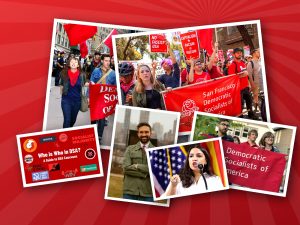
These are the people who form the real vital base of groups like the Democratic Socialists of America (DSA) and Mamdani’s victory in New York would have been impossible without the fervent support of urban professionals. But Mamdani also marks a slight, but important shift, since he was the first of these socialist liberal candidates who has retained more of a distinction from institutional democrats (unlike Alexandria Ocasio-Cortez et. al.) and has also made inroads with other strata of the class, beyond the professionals that formed his core of support. This has been a major problem for organisations like the DSA, which has struggled to appeal to other strata of the class despite having relatively friendly programs that should seemingly be quite attractive to these strata. Aside from some limited but admirable campaigns in suburbs and lower-tier cities, however, they really haven’t focused much energy toward these goals. Ultimately, though, we need to remember that today’s ‘socialists’ are not socialists in any real sense. I call them socialist liberals because they’re just advocating for very standard postwar liberalism and referring to it as socialism. They think that socialism is when the state is able to have a bit more power and thereby ‘contain’ the market. They don’t advocate for anything even close to genuine social transformation. Perhaps the closest they come is the idea of setting up co-ops that then operate as conventional firms within the market.
Communists, of course, understand that the state is not a neutral or independent entity but is always an emanation of class power. In concrete terms, the state is obviously entirely dependent for its existence on accumulation and is therefore, at the structural level, always compelled to ensure that accumulation is running smoothly. Otherwise, it doesn’t have any tax revenue, cannot pay its workers, cannot buy material, cannot maintain its existing infrastructure, etc. And that’s why every electoral success that’s actually threatening to power will be met with a capital strike, as in François Mitterrand’s France in the 1980s, which then starves these progressive policies. So Mamdani has a very narrow range to work in, and he knows it. He’s done a good job demonstrating that there is far more existing leverage at current rates of accumulation for progressive candidates, and that things can actually just get done at the municipal level – and that these minor efforts are not enough to trigger a capital strike, as is now clear. But any socialist organisation engaging with electoralism needs to simply understand that maybe 80 per cent of the function of the electoral project is simply political theatre that can be used to amplify other, more concrete organisational efforts. Elected offices simply aren’t where the real power lies.
Obviously, the leftwing push would be to encourage the formation of neighbourhood-and workplace-level assemblies or associations and force these progressive liberals to recognise them and work with them. But few groups have the capacity to do anything like this. So, in terms of how communists should relate to both the lack of hinterland organising and this new surge in progressive liberal candidates, I would just emphasise that we need to actually build our own capacities first to even be able to talk about a collective ‘we.’ Most of the time, those who ask these questions are really only talking about a spare few people who have very little influence on any of these things. So, I’d gesture toward building out the social field of pre-political infrastructure I mentioned above, which would then help to at least create platforms where some of these discussions can be had, and basic capacities can begin to develop. Otherwise, even the best strategies will simply be whispers cast out into the whipping winds of history.
This is the second part of a two-part interview. Part 1 discussions on Phil A. Neel’s books Hinterland and Hellworld, can be found here




0 comments