
Sí, ya puede hablar: The UFW and abuse
Mara •Earlier this year, United Farm Workers founder César Chávez was accused of sexual abuse. But this problem goes beyond one man, as Mara writes.
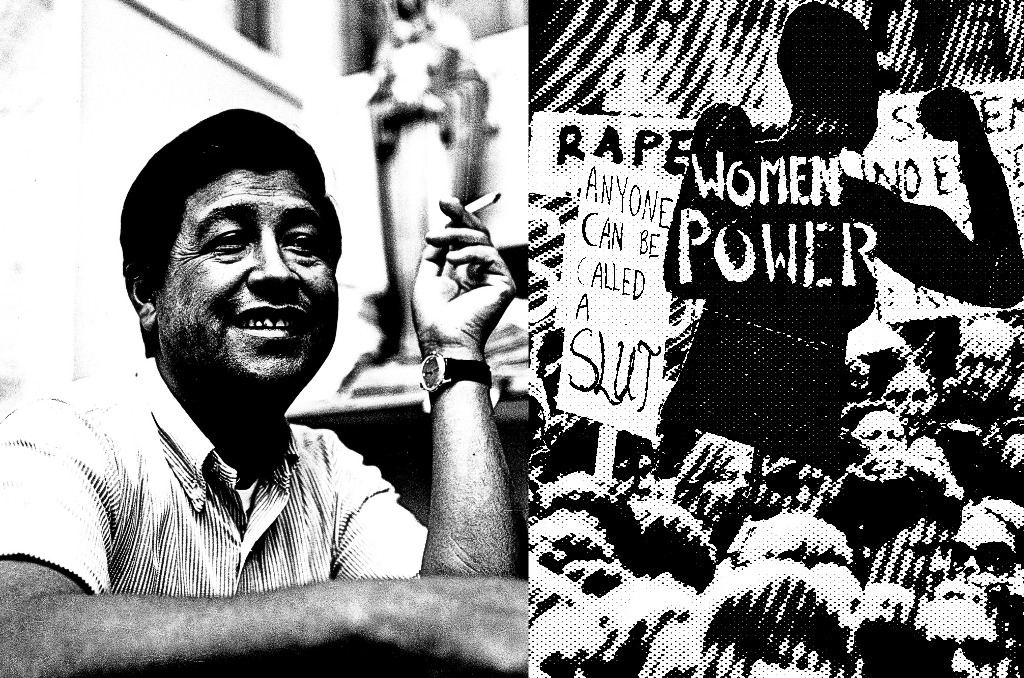
César Chávez, who founded and led the union United Farm Workers (UFW) for decades, was accused earlier this year of serious sexual abuse by at least five women in a New York Times investigation. Founded in the United States in 1966 when the National Farm Workers Association (NFWA) and the Agricultural Workers Organizing Committee (AWOC) merged, the United Farm Workers were heavily involved in militant struggles of mainly Chicano, Mexican and Filipino farmworkers in the US south west in the sixties and seventies. Later it joined the American Federation of Labor and Congress of Industrial Organizations (AFL-CIO) and became known as the United Farm Workers Union.
Dolores Huerta, a co-founder and leader of the UFW, came forward after hearing the statements by other women, revealing that César Chávez also raped her and that she had two children as a result of this abuse. She hid her pregnancies and the children were raised by other families.
Two women, who were the children of UFW members, have said that Chávez abused them starting when they were young teens. The atmosphere in the UFW at the time could be very intense, due to the pressures of struggle and the amount of hope the farmworkers placed in the union. In many cases it could be described as something like a church. The two women now feel that other adults in the union failed to take action, with one questioning what people thought Chávez was doing when she regularly went in and he locked the door of his office.
Both of these victims suffered long term issues after the abuse. One of them developed difficulties with drug addiction later on and was ordered by the UFW leadership to leave the community when she had returned home hoping to get help. Before, during and after, there was a serious failure of care to these women.
Chávez was never accused publicly in his lifetime, and died in 1993, revered as a union and community leader due to his role in the UFW and Civil Rights struggle for the Chicano people. However, issues with his undemocratic and damaging mode of leadership of UFW were well known and spoken about at the time. Chávez repeatedly imposed his own strategies over striking workers and had people who stood up to him driven out of the union. He also saw the interests of US born Chicano farm workers as threatened by recent migrant workers from Mexico and organised in a hostile way against the newer migrants.
The 1979 vegetable strike shows how Chavez’s authoritarian approach could be harmful to the working class struggle as well as to individuals in the union. The strike, in California, was over wages, conditions and management control of the work process and hiring, and came after more than a decade of tumultuous conflict in the area and many UFW victories. The strike was met by a violent response by the employers. Chàvez came into conflict with the elected strike committee, who wanted to extend the strike to other companies, when Chàvez wanted to rely on a limited strike and a consumer boycott. The workers and the strike committee escalated the strike, against his wishes, and won. Chàvez was furious and retaliated by driving out several militant reps, substantially weakening the union.
The women who have spoken out now kept quiet for decades for various reasons. One woman said she felt she could only speak up when her father, a UFW member, had died. Dolores Huerta said she didn’t want to harm the UFW. The women were not wrong to think that the union as a whole could come under attack. The growers were a powerful business interest in the area and strikes were met with violence, strikers were shot dead. It was also reasonable to be afraid, in the 1960s and 70s, that you would be disbelieved, rejected, and blamed for your own abuse.
Dolores Huerta coming forward and saying she was also abused, in an act of bravery, has meant that it has not been so easy for people in the union to attack and malign the other women in the usual way, due to her status. Possibly this is why she spoke up. Her grown up children have now had to process what this means for them. It is shocking to think that a woman who was a leader of a union was abused and had two children as a result and hid that fact and carried on in the union for decades. But at that time people were forced to hide so many things, especially around topics like abuse and illegitimate children. Huerta herself has also come under scrutiny for how she handled other survivors’ allegations. From this it becomes clear it is a problem of culture in movement spaces.
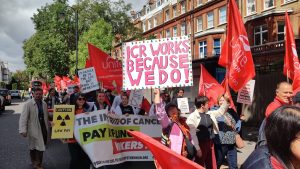
It may be easy to shake your head at this story and say ‘well that was very bad but the sixties were a long time ago.’ But we know that abuse continues to be rife now, including in left groups and unions. Unions in the UK including GMB, TSSA and RCN have had investigations into their internal conduct including ingrained sexism and sexual harassment. There were promises of change from various leaders but the issue now feels like it’s been kicked into the long grass.
Hearing that woman say she felt her father’s death was the moment she could speak up was very painful. No matter how loyal somebody is to their union, you would hope that a parent would listen to and protect their child. The union and safeguarding should never be in contradiction.
We have to build a movement which does not revere leaders, which does not put people in such harmful situations and then make them feel it is their responsibility to protect the movement, and people they love, from the consequences of those leaders’ abusive behaviour.
The UFW were, and still are, fighting vital campaigns for an ignored and underrepresented group of workers. But the fact remains there were multiple abuses of power, including structural issues around the comparative lack of power of elected reps within the union. The fact that this was a group of low-paid oppressed workers, including many people vulnerable to state repression, makes it all the more important to ensure these abuses aren’t repeated.
The leader of the union isn’t the union. Nobody embodies the class struggle as a singular person: that is made through each and every worker standing together. For too long there has been a culture of protecting leaders from criticism, including criticism of strike strategy or whatever else.
Nobody should be treated as disposable and nobody should be above criticism or sanction. This is an issue of union democracy, but at the same time it’s not only just that. These issues of abuse occur at all levels of unions, including at rank and file level. As an urgent commitment to rank and file democracy, to challenging patriarchy in our movements, it is up to us all to intervene in and stop abuse. It can be done, and it must.




0 comments