

A Communist anticipates … Health Communism
DK Renton •In this talk, given at rs21’s Festival of the Oppressed event in London, DK Renton explores the possibilities of Health Communism as imagined by Alexandra Kollontai.
This article is a republishing of the version uploaded to the author’s substack.
The inspiration for this talk was Robert Chapman’s idea of health fascism, and their argument that the far right grows by idealising a lost past of individual and collective health. That left me wondering if the left has our own notion of “health communism”.
Obviously, there’s the book of that same title, which came out with Verso in 2022. But I feel that, in their account of communism as an antidote to capitalist ill-health Adler-Bolton and Vierkant write as if they’re starting out from first principles, as if the key question was what health communism would be, if there ever had been such a theory. Their narrative abuilds up to the story of the Socialist Patients’ Collective, patients at the psychiatric hospital of the University of Heidelberg. It’s a lovely work of history from below, an account which needed to be reclaimed because it was unknown. Here, I’m arguing something slightly different, that mainstream Bolshevism always had a vision of a future society which would be unlike capitalism in part because it would maximise the opportunities of everyone involved to live as fully as possible. There’s nothing missing, nothing lost, the idea of the good society as producing healthier and happier people was always there.
A good way to think about Health Communism is through Alexandra Kollontai’s short story, Soon. Kollontai (pictures above, with dark hair, right)* became Socialist in the 1890s, was a leader of the Bolshevik’s women’s organisation. Written four years after the October Revolution, the tale imagines a gathering 50 years after the revolution. It may be that, as I go through that story, there’ll be some people reading this who find Kollontai’s utopia intriguing and others who find it alienating. Either reaction is fine. The reason why Marx and Engels were vague about the detail of Communism is they wanted it to be a democratic society drawn up by billions of people. (An idea utopia drawn up 100 years old will have its weaknesses. In just the same way, any plan we draw up will probably strike the generations of the future as hopelessly inadequate. That’s fine – that’s why the wager’s made not on us but on them).
The event is a Xmas party and the people in Kollontai’s commune want a fir tree. To get it, they have to negotiate with another body, the collective in charge of the forests. One good idea the story introduces is that health is, in part, about people’s relationship to nature. And, the wilder that nature is – probably – the more liberating it will be to spend time there. This is one of the big differences between health fascism and Communism. When Mussolini saw a swamp, his first thought was to drain it and create land for commercial farming. Health Communism more likely to get pleasure from nature that is just nature, that’s left wild, unkept, a dozen different species unintegrated into any supply chain.
This is a society of future technology; Kollontai’s commune have gone beyond electricity. They’re futurists. Fine. Honestly, it’s hard to be techno-utopians in an age of AI, when it feels like the medical advances are so nakedly about targeting the illness suffered by particular groups of older, affluent people, in an epoch when it feels like every advance is about profit rather than addressing people’s needs. But that’s something any movement of millions will have to recreate.
The people live in “Commune Ten”. It isn’t the most individual name, but at least there’s some sense of place. In my vision of health communism,, I’d have an even stronger sense of the city in which they live. Comrades will know Mike Davis’s essay “Who will Build the Ark?” where he sees the city as a place of “great urban parks, free museums, libraries, infinite possibilities for human interaction”. Those kinds of city, Davis argued, could survive global warming, they could also build the health infrastructure we need.
“The young people were healthy, their bodies were supple and strong … There was not one sick, pale, or exhausted face.” Kollontai responding to the war, the flu epidemic of 1918, the civil war and the general starvation. She’s saying life didn’t have to be like that. And she’s right, it didn’t.
If there’s one part of her essay I’m unsure about it’s really this – I mean some of what we think of as health is just the random allocation of conditions. Even under communism, people will carry difference in our bodies. People will get tired. We’ll all still need other people to care for us. Hopefully, we’ll get more care.
“Everyone,” Kollontai writes, “works at their own vocation for two hours a day,” which is enough for the running of the commune. The rest of the time the individual is free to spend her time as she enjoys. This would have been the part of her piece which would have seemed most utopian to readers in other countries. Five years before she wrote her piece, a working hour of 70 hours a week had been normal in Russian cities.
The promise of taking back time runs head-on against the way capitalism works. Capital exhausts us with demands, overwhelms us, categorises people who’s bodies can’t put up with that pressure as unhealthy, impaired or disabled. Communism says slow down the clock, let people contribute what they can. Give everyone what we need.
Of all the ideas in Kollontai’s piece, the one which appeals to me most is that vision of communism, as getting back time. As people in this room may know, last year, I was diagnosed with stage 3 colon cancer. I spent two months in hospital, had my body pumped full of drugs. My body was tired, like I’d aged two decades in a year. But such is the way, capitalism tells us to be productive, that for me, being ill, was also a kind of liberation. Suddenly, everyone wanted to see me. They made the time to see me. While I was being treated, I had a picc line. I used to go to this one room in the Macmillan centre at UCH where they cleaned my line, took my bloods. It was the best care I received all year, because the nurses who worked there was to do unpredictable work. tasks in-between. You couldn’t set them targets. They gave care slowly and well.
(I’m not saying that every illness, every disability, gets its own balancing compensation. That’s the most patronising idea I can imagine) What I am saying is that being ill isn’t always simply a bad thing. And that Kollontai was right – under communism time will belong to us again.
“People do not live in families but in groups according to their ages.” Commune 10 swaps the nuclear family for collective relationships. Communes would address isolation, loneliness. As for the family, we saw in Covid how everything was shoved back into the private family, food, care across generations, medical treatment. Rebuilding collectivity is a strategy for more sharing, a better life.
One of the children speaks to an elder, saying, “Grandad, I know what the word ‘capitalist’ means. Another says, “We saw money in a museum. Did you have money, Grandad? Did you carry it in a little bag in your pocket?
She’s referring there to the plans the Bolsheviks had in 1919, their dreams under war conditions of abolishing money.
“There had been hunger and exhaustion.”
Again I’d read that as a promise to her readers, a reminder of the conditions that they’d all been living through, and a pledge not to go back to the.
“You must have been very unorganised and ignorant,” someone in the new generation says.
By that word “organis[ed]”, she means planning. Not the bureaucracy of the Five Year Plans. But something deeper rooted in community. The people of Commune Ten could, if they liked, choose to build more houses, libraries, theatres, youth clubs, recording studios, landscape parks, merge their district with the nearby lands under conservation. They could have small-scale factories and work with their hands, they could devote their lives to a craft if they wanted. They could organise their lives how they wanted. People would have live longer in that kind of system, be better protected against illness.
“Our tasks are on an even larger scale.” Kollontai concludes. Under the future for which we’re fighting, they will indeed be.
The points I take from Kollontai’s short story are these:
-Different ideas matter more to different traditions. Revolutionary and counter-revolutionary ideas don’t exactly mirror each other. Marxists do, or used to, have a treasury of compelling things to say about economics; fascists never have. It’s likely that health matters more to counter-revolutionaries than it does to communists; what counts for us isn’t the health but the communism
-Probably, our notion of health will be less about the past and more about the future
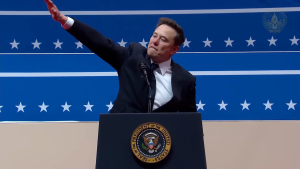
-Expanding that, health fascists promise that their plans will help the individual. Think of the tech millionaire Bryan Johnson and the money he spends to reverse ageing. Or Elon Musk, and his 14 children. The health at the end of health communism is an idea of a better society. We will create conditions for all will flourish. But the payoff from those dynamics are generational. The beneficiaries won’t be us, won’t even be the people who fight the revolution but those who come after.
*Information in the bracket has been amended to reflect the change in article image.

0 comments