
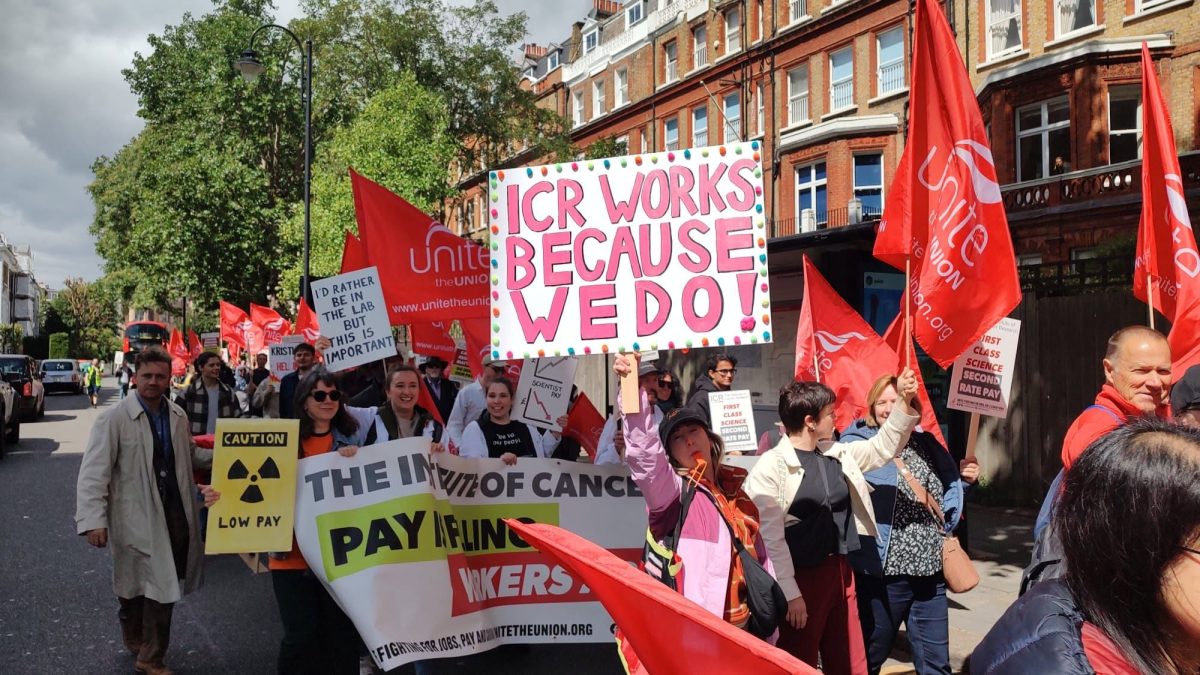
Cancer researchers on strike in west London
West London rs21 •Workers from the Institute of Cancer Research are into their ninth week of strike action, demanding pay restoration from a CEO on nearly half-a-million-pound annual salary. rs21 West London members have written a short overview of their struggle.
Workers from the Institute of Cancer Research, one of the oldest and most prestigious research institutions in the world, are about to enter their ninth week of strike action. Their demands echo those of workers up and down the country who face declining wages in real terms, as well as the erosion of working conditions.
The specific attacks on ICR employees include the replacement of a progression-based salary framework with a system in which wages are benchmarked against other institutes. Unsurprisingly, wage suppression is a sector-wide phenomenon, and the benchmarking approach is therefore a tool for keeping wages low. By 2025, workers at ICR had experienced a 16% erosion in real wages, with wage inflation tracking well below RPI. Whilst ICR workers have reported regularly skipping meals (the staff canteen has also been removed), CEO Kristian Hellin takes home a salary of £457,000.
Academic work in general is often depicted as a vocation – a labour of love that cannot be quantified in purely monetary terms. These workers are quite literally developing cures and medical tools for combatting cancer, and the importance of this task has been used as a way to pressure them to work beyond regular hours without financial remuneration. This is becoming unsustainable, given the lack of career progression and severe wage suppression. In the face of such attacks, ICR workers are leveraging their most potent weapon – the withdrawal of their labour.
Industrial action tactics
Members of the ICR strike committee came to talk to rs21 West London members at our most recent branch meeting. Their experiences of rapid and effective organization are incredibly inspiring.
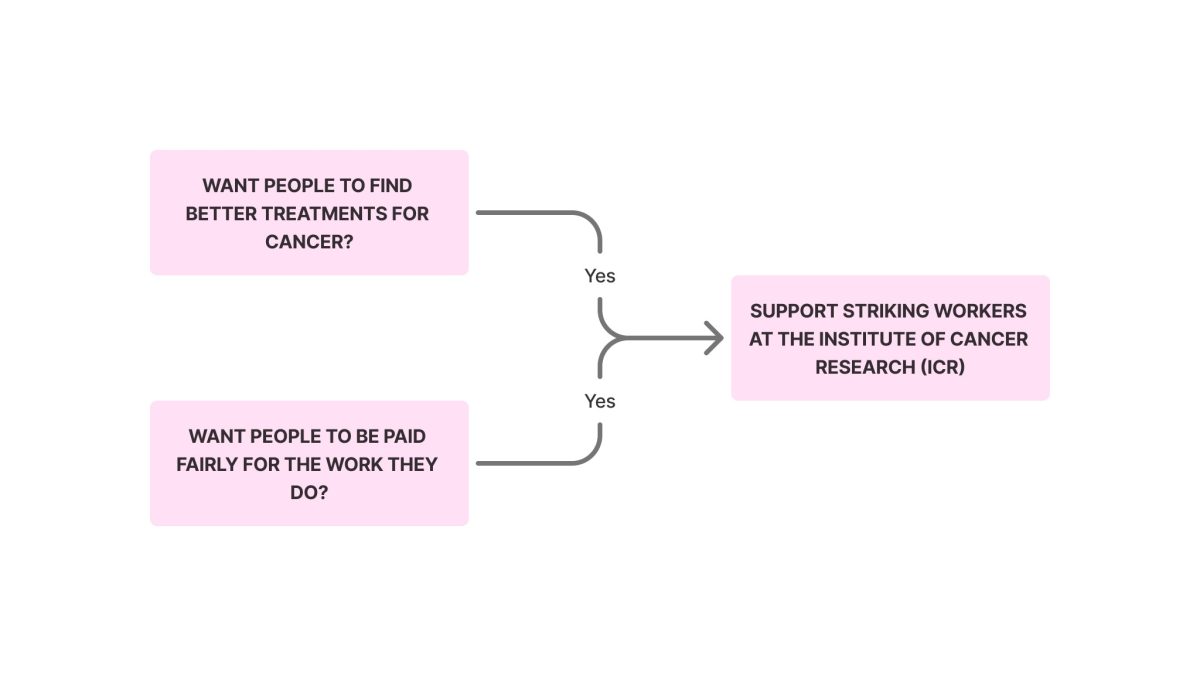
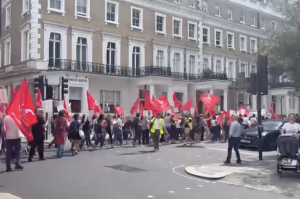
Until five years ago, ICR workers had never been organised on this scale. Starting with 100 unionised members, the branch experienced growth via workplace conversations, all-staff meetings, stalls and the aid of an experienced cadre. In recent months the union branch has exploded in growth, now 400 members. The strike is nine weeks deep and a 60-strong picket is out every day, demanding a return to the previous incremental wage scale, one that increases with experience.
A settlement should be achievable, given that ICR holds £37 million in unallocated reserves, whilst pay restoration would cost a mere £9 million. Despite this, at the time of writing management have only just brought a return to the progression-based salary framework back to the negotiation table, but lack of clarity over its meaning meant that members rejected it. That management have made this concession however – one that they previously argued was impossible – shows how they are on the back foot.
As is always the case, our visitors from the strike committee spoke of the radicalisation that such collective action elicits, even amongst those who are already politicized. It is in these moments that another world really does become possible. Workers who used to pass each other in corridors are now bonded through solidarity, those who preferred to remain in the background are seizing the megaphone to rouse their comrades.
An important aspect of the campaign has been to communicate with the general public, many of whom are under the assumption that ICR is simply a body of the NHS, and that doctors recently obtained pay rises so further action is unnecessary. Shock and outrage are common reactions when they hear about the actual circumstances workers are facing.
As part of this effort, workers identified a board member who is also on the board of the London Symphony Orchestra, leafleting inside the venue during a performance. From figuring it all out on the fly to innovating, it has been inspiring to hear about the journey everyone has been on.
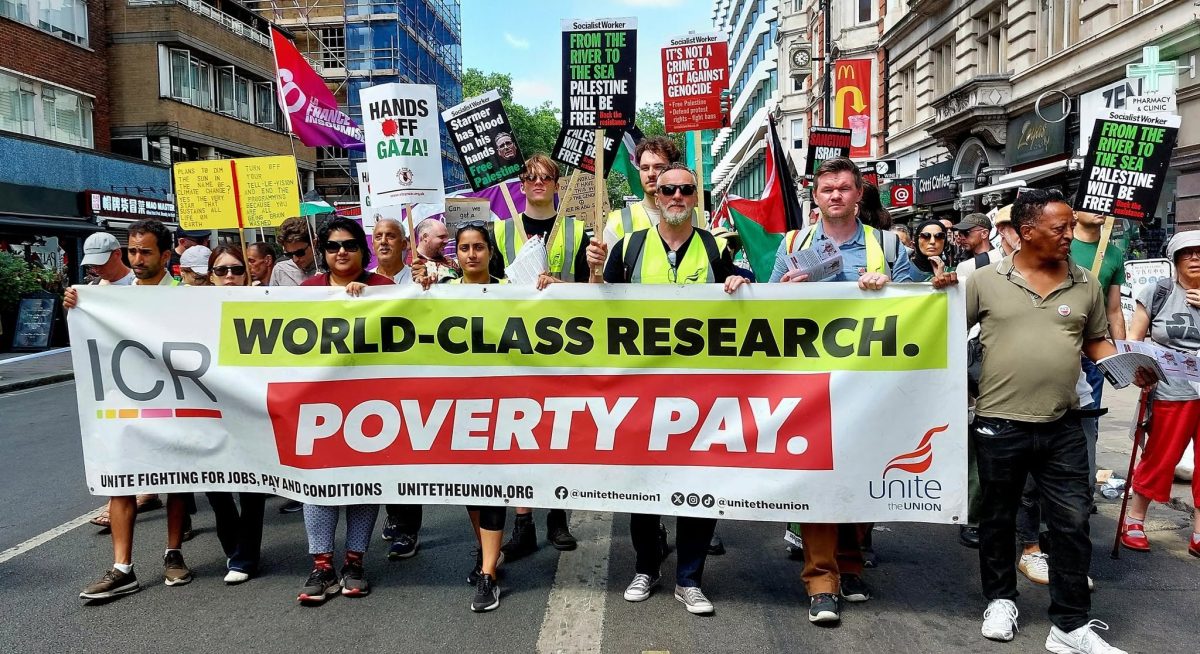
Beyond the general public, the union branch recognises the need for solidarity between struggles, rallying at the ongoing Palestine marches and broadening bonds of solidarity. There are also plans to engage more widely with health workers across London. This resonates strongly with rs21’s West London branch, where – in our current nascent phase – we feel the best use of our capacity is in helping link struggles together.
How we can support ICR workers
To keep the strike going, ICR workers need our support. The action is entering into a critical phase, with negotiations finally beginning. This is an encouraging turn of events, though the need to hold the line and refuse to accept the first, paltry offer is paramount. Whilst this goes on, management have brought in agency workers to cover jobs with health and safety regulations, thereby violating section 7 of the Conduct Regulations 2003. The union is prepared for further anti-union tactics including delays and misinformation. It is clear that every concession drawn will be fought for via the ongoing withdrawal of labour.
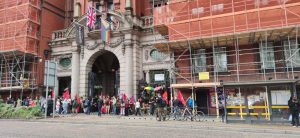
That ICR workers have come this far is a source of inspiration and education for us all. This is not simply “their struggle”, it is the struggle of all of us, one of many nodes of struggle across the globe. We can support the struggle by signing the petition to the ICR board of trustees, as well as making a donation to the strike fund. For those able, the picket is outside ICR Chelsea every day from 8-11am, and every Friday there is a rally at 10am that starts at South Kensington Station.
For more information on how you can help the striking workers, check out the Solidarity Pack created by Strike Map.

0 comments