
The far right’s embrace of neurodivergence
Robert Chapman •Robert Chapman writes on the cynical use of neurodivergence by the Far Right, laying out how it happened and how to fight it.
This article is a republished version from Robert Chapman’s substack, which is itself a written version of a speech Chapman gave at Festival of the Oppressed 2026.
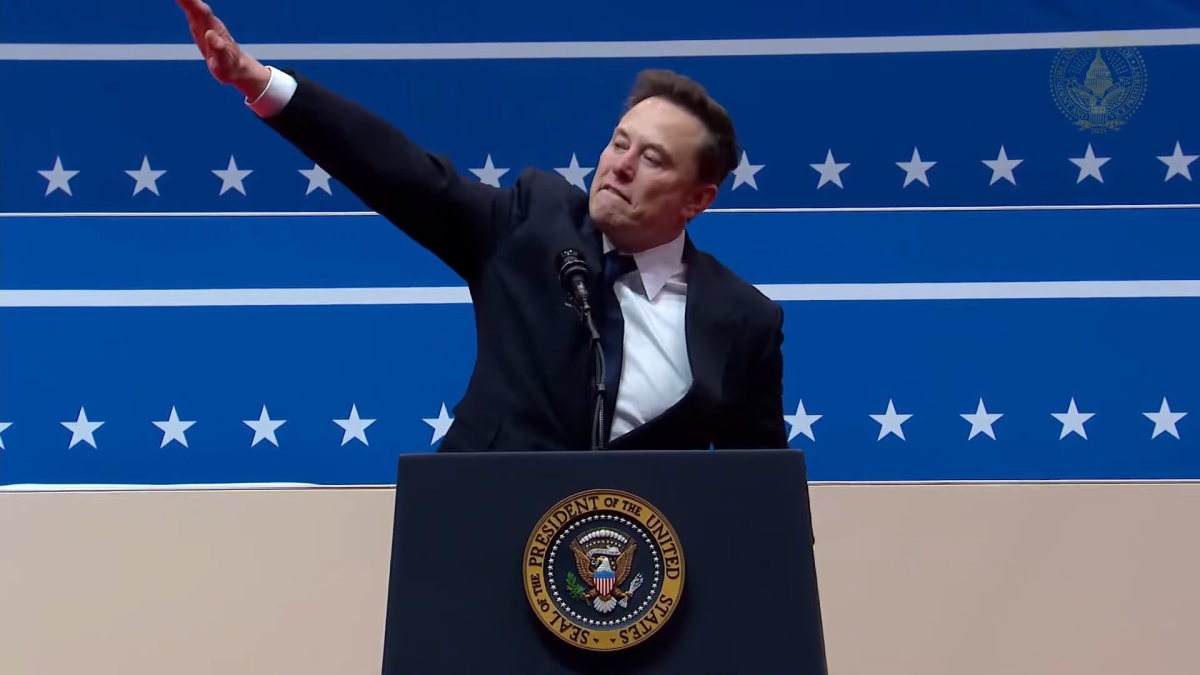
I’ve written here previously about how the far right mobilises experiences of ill health and disability for its own political ends. I’ve also written about the emergence of neuro-supremacist terrorism, whereby neurodivergent people, usually white cishet men, seek to take revenge on neurotypicals alongside their others targets, which may be women, migrants, Muslims, trans people, and so on. We have also all seen the way celebrity neurodivergents such as Elon Musk have now been embraced by the far right, in ways which would not have been possible historically. Today I want to unpack how all this relates in a bit more detail, looking at earlier fascist history and what has changed, to understand its significance.
We should note right off that fascism is itself typically seen as a normalising force, in the sense that it seeks to minimise diversity and exterminate divergence. This is widely known and well established. Yet this perspective alone overlooks how fascists have also spoken to people with concerns about over-normalisation. This is part of the overlooked mobilisation of health I have documented previously.
Consider a 1933 speech by Benito Mussolini, in which he analysed how capitalism had developed through different stages. Since 1914, he argued, it had finally entered a stage of what he called “supercapitalism”, which is roughly in line with what we now call Fordism. One central tenant of Mussolini’s diagnosis was astute:
“Supercapitalism’s ideal is the standardization of the human race from the cradle to the grave. Supercapitalism wants all babies to be born exactly the same length so that the cradles can be standardized and all children persuaded to like the same toys. It wants all men to don the very same uniform, to read the same book, to have the same tastes in films, and to desire the same so-called labor-saving devices. This is not the result of caprice. It inheres in the logic of events, for only thus can supercapitalism make its plans”
We might quibble over specific details, or what he means analytically by “supercapitalism”. Yet those points aside, the claim made in the quote is broadly correct. Indeed, it sounds like something the new left intellectual Herbert Marcuse could have written three decades later in his classic book One Dimensional Man. It also broadly aligns with the analyses developed within Marxian disability theory, including my own.
The key issue in this passage is not with Mussolini’s diagnosis but with his subsequently proposed solution, which is the fascist economic model of the corporate state. This does not end capitalism but rather seeks to minimise class conflict within capitalism, rejecting class struggle in favour of struggle between races and nations through a corporatist merger between classes.
As Marxists at the time knew, this would not in fact overcome the contradictions they were faced with. And as we now know in retrospect, fascism tended to increase capitalism’s normalising tendencies rather than diminish them. In this, it utterly failed to deliver on its promise to free the people of Italy from capitalist normative domination. Still, by correctly linking these emerging and oppressive normalising tendencies to capitalism, his analysis still seemingly managed to cut through in ways missed by liberal analyses and propaganda, which was fairly openly committed to maintaining capitalism even while complaining about the ways capitalism impacts people. At the time he made this promise, Mussolini was thus still popular in Italy and admired from abroad, viewed as providing a third way between capitalism and communism.
In some ways then the more recent far right embrace of neurodivergent leaders such as Elon Musk and notions of neurodivergent revenge against neurotypicals is not new. At least, symbolic embrace of those beyond the norm has, contrary to most popular understandings, historical precedent in earlier fascistic periods. And yet today there are some developments that are genuinely novel, and these are important to consider.
Before we get to this, we should note that fascism itself, according to analyses in both Marxian and the Black radical traditions, is not an aberration from liberal capitalism but its bastard child, destined to re-emerge as a threat whenever the promises of liberal racial capitalism are shown to be hollow. I mention this because I think it is important to recognise something similar when it comes to liberal neurodiversity and far right neuro-supremacy, which are in some ways opposed but also share a certain generative relation.
Perhaps the most important development in understanding since Mussolini’s analysis regards how, until recently, fascism could never have accepted people with hereditary disabilities as part of its community, let alone as its leaders. For the fascist associates hereditary disability with the decline of the health of the race, which is a central problem fascism promises to overcome. However effective Mussolini’s promise of overcoming the normalising tendencies of capitalism was as a form of propaganda, it would not, therefore, have included an even implicit promise of emancipation to those considered to have hereditary disabilities, since they were already presupposed to be outside the legitimate scope of the fascist community. Communities with hereditary disabilities could not therefore be mobilised in favour of his political project.
Today, by contrast, liberal neurodiversity as a theoretical framework has allowed us to acknowledge that some people have disabilities with a hereditary basis, while also acknowledging that there may be no inherent pathology. This itself has been an important progression, allowing many people to push back against default pathologisation and domination of normality. Yet the unintended consequence is that it opens up the space for an expansion of the fascist’s imagined community, which can now include people with neurodivergent disabilities, so long as these are not deemed inherently pathological. After all, if they are not inherently pathological, then there is no need for them to be excluded from the community even if their disabilities have a hereditary basis. Neurodivergents like Musk can even be leaders, who provide an ideal for other resentful cishet neurodivergent white men to aspire to, one which seems mainly about being wealthy, powerful, cruel, and impregnating large numbers of white women.
It is worth noting something here about far right ideals of neurodivergent revenge against neurotypicals. This idea too could only have emerged as a form of reaction from within a world where a liberal neurodiversity framework that implicitly sees neurotypicals as the privileged oppressors of the neurodivergent was already widespread. The reactionary can readily adopt that framework while declining liberal democratic values, thus reforming that framework to fit an ideal whereby white cishet neurodivergents can blame neurotypicals, but then enact their revenge through illiberal methods. Like liberal neurodiversity this leaves capitalism itself intact, diverting neurodivergent disaffection away from the underlying causes of that malaise.
In this, just as fascism is the bastard child of liberalism, this being the default political mode of racial capitalism, so too is the contemporary expansion of far right communities and mobilisations the bastard child of shifts in liberal political understandings of neurodiversity. Further, as I detailed in Empire of Normality, while the problem of normalisation has changed since the Fordist era, it has if anything worsened, meaning that more people are desperate for change. This is important because it means that the need for an offer of radical neurodivergent emancipation from the left, which will require mass movement building against capitalism itself, will increasingly be necessary not just as an alternative to liberal neurodiversity. It is also the only serious antidote to liberal neurodiversity’s bastard child, which has granted the far right community the conceptual tools for growth beyond its traditional base, beyond its traditional mobilisation of acquired trauma only. The politics of neurodiversity is thus no longer just about neurodivergent people ourselves (or our families) but also about how we can increasingly be mobilised for liberatory or reactionary ends that will impact everyone.







0 comments