
Reflections on International Workers’ Memorial Day
rs21 Art Group •For International Workers’ Memorial Day 2023, the rs21 Art Group was involved in producing and distributing a zine with Cut-Through Collective. In this piece, we reproduce pages from the zine, alongside the group’s reflections on the importance of marking the day. The full zine can be viewed alongside their other work on their website. Free copies are available on request.
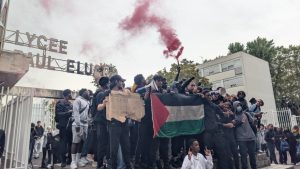
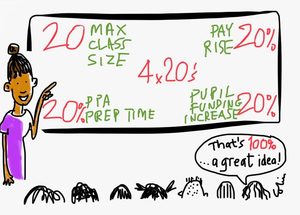
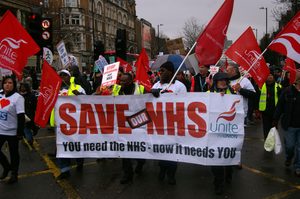
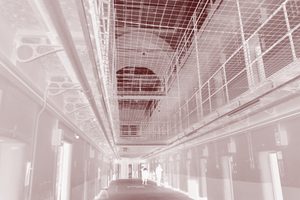
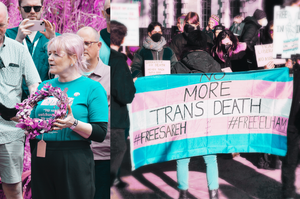
 Left image by Peggy Leaver; right image by Steve Eason.
International Workers’ Memorial Day (IWMD) takes place on 28 April each year. It is a day to mark the passing of those who have lost their lives while at work, and a call to improve the rights of workers everywhere. This year, the rs21 Art Group commemorated the day by putting together a zine with Cut-Through Collective, which we distributed in Glasgow and London across the May Day weekend.
This day was first marked in 1989 by the American Federation of Labor and Congress of Industrial Organizations, and has grown since then to find support on every continent. Details of this year’s actions were compiled through the work of Hazards magazine and the International Trade Union Confederation. The date is a time of memorial, to afford ourselves a space to collectively reflect on the meaning of death in our lives. It is necessarily also a time to protest against unsafe conditions imposed on us by the competitive drive between employers on the market. IWMD demonstrates a relation between these two processes, of mourning and the struggle for a better living.
Trade unions are at the heart of IWMD. Most directly, they are the main vehicle for expressing health and safety concerns. A trade union presence at work can set and maintain boundaries and expectations about what goes and what doesn’t. They can be part of creating a healthy workplace culture where unsafe conditions and practices will be reported and quickly fixed by the employer. Unions also protect whistleblowers from victimisation. When somebody is hurt at work, a union is usually the go-to organisation when seeking justice for workers.
While IWMD is for workers, ‘killed, disabled, injured, or made unwell by their work’, we believe that the spirit of the day must be open to include those who might not normally be seen by the trade union movement: Those with long-term disabilities, anyone who labours outside the formal economy such as sex workers, people struggling in difficult-to-organise and precarious sectors, those who perform domestic labour; no worker should be forgotten. IWMD can encompass the rights of those injured at work, and those who suffer the effects of unemployment due to those injuries.
 Writing by Shiraz Hussain, Photo of Glasgow Covid Memorial by Richard Matoušek
Workplace health and safety became headline news during the COVID-19 pandemic, and we are still living with the long-term impact of both the virus’s physical effects and the grief brought on by the preventable loss of life. We are familiar with the scandal of inadequately protected health workers, of teachers having to mobilise through their unions to avoid unsafe classrooms, of essential workers offered insulting pay rises despite having continued to offer their labour during one of the worst health crises in generations. The pandemic brought to light how workers’ lives are systematically devalued by governments and employers with other priorities.
Understanding this systemic threat to workers requires a global, anti-imperialist point of view. Multinational companies that grew from imperialist nations have a disproportionate influence over the health and safety policies of employers in states compelled to compete for their business. The most dangerous places to work are part of the colonial legacy. The fashion industry provides notorious examples of neglect, but also amongst its workers, a powerful model of international solidarity.
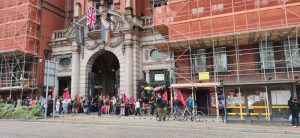
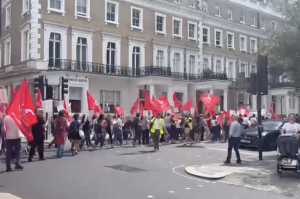
The Rana Plaza garment factory disaster took place ten years ago on 24 April in Dhaka, Bangladesh. One of the buildings collapsed, killing 1132 people. On 23 April 2023, the Rana Plaza Solidarity Collective coordinated a ‘Cost of Fashion’ walking tour and protest around central London and a memorial event in Tower Hamlets, East London, home to a huge part of the UK’s Bangladeshi population.
Organisers and activists raised the need to bring boycott campaigns through our trade unions as a way of holding multinational businesses to account everywhere they operate. Additionally, they pointed out that urgent efforts are needed to unionise workers in much of Britain’s garment industry, which exploits migrant workers particularly. This work requires a trade union movement that is politicised, internationalist, and confident in speaking to a broader range of issues than local pay and contract disputes. This is a movement we can build.
The Rana Plaza memorial events also included film screenings and an exhibition of photography by Taslima Akhter at the Kobi Nazrul Centre. Images of devastation at Rana Plaza, were given equal space to pictures and stories of the protests organised in direct response to the disaster. The IWMD slogan, ‘remember the dead, fight for the living’ was emphatically put into practice. Taslima’s photography and the Rana Plaza disaster also forms part of an animated short film, Primate, which made in collaboration with the No Sweat campaign and shown outside Toynbee Hall.
https://youtu.be/vwlxdbeVl1Y
(dir.) Kieran Turnbull and Patrcja Micek, Primate (b+w preview)
Collective commemoration is part of how human societies make sense of grief. Yet the demands of capitalist production all too often take this away from us. Longstanding communities with shared rites are broken up, getting time off work to grieve can be at an employer’s discretion, national holidays for collective grief are reserved for the death of monarchs who never represented us. It seems that in order to mourn, we have to fight. International Workers Memorial Day is an occasion for shared reflection, a basis for events that help us grow our strength for the fight ahead.
 Writing by Allan Struthers; Image by Corie McGowan


0 comments