
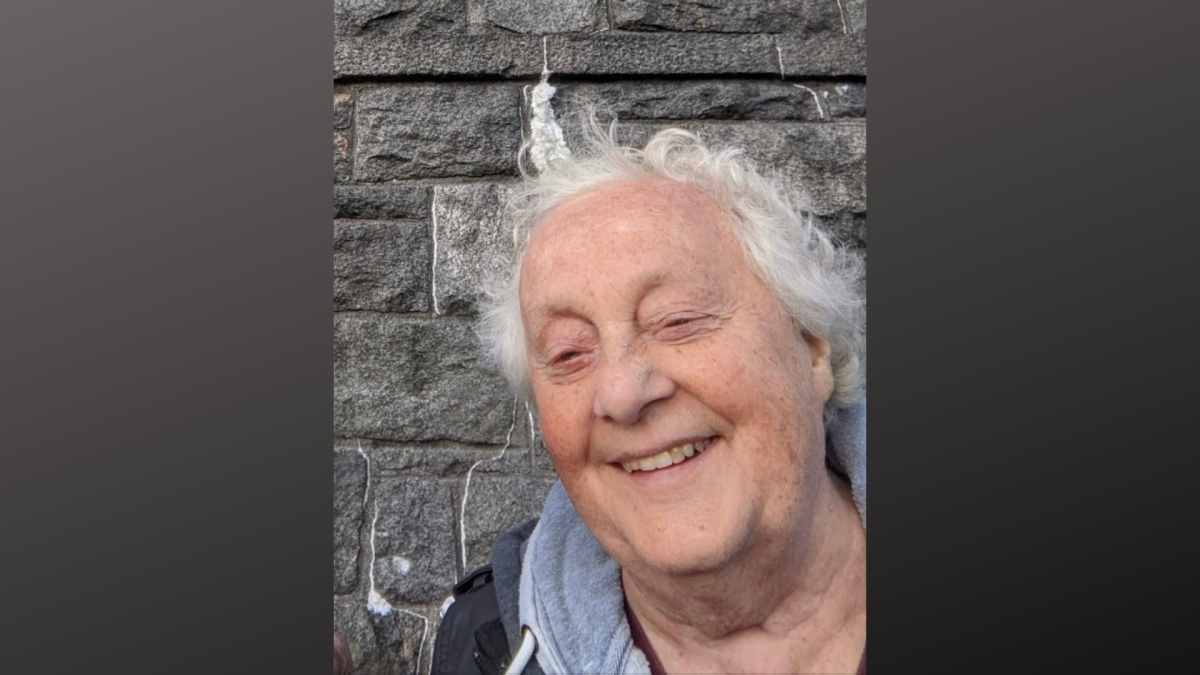
Obituary: Brian Parkin 10 May 1947 – 12 August 2026
Edinburgh rs21 comrades •This obituary in memory of our much-loved comrade Brian Parkin was compiled by Edinburgh rs21 members with contributions from Charlie Hore and Jonny Jones.
Brian Parkin was an active revolutionary and Marxist from the age of 16. Throughout his life he read constantly and was driven to act against exploitation and injustice, with a particular hatred of racism.
Over more than 6 decades he was an inspirational friend and comrade to so many people. Brian was always a fighter. This was demonstrated not least in his battle against cancer which lasted more than twenty years. He had an infectious smile, a wicked and acerbic sense of humour, and he touched so many people’s lives. He rose and fell with his class, and leaves so many powerful and inspiring memories
When Brian left school, he became an apprentice engineer. He worked in several factories in Leeds and from the beginning he was a troublemaker, getting sacked at least three times for his militancy. The 1970s were a time of bitter class struggle following the miners strikes in 1970 and from 1974 the rapid rise of the fascist National Front (NF). Brian played a leading role in the struggle against fascism. Charlie Hore met Brian in 1974 when he arrived in Leeds as a young student.
Charlie takes up the story:
Despite Brian’s short stature, he was a striking and charismatic figure, with that shock of red hair, that wicked smile and compelling speaking style. He had been in the International Socialists (IS) for four years, and was part of a group of young workers who were transforming the Leeds district of IS, among them his first wife Sheila, who we sadly lost last year, and who was very much Brian’s equal.
He had seemingly unlimited energy, and a profound commitment to both everyday activity but also the ideas and theory that powered it. He was a leading member both locally and nationally, through his work in the white-collar section of the engineering workers’ union (now part of Unite). And he was an internationalist and anti-fascist to the core of his being.
Leeds was plagued at that time by several small but particularly vicious groups of Nazis. Brian was central to our anti-fascist organising, in which he was absolutely fearless.
On occasion, IS members would work with the Association of Jewish Ex-Servicemen in pre-emptively shutting down Nazi meetings when they got wind of them. Brian was at the heart of that collaboration, which was quite hush-hush – he would often respond to enquiries about such events with his catchphrase ‘You don’t need to know that, comrade.’
One memory, in particular, stands out. In, I think, early 1976 the Socialist Worker sale had been attacked several times in Leeds city centre, and it was decided to respond in kind. We assembled in an old warehouse on the edge of the city centre which was then an IS office, and Brian stood in front of a flipchart which had a detailed plan of the square that we and the Nazis were contesting, with a pointer which he had acquired from somewhere. Once we had settled down, he tapped the flipchart and said with that trademark wicked grin: ‘I’ve always wanted to say this: ‘Pay attention, chaps’ in a wonderfully clipped posh officer’s accent.
The less said about the rest of that day, the better…but the plan worked.
This was just self-defence, though, and we needed a much broader strategy to isolate and defeat the Nazis. We built very large pickets of NF election meetings whenever they happened – one on a Saturday morning outside a school next door to the Catholic cathedral, where a very surprised wedding party came out to find themselves in the middle of several hundred anti-fascists. Brian was among those who struck up a chorus of ‘Here comes the bride’.
And then came Rock Against Racism and the Anti-Nazi League. Brian found punk quite antithetical to his own sense of style – he was of the ‘always have a better suit than the boss’ generation of mods – but he recognised its importance. And he threw himself into the Anti-Nazi League. He was a particular object of attack for the Nazis, both because he was so recognisable and because he was Jewish. On one occasion, after going into a pub near his home in south Leeds which had become a meeting place for the NF, he was beaten so badly that he was hospitalised for several weeks.
One of the high points of his life was his visit in early 1975 to Portugal to see the Portuguese revolution, then at its height, and to see the ideas he treasured so much come to life and take over the streets and workplaces.
He and I were not always personally close. We were of different generations, with different temperaments, and often argued, sometimes quite bitterly. I learned so much from those arguments, both about revolutionary politics in general, but also about the nature of comradeship. Comrades aren’t always your best friends, but they are the people you argue with and then fight alongside – and trust implicitly.
I have focused on antifascism and on internationalism, but whatever the activity was – and there was a lot of it – he was in the thick of it. The miners’ strike of 1984/85 was in some ways the fight of his life. He understood – better than a lot of us – that if we lost this would haunt us for decades.
In 1983, just before the miners’ strike Brian married Pat. In the following years – a very happy time for both, they had three daughters. Following the strike Brian withdrew from activity in the SWP (the new name for IS). In the late seventies encouraged by Peter Sedgewick he had gone to university – a decision that made it possible for him to work as a research officer for the National Union of Mine workers.
Pat was killed in a car crash in 2004 – devastating for Brian and his children. And just a few weeks later he received a diagnosis of prostate cancer. It was a very hard time but within a year Brian resumed political activism and re-engaged with the SWP.
Brian was no respecter of hierarchy or automatic follower of party lines. He played a leading role in the opposition to the SWP central committee in 2012-13. In 2014 he became a founding member of rs21. Jonny Jones describes how Brian responded to the challenge of building anew:
Brian threw himself into building the new organisation rs21 with gusto, becoming central to building a branch in Leeds. He became the editor of a local socialist paper called the Northern Star. Initially intended to bridge a gap before rs21 launched a national publication, it ran for 16 issues between 2014 and 2017 and carried articles from several rs21 members, as well as international contributors such as Eamon McCann.
Brian made an enormous contribution to rs21’s publications, writing dozens of articles for the website and magazine in which his formidable research and technical knowledge were placed at the service of working-class emancipation. He wrote about climate change and energy, imperialism and militarism, migration and racism, industrial struggles, as well as rediscovering episodes from workers’ history. Across the remarkable range of his writing, there were clear connecting threads of internationalism, a hatred of the waste and cruelty of capitalism, and an enduring confidence in workers’ capacity to change both themselves and the world through struggle.
Brian always argued against seeing climate catastrophe as merely an environmental problem. In Petrocide: Hydrocarbons, Conflict and Climate Chaos, co-written with Jonny Jones and first presented at the Historical Materialism conference in London in 2015, they traced the deadly convergence of fossil-fuel dependence, speculative energy markets, imperialist war and climate catastrophe. Brian carried this argument into two important rs21 pamphlets, Unite against Trident and Diversify or Die. Both rejected the false choice between defending workers’ livelihoods and opposing militarism. Workers’ skills and industrial knowledge should instead be turned towards renewable energy and socially useful production, but such a transformation would require rank-and-file organisation, democratic control and a fight against employers, the state and the trade union bureaucracy.
His series on migration in the age of imperialism’s “four horsemen” connected the mass displacement of people to war, conquest, poverty and environmental destruction, while refusing the distinction between “deserving” refugees and supposedly lesser economic migrants. That same refusal to allow the right to turn working-class insecurity against migrants ran through a piece co-written with Anindya Bhattacharyya. They dismantled UKIP’s depiction of migrant workers as stealing construction jobs, showing instead that Eastern European workers were disproportionately concentrated in the most dangerous and insecure work, while contractors, agencies and umbrella companies used casualisation, bogus self-employment and weakened safety standards to drive down conditions for everyone. Brian’s anti-racism was grounded in his insistence that the real division was not between British and migrant workers, but between workers and those who profited by setting them against one another.
The same conviction animated Brian’s essential article on the lessons of the Fawley refinery dispute. He contrasted the poisonous “British jobs for British workers” slogan raised at the Lindsey Oil Refinery with a strike in which British-born direct and contract workers fought for migrant subcontractors to receive nationally agreed pay and allowances. Their victory increased those workers’ pay from £48 to £125 a shift, backdated it, and brought them into the union and the stewards’ committee. These tactics spread to Teesside, where activists produced multilingual leaflets, worked with priests, imams and local Asian and migrant-welfare organisations, and drove out attempts by the BNP and UKIP to intervene. Brian was clear that the antidote to nativist racism was a fighting unity. When employers used migrant labour’s insecure status to undercut agreements and divide workers, the answer was to organise everyone on equal terms. Collective struggle could overcome divisions between migrant and British-born, skilled and unskilled, direct and subcontracted workers, while revealing the enormous power they held at critical points in production.
Brian also wrote workers’ history as someone who had lived it. His accounts of the Great Miners’ Strike, Orgreave and the closure of Kellingley preserved both strategic lessons and the texture of working-class life. That warmth was especially present in his obituaries for miners’ leaders Davey Hopper and Tyrone O’Sullivan. Brian wrote candidly but compassionately, capturing their humour, personality and contradictions as well as their courage. He showed Hopper’s prejudices transformed through the solidarities of the strike, and O’Sullivan’s gentleness joined to fierce militancy – from saving Tower Colliery to embracing solidarity with lesbians and gay men. These were not plaster saints, but people enlarged by the struggles they had been immersed in. Brian’s portraits of them revealed a great deal about his own socialism: tough-minded but generous and sustained by faith in what working class people could achieve together.
Following his time with NUM Brian had developed a deep understanding of energy systems and the workings of the construction industry. He made good use of this knowledge in working with rank-and-file activists in Unite – regularly producing briefings and reports that were a model of clear, accurate information and sharp political analysis. From around 2015 he started travelling up to Scotland regularly – working with activists in the Scottish Construction Rank and File Group. Together with members of the R&F group, some Scottish rs21 comrades and other climate activists he was the prime mover in the foundation of Scot.E3 (Employment, Energy and Environment).

In 2019 Brian moved from Leeds to Edinburgh. His cancer had spread and he was unable to get the treatment he needed in England. But it was available in Scotland where he already had good friends and political contacts. In the next few years Brian had many ups and downs, but he never complained despite rotten side effects from his otherwise successful treatment. He made a deep impression on his comrades and on a much wider layer of political activists. In particular, he played a big part in the Palestine movement – and on more than one occasion he spoke at Edinburgh solidarity rallies just a couple of days after coming out of hospital. He played a full and active role in the Edinburgh rs21 branch, and he wrote prolifically for the rs21 and Scot.E3 websites and for the Scottish Rank and File.
We will all miss Brian hugely – not just for his knowledge, political judgement and wisdom but for his company, his love and kindness, his jokes, his conversation and his love of life, music, art, books and the natural world.
3 comments
he was a brave and courageous fighter. I was there when he blew the whistle for the attack on the NF in Leeds. unfortunately the SWP hadn’t planned on what happened next. I ushered off the streets into near by cafe. . Brian stayed behind and the fascists attacked just as the police arrived. Who seeing a small Jewish man being attacked by thugs protected him.
Could rs21 publish a collection of Brian’s work?
Brian was all that.
one correction:
Northern Star first issue was 5th April 2014.
Last issue – issue 18 was 7th October 2016.
I and other comrades are working on creating a complete archive of the complete run that will be made publicly available.