
Report from the Scottish Your Party conference
rs21 members in Scotland •rs21 members in Scotland report on the inaugural conference of Your Party Scotland.
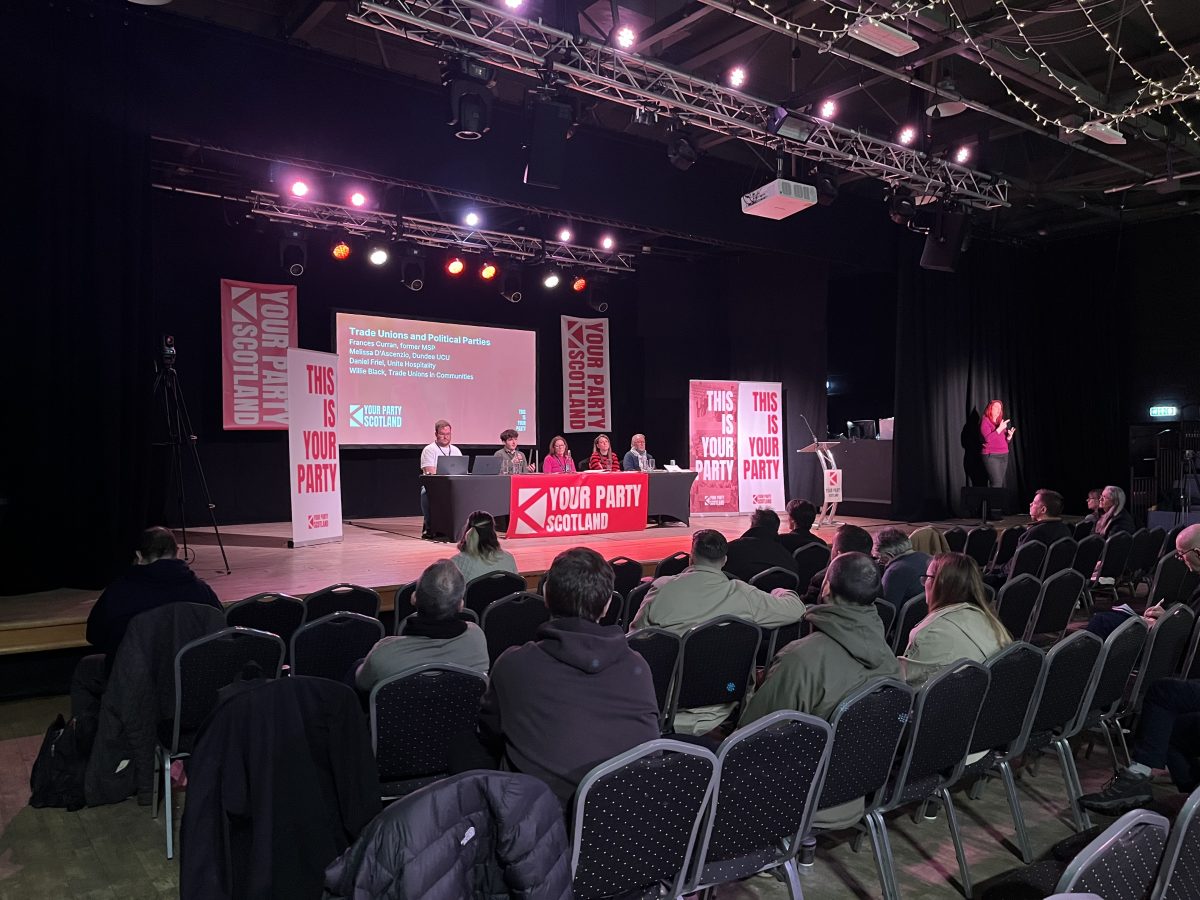
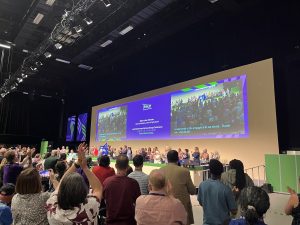
The inaugural Your Party Scotland conference took place in Dundee over the weekend of 7/8 February. It was a very different event to the first Your Party conference in Liverpool. While it was reliant on Your Party central for initial communications and software for sharing agendas, motions and enabling votes, it was planned and organised by volunteers from proto-branches around the country. Over the weekend, and despite occasional interruptions by software glitches, the chairing was excellent, relaxed, inclusive and responsive to suggestions from the floor of the conference. A packed and complicated agenda was completed ahead of time but with no sense of things being railroaded through. At the peak on Saturday around 400 people were in the room and around 50 online – numbers dipped on Sunday with around 150 still present towards the end.
The headline from the weekend’s debates was the decision, on a 60-40 vote, to ‘Engage and consult with the CEC with regards to presenting an option to become an organisationally independent sister party of Your Party.’ The conference also voted to actively support Scottish independence rather than the alternative which advocated supporting the right of self-determination but not taking a position for or against independence.
There was strong support for grassroots democracy and decision making based on debates in branches. The conference voted for collective leadership (61 per cent) and four-fifths of participants voted for national officers to be directly elected by the membership. There will be term limits for public office holders and policy development at a local level will be decided at branch meetings. The healthy respect for local democracy over centralisation was also reflected in impatience for Your Party central to share the data that would allow proper communication with everyone who has signed up in Scotland and enable the rapid development of branches.
The conference debated the issue of dual membership. Four-fifths of all those participating voted to overturn the formulation agreed at the Liverpool conference where the Central Executive Committee was tasked with establishing a list of approved organisations. In contrast YP Scotland now has a default position that membership of other left-wing organisations is compatible with membership of YP. The new Scottish Executive will be able to proscribe membership of particular organisations but only if there is evidence of incompatibility with the party.
In May there will be elections for the Scottish Parliament. For a party with no formally established branches this is a real challenge. In a fierce debate some YP comrades argued for standing everywhere, others argued for a realistic assessment of what’s possible and warned of a danger of crashing an embryo organisation under the weight of the bureaucracy that standing everywhere would entail. There were also serious contributions and differences over the relationship between community organising, building deep roots in the working class and electoral campaigning. In the end the conference voted for limited engagement on the regional lists in May with the decision to stand or not being down to local knowledge and decisions by the branches in each region. More than 80 per cent voted that Your Party councillors (YP Scotland has ex-Green Party councillors already in Glasgow) and members of parliament should never vote for budget cuts.
YP Scotland now has a political statement that is explicitly anti-oppression and anti-imperialist. Importantly, delegates gave a positive reception to support for trans rights expressed by speakers from the organising group and the conference floor, and notably by Zarah Sultana at the beginning of the Sunday afternoon. Jeremy Corbyn also attended for the first Sunday session but had left by the time that Zarah spoke. Both founding members got good receptions. The fault line between the Corbyn camp and the ‘grassroots left’ in YP was not reflected at the conference.
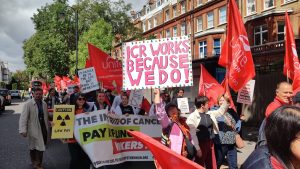
There were excellent late morning sessions on both days of the conference. On Saturday we heard from speakers from Die Linke in Germany, from Paul Murphy, People Before Profit TD from Ireland, from Partija Radikalne Levice from Serbia and Anticapitalistas from Spain. The Sunday session was given over to grassroots organising and we heard from strikers at Village Hotels in Glasgow and Dundee University and from Willie Black representing Trade Unions in Communities which developed its first two community hubs in Edinburgh but is now launching in Falkirk too.
There was powerful evidence at the conference of a collective desire to build a mass socialist party. And many of those present were absolutely clear that that shouldn’t be Labour Party 2.0 or the Scottish Greens 2.0.
We came away from the conference with a sense that it had been a real step forward in the development of socialist organisation in Scotland. However, it remains a fragile organisation. The level of organisation in proto-branches around the country is variable. There are a small number of inspirational initiatives. The (Edinburgh) Leith proto-branch has been very active working on a variety of community organising initiatives and the Leith model is being followed closely by other activists. However overall development has been stunted by lack of access to data. Lack of progress over many months has led some people who initially became involved in proto-branch development to drop out or at least play less active roles. The delays and frustration have led to a situation where the conference was too male and didn’t engage enough young or racialised people.
We are faced with building branches very close to and during an election campaign. And at the same time liberating the data that will enable YP Scotland to become an independent sister party of YP in England and Wales. Some of us remember how RISE, the new socialist party, born out of the radical independence campaign, foundered and then died after standing everywhere in Scotland and achieving a derisory vote. Circumstances have changed but the stresses and tensions will be the same. Under these pressures there is a real danger of failing to claw back the mass base that was lost in the dysfunctional launch of the party.
To overcome this there will need to be a strong emphasis on rebuilding trust, demonstrating to the many social movement activists who have held back from joining Your Party that it genuinely is a new model of aspirant mass socialist organisation, taking on Reform and fighting for independence through a new kind of insurgent grassroots politics.
0 comments