

Protesters against the proposed extradition law
Revolt in Hong Kong
Charlie Hore •Charlie Hore provides some background on the magnificent protest movement in Hong Kong, and discusses the strategic dilemmas ahead.
How do you top a march of a million people? Organise a march of two million, followed by a stay-away/strike. And what then? That’s the question currently facing everyone who has participated in the tumultuous events in Hong Kong this month.
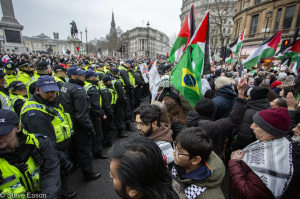
The protest movement that erupted onto Hong Kong’s streets has been a glorious reminder of the power of mass action and defiance of authority. The protesters have shown determination, invention, solidarity and a willingness to fight back against police brutality, and in the process have inflicted the heaviest defeat on Hong Kong’s rulers since the reversion to China in 1997.
The numbers may be somewhat exaggerated, and the strike and stay-away seems to have been patchy outside schools and colleges, but there’s no question that this is the biggest protest movement in Hong Kong for decades. One of the best illustrations of the movement’s scale is the video of a sea of demonstrators parting to let an ambulance through and then coming back together again, which it’s claimed has had over four million viewings.
The immediate trigger for the protests is a proposed new extradition treaty, which would crucially allow extradition to China. This may seem like an unlikely cause for such a huge explosion of anger, but it draws from what one writer supportive of the new law admitted is ‘a deep well of mistrust of China’.
When Hong Kong reverted to Chinese rule, after 100 years of being a British colony, it did so under an arrangement called ‘one country, two systems.’ What this means is that while Hong Kong is an integral part of China, it retains its own laws and local government, and allows citizens crucial democratic rights absent anywhere else in China – a partially elected government, freedom of the press, freedom of assembly, legal trade unions.
One consequence is that it is legal to speak, write and demonstrate about the mass movement of 1989 and the massacre that ended it – which would get you arrested anywhere else in China. Every year since 1989 Hong Kong has held a huge commemoration rally on 4 June, and undoubtedly many of those who were on the streets earlier this month had taken part in this year’s rally, which drew some 180,000 people.
China has repeatedly encroached on those freedoms in recent years, most notably with the kidnapping of five employees of a publisher which had published unflattering biographies of Xi Jinping and other Chinese Communist Party (CCP) leaders. One of them – actually a Swedish citizen – was abducted from a hotel in Thailand and surfaced on a local TV station in China ‘confessing’ to involvement in a fatal traffic accident and smuggling banned books.
That encroachment has been part of a general tightening of state controls under Xi Jinping, which has seen increased harassment of pro-worker NGOs, and arrests of feminists, Marxist students and strike supporters. Hong Kong has long been a base for supports of workers’ and other struggles in China, and recent years have seen increased links among activists across the border – another reason why many in Hong Kong are so sensitive to any moves to increase China’s control.
Five years ago, the Occupy Central movement ended with a win for the government, which they followed up by jailing numbers of leading activists, and this latest round represents a crucial recovery from that. As one columnist noted:
Our youth are despondent, frustrated and angry about the lack of upward mobility in a city where the wealth gap is obscene, home prices are unaffordable and the rich and the powerful seem to get away with everything. They feel nobody is listening to them…the way the bill has been bulldozed forward feeds right into their perception that this government is more committed to keeping Beijing happy than protecting their interests.
The movement exhibits a curious mix of detailed organisation – marshals, first-aid stations, food and water supplies, even clearing away rubbish – with a lack of any clear central leadership, whether organisations or individuals. To an extent this is wariness after the previous repression, but it’s also a political choice, as one Hong Kong socialist described:
In this 2019 movement, we are witnessing the continuation of a trend already very visible in 2014 — namely, the strong feeling in favour of decentralized and leaderless actions. The communication revolution makes coordination much easier now and rigid organization less necessary.
But that also makes it more difficult to have open discussions about strategy and to hold leaders and organisations accountable. The movement has won key victories in forcing the government to suspend the bill, and the Chief Executive to personally apologise, as well as in getting charges dropped against most of those arrested. However, she remains adamant that she will not drop the bill, nor resign as many have demanded. If the movement is to build on this important first victory, it will need a clear strategy for escalation.
It looks as though the next big action will be a demonstration on 1 July, the anniversary of Hong Kong’s reversion to China, and a public holiday. While this will be an important opportunity to get the movement back on the streets, there is a danger of it becoming simply an anti-Chinese demonstration, which would play into the hands of the CCP.
The liberal pan-democrats and the growing right-wing ‘localist’ groups both want to play down class divisions and make out that all in Hong Kong share a common interest in opposing China. The left has to counter by arguing that Hong Kong’s capitalists have long collaborated with the CCP in trying to restrict democratic rights, and that Hong Kong’s workers have a common interest with Chinese workers in opposing both.




0 comments