

Image: Steven Straiton/Flickr
Robber baron Ineos takes over Forties fields
Brian Parkin •Brian Parkin comments on the extension of chemical giant Ineos’ control over the Scottish energy economy and calls for radical, democratic and green working class resistance.
Last week British Petroleum (BP) announced the probable disposable of its oil and gas sector infrastructure in the Forties oil field, the largest oil field in the North Sea, to the union-busting Ineos, operator of the Grangemouth refinery in the Firth of Forth, Scotland. Just over a year ago Ineos also acquired the ownership of a Russian-owned North Sea gas field as well as renewing its licence options on over 1400 square kilometres of Scotland’s Central Belt – plus additional options in Dumfries and Galloway – for the purpose of shale gas extraction. All this, plus the new terminal and storage facility at Grangemouth – underwritten by the taxpayer – for the landing of US shale-derived liquefied natural gas (LNG) in vast amounts.
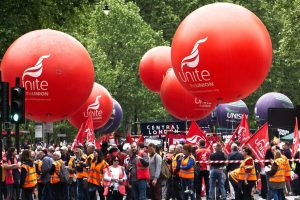
This now gives Ineos a virtual stranglehold on the Scottish hydrocarbon energy economy. The response of the union Unite has been swift in calling for ‘questions to be asked’ about the latest Ineos acquisition. However, to go beyond asking questions requires a different response than the debacle at Grangemouth in 2013. Unfortunately the recently-published book The Battle of Grangemouth – the union’s ‘inside’ account of those events – suggests that lessons haven’t been learnt.
What is at stake is Scotland’s opportunity to realise a green economic resurgence based on the democratic mobilisation of its workforces in construction, shipbuilding, electrical and mechanical engineering, petrochemicals, power distribution and the offshore sector around a coherent and radical renewable energy infrastructural strategy. A strategy that can combine the massive know-how potential and genius of the workforces with the energy of community fuel poverty and housing campaigns to redefine energy within the context of environmental responsibility and social need.
This means raising the issues of democratic social ownership of the entire energy chain. It means raising the vision of good, secure jobs in the service of harnessing Scotland’s almost infinite sources of renewable energy. It means that now, in a period of dying, sclerotic and vindictive capitalism we demonstrate the ‘actuality’ of the means of production and the democratic potential to revolutionise society. And in Scotland with another independence referendum in prospect, the ground for such radical ideas could not be more fertile.
An essential first step should be to call for the entire assets of Ineos to be taken into democratic public ownership, as a first measure in opening up the whole issue of energy as a key to greening and democratising the Scottish economy.
Utopian? Well let’s see – but the time of mourning is over. Time to fight.





0 comments