
Whose World Cup?
Sam O •In this first article of a series Against Modern Football, Sam O argues that the corruption and authoritarianism surrounding the World Cup are not aberrations but expressions of how capitalism exploits the game – and that the terraces remain a site of political struggle.
Every four years, billions of people around the world look forward to the FIFA World Cup. For many, it is the pinnacle of sporting brilliance, or just an excuse to have fun with friends and family.
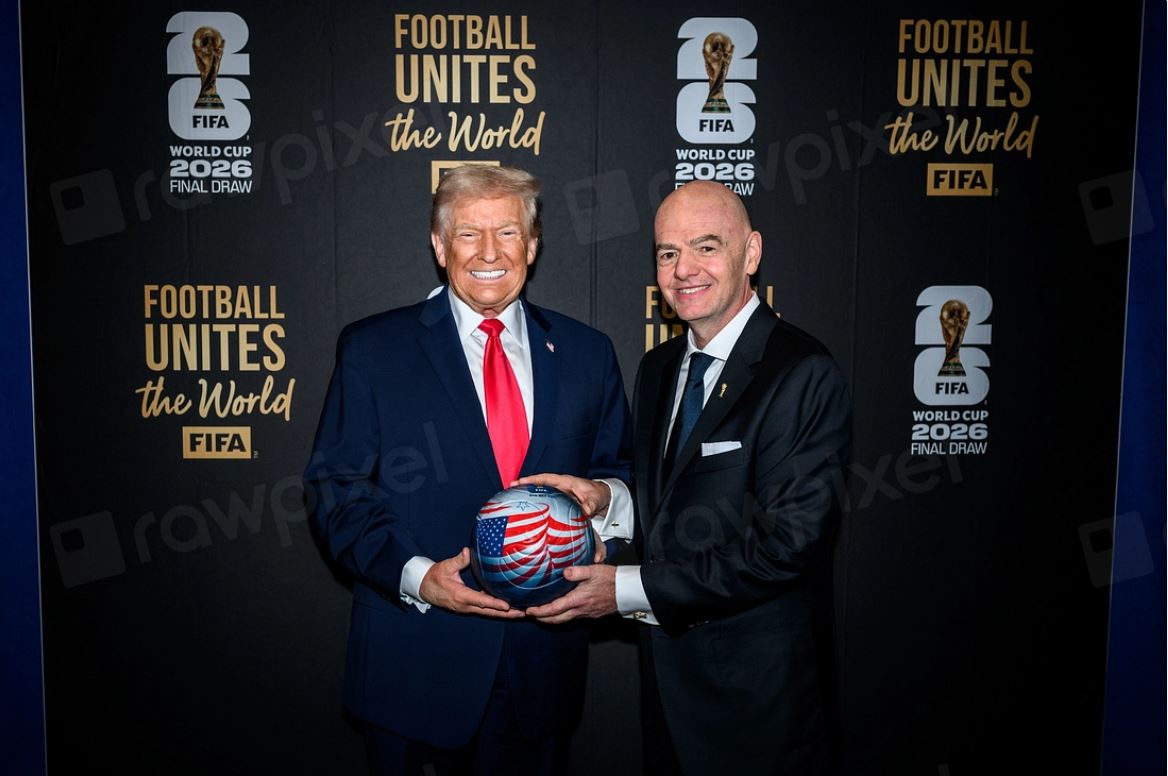
Yet the 2026 tournament, hosted by Mexico, Canada and the US, has been fundamentally soured – from astronomical ticket prices and ICE agents patrolling stadiums to heavy-handed border restrictions targeting players and fans from nations such as Iran. This is despite Trump securing a ‘FIFA Peace Prize’ after being snubbed for the Nobel Peace Prize.
The reality is stark. Trump even directly intervened with FIFA executives to overturn a red card suspension for US striker Folarin Balogun. When even UEFA, hardly an ethical governing body, accuses FIFA of crossing a ‘red line’, it is clear something is rotten.
But it is wrong to view this as a case of ‘bad apples’ or unique modern greed. The corruption, authoritarianism and rampant environmental destruction embedded in this tournament are not accidents. They are how capitalists utilise sport for their avaricious agenda.
Marx said: ‘The executive of the modern state is but a committee for managing the common affairs of the whole bourgeoisie.’
He argued that the capitalist state is a committee for managing the everyday matters of the ruling class. The World Cup is an extension of this. Using football to sanitise a regime’s image – better known as ‘sportswashing’ – is a deliberate strategy of ideological state distraction and capital accumulation.
This has a long, bloody history. The second World Cup, in 1934, was weaponised by Benito Mussolini to showcase the ‘superiority’ of fascism, with Italian players forced to give a fascist salute. He also allegedly chose the referees.
In Brazil in 1970, beyond the beautiful football of Pelé, the Cup was cynically exploited by General Médici’s brutal military regime to whip up nationalistic tensions while the state actively tortured and murdered political dissidents.
Most notably, the 1978 tournament in Argentina was used by General Videla’s military junta to mask the ‘Dirty War’, which saw 30,000 citizens disappear. Matches at Buenos Aires’ El Monumental stadium were played just a ten-minute walk from a notorious torture facility.
In the modern game, this dynamic has only intensified alongside neoliberal globalisation. The infrastructure for Qatar 2022 was built on the backs of exploited migrant labour, resulting in an estimated 6,500 worker deaths. Today, the US, Canada and Mexico use the tournament to distract from their own imperialist realities: the cages of ICE detention centres, the ongoing displacement of Indigenous peoples, the violent repression of workers’ struggles and more.
Marx’s theory of commodity fetishism describes how capitalism takes something deeply human and collaborative, like football, and transforms it into a commercial product. Capitalism has increasingly made football a multi-billion-dollar vehicle for corporate sponsorship.
This trajectory shows no signs of slowing down. The next World Cup, spanning Portugal, Spain and Morocco, is already mired in environmental controversy and will undoubtedly be used to paint over state violence and imperialist suppression in the Western Sahara, Catalonia, the borders of Melilla and more.
Saudi Arabia, which has been on a sportswashing rampage, will host the 2034 World Cup. And at this point, I wouldn’t be surprised if Israel, North Korea or Mordor hosted in 2038.
As football fans, we do not need to feel guilty for loving the sport. The passion, solidarity and community found in the stands belong to us. But we must reject the nationalism that tournaments like the World Cup demand of us. The ‘get behind your country’ or ‘club and country’ rhetoric is a dangerous trap designed to divide workers along national lines while the ruling class lines its pockets.
Enjoy the football, but recognise the pitch and terraces as a site of political struggle. If we want to reject and overthrow modern football, we have to fight the system that commodifies it.
This is the first part in an ongoing rs21 series of articles, Against Modern Football.


0 comments