
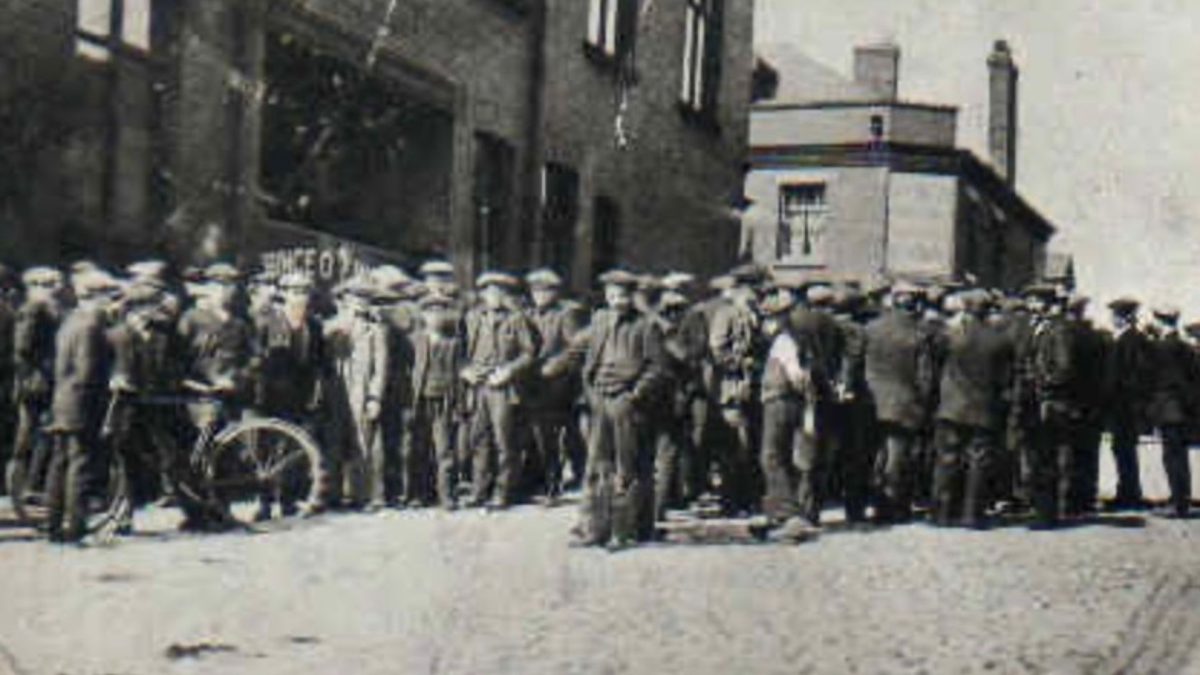
One hundred years since the General Strike
Andrew Stone •The General Strike of 1926 is one of the great events of working class history. Andrew Stone explains the context and analyses the political causes that led a movement that was growing in militancy and strength to defeat.
As we mark its centenary, many will treat the General Strike of 1926 as a historical curiosity. Triggered by a dispute in the now-obsolete coal industry, we will no doubt see some shaky black and white newsreels of pickets playing football with coppers, and tributes to the essentially moderate nature of the ‘British character’ winning out. So does it provide any worthwhile guidance to socialists today?
I believe it can, because although in many respects the terrain on which the seismic events of the strike played out has changed, many of the same questions are posed for activists now: how do we relate to movement leaders? How can we mobilise the latent economic power we have as workers? How can we forge an alternative media that undermines the propaganda of government and corporations? In May 1926 millions of trade unionists, their families, communities and other allies grappled with these questions on the streets of Britain.
While it began as a bureaucratic mass strike, throughout 1926 it contained the seeds of something more revolutionary. No honest account of the battle can deny that it led to a severe defeat for our side, but sometimes defeats can be the best teachers. And they are rarely pre-ordained – with a different strategy, 1926 might now be remembered as a major turning point that shifted historical forces profoundly in our favour. Examining why it didn’t is a worthwhile exercise.
Background to the strike
I have written previously on the long-term background to the strike, culminating in ‘Red Friday’ on 31 July 1925, when transport and dock workers were primed to implement a nationwide refusal to handle coal. The Miners Federation of Great Britain (MFGB), backed by other major unions in the Trades Union Congress (TUC), were resisting mine owners’ plans to drive down their wages, and abolish their minimum wage and national agreements. An uncharacteristic display of mettle from the union leaders had forced Stanley Baldwin’s Tory government to provide a nine month subsidy to miners’ wages and to form a Royal Commission under Liberal Sir Herbert Samuel to investigate the future of the industry.
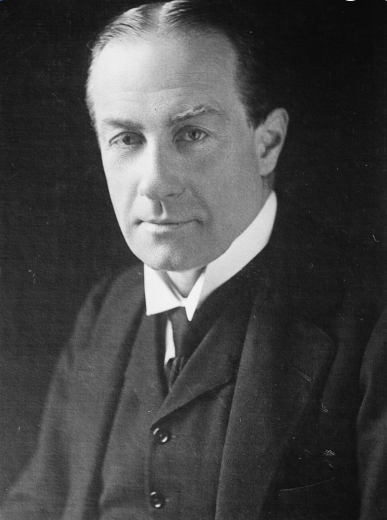
It should have been obvious to anyone that this was only a temporary reprieve. But that would be to overestimate both the intelligence and the courage of the trade union bureaucracy. The government was well-prepared. It formed the Organisation of the Maintenance of Supplies (OMS) – a 100,000-strong scab army – and was told in October 1925 that Fascisti would be available in an emergency. The TUC, by contrast, made no concrete plans for a General Strike until 27 April, as TGWU leader Ernest Bevin later admitted. This was just days before the government subsidy was due to run out and miners were to be locked out of the pits.
The TUC remained eager to settle, ready to accept wage cuts for the miners in exchange for hollow promises of future reform. Yet at the 30 April negotiations – held without the miners’ leaders – NUR leader Jimmy Thomas produced an OMS poster declaring a State of Emergency. Baldwin – the supposed man of peace – had no choice but to admit government involvement.
Even so, negotiations continued even after an overwhelming vote for a general strike by the TUC officials at Memorial Hall on 1st May. They apparently saw this as a rerun of Red Friday, hoping that brinksmanship would bring an improved offer from the government that could be sold to the miners as a victory, and marginalise the radicals within their unions. As TUC acting General Secretary Walter Citrine concluded his letter to the government on the Special Conference vote:
I am directed to say that the General Council will hold themselves available at any moment should the government desire to discuss the matter further.
It was the government that ultimately drew a line under TUC attempts to settle. The trigger was NATSOPA members at the Daily Mail refusing to print a hostile anti-strike story – ‘For King and Country’ – which branded the forthcoming General Strike ‘a revolutionary movement’ aimed at ‘destroying the government and subverting the rights and liberties of the people.’ TUC officials tried to disavow this spontaneous act of class solidarity, but to no avail.
A bureaucratic mass strike
Revolution, needless to say, was not what the TUC had in mind. In fact, they didn’t even declare a General Strike, but a partial ‘National’ one. They called out initially approximately 1.75 million workers in transport, printing, iron and steel, power stations, building and the chemical industries, to join the million miners locked out by the mine owners, but left ‘in reserve’ workers in engineering, shipbuilding, telecommunications and public services. After an initial chaotic flurry, Bevin was put in charge of coordinating arrangements.
The wave of solidarity from workers with no immediate stake in the miners’ claim was remarkable. Eighty-two different unions had to work out how to implement often confusing general instructions. For example, power workers were instructed to prevent industrial usage while continuing domestic lighting, an often impossible distinction to implement, and builders working on housing and hospitals were excluded from the strike. Taxi drivers were not called out with the near-universal initial stoppage of buses, trams and trains, but joined them anyway. Pickets were initially large, and despite the government’s refusal of the TUC’s offer to ensure the movement of vital supplies, many local Councils of Action imposed their own permit systems. The London docks virtually shut down.
Yet the message the TUC officials sent to union members was to display supine passivity. The General Council aimed to keep rigid control over all information about the dispute, instructing local officers and secretaries ‘to confine their statements on the situation to the material supplied by the [Publicity] Committee and to add nothing in the way of comment or interpretation.’
Refusing to embrace the political nature of the strike, and justifying it instead as purely industrial, they called out all printers, rather than maintain the left-wing press that could have built the struggle. Their sole mouthpiece was to be a bland, inoffensive news sheet called The British Worker, which provided such daring tactical advice as ‘do all you can to keep everybody smiling – the way to do that is to smile yourself’ and ‘do what you can to improve your health, a good walk every day will keep you fit.’
The supposed political representatives of organised labour, the Labour Party under Ramsay MacDonald, including the moonlighting Jimmy Thomas, made pained speeches in parliament about how miners were being treated poorly while also disavowing the strike. The latter said that it was ‘merely a plain, economic, industrial dispute… [but if it were] a challenge to the Constitution, God help us unless the government won.’
By the fourth day they were in secret cahoots with Herbert Samuel in the opulent Bryanston Square home of the South African mining millionaire Sir Abe Bailey, a personal friend of the social-climbing Thomas. Samuel had returned from Italy, where he was writing a book on philosophy, to convince the miners to accept less pay in such a way that the unions could declare a score draw.
The forces of reaction
The British Worker was a pale imitation of the The British Gazette, the government propaganda sheet edited by the then-Chancellor Winston Churchill. Its circulation reached 2 million by the strike’s end, with the government requisitioning newsprint supplies and deploying a dozen aircraft to support rapid distribution (needless to say, the British Worker was not afforded these advantages.)
The Gazette made no pretense of objectivity, and frequently exaggerated the success of scabs. For example, on May 6, it said there were 200 buses in service when there were 86, and boasted of a ‘full service’ on the Central Line of the London Underground when just 8 out of 29 trains were running, among the 43 in action out of a possible 315.
The British Gazette refused not only to publish the views of trade unionists or Labour MPs, it also refused to print an appeal for compromise by the Archbishop of Canterbury. A more combative message from the Catholic Cardinal Bourne, calling the strike ‘a sin against the obedience that we owe to God’, was splashed across its pages. As the strike progressed it was joined by the return of several right wing papers including the Daily Mail which, after former Attorney General John Simon asserted (wrongly) the illegality of the strike, screamed ‘DISSOLVE THE TUC’!
Similar editorial choices were reflected in the bulletins on the fledgling BBC radio service. John Reith, its first director general, had as its mission statement that the BBC should ‘inform, educate and entertain’, but in this case it did little of the first two and it was mainly the government who were entertained. While Reith’s personal sympathies were with the (less gung-ho) members of the government, he was wary of losing trust with his audience with outright mendacity. But whatever his good intentions, the BBC depended on the government for its continued existence (which would allow its incorporation at the end of the year). And its chairman was Lord Gainford, not only a mine owner but a key board member of the Mining Association which had locked out the miners.
So the activity of the ‘volunteers’ intent on scabbing on the strike were reported in glowing terms, as civic-minded patriots intent on defending the constitution, rather than as entitled and often inept children of privilege as so many of them were. At a time when university education was still almost entirely reserved for the wealthy, large numbers volunteered to drive trains, trams and buses, play as police ‘special constables’ or even dirty their fingernails with manual labour. More than half of Edinburgh University’s 4,000 students signed up, for example. Future Labour left MP and Arts Minister Jennie Lee – a rare exception as a miner’s daughter who was then studying Law – remembered angrily how
Inside 24 hours I began to hear normally good-natured young fellows talk with unholy glee of the pleasure it would give them to run a tank through some of our mining villages.
Belfast-born Scottish miners’ leader Robert Smillie later recalled how he could
… see them to this day… those fresh-faced boys and well scrubbed men delighting in their temporary role as industrial workers. How exuberant they would have felt if faced by a lifetime of poorly paid, industrial labour is, of course, another matter.
The truth was, though, that the skills of the strikers were not easily replaced. As historian Julian Symons comments,
… the failure of the OMS to provide skilled technicians in any number is shown by the collapse of the railways and public services during the first 48 hours of the strike. On Wednesday the passenger railway service showed no substantial improvement over Tuesday, and – what was even more serious – goods services had practically stopped.
The Forces of the left
There was massive potential to build on the class consciousness that greeted the outbreak of the strike. The Communist Party (CPGB) was the main radical left party of the time, with some 5,000 members at the outbreak. Its activists showed great commitment and personal bravery throughout. The fact that the government had a dozen of its leading members imprisoned in October 1925 showed they feared its potential impact. They also prosecuted its Battersea MP Shapurji Saklatvala, who in his May Day speech had urged the armed forces to lay down their arms rather than fire on strikers, for incitement and breach of the peace. Among the membership as a whole, some 24% were arrested during the course of the strike (compared to an overall arrest rate of 0.2% for TUC-affiliated trade unionists). Many would be further victimised as a result, some not able to work for years.
This attack reflected the centrality of many Communists to local activity, as well the political way in which the state waged its campaign (while hypocritically complaining of the political motives of its opponents). But the inescapable truth is that the party was hamstrung by theoretical and strategic weaknesses that blunted its ability to shape events.
The CPGB was a relatively new party, formed in 1920 out of the merger of diverse left sects and activists inspired by the Russian revolution. It contained good trade union activists but a mistaken analysis of the trade union bureaucracy, which wasn’t helped by the poor advice coming from the increasingly Stalinised Communist International. In 1924 it launched the National Minority Movement (NMM), which although rhetorically a rank and file movement became increasingly focused on winning over the ‘lefts’ of trade union officialdom. It viewed positively the formation of the TUC General Council and muted criticism of those officials who supported an Anglo-Russian Trade Union Committee. It sowed illusions that the ‘lefts’ would stay firm and carry the day.
Unlike the TUC leadership, the CPGB had made some preparation for the strike through a programme approved at the NMM’s Conference of Action in March. This called for
- Every trades council to form a Council of Action representing all local workers’ organisations
- Local Workers Defence Forces against fascism
- Factory and pit committees
- A demand for the right of soldiers and sailors to refuse ‘strike service’ [ie strikebreaking]
All of these points implicitly challenged the authority of trade union officialdom, who feared the potential for militancy ‘getting out of control’. While the British Worker promoted the symbol of strikers passively ‘folding their arms’ and wearing their war medals to show their patriotism, some of the Councils of Action utilised the military experience of WW1 veterans to fortify the pickets. As John McArthur, CPGB member and chair of Methil Council of Action recalled:
We had 600 volunteers for the Workers Defence Corps. The pickets were marching up the road in hard hats and pit boots. By this time the police had been reinforced with bus load after bus load of men.. The chief picket dropped off enough men to block off every approach road. So the beer lorry came. We took every single barrel off it and let them run out in front of the police. They gave us no trouble at all. Everyone looked to the Council of Action. Its authority was unquestioned.
Levels of organisation and confidence varied widely, but militancy was far less exceptional than it has often been portrayed in retrospect. In Elephant and Castle large crowds stopped and emptied a scab bus, then set it on fire; in Hackney tram workers forcibly removed strikebreakers from their vehicles; and in Brighton ‘the Battle of Lewes Road’ ensued when pickets tried to block trams from being removed from the depot. A force of 300 foot police and 50 mounted specials began attacking the pickets, who fought back with stones and bricks. ‘They [the police and specials] came through as if they were mad,’ reported an eyewitness, ‘one special on horseback jumped over the wall into the recreation park where women and children were for safety and others went into the park and frightened the little children to death.’ Indeed my Great Aunt Ivy, one of the children concerned, still remembered it vividly almost a century later.
However, while the strike was on, the CPGB did little to distinguish its own propaganda from that summarised in the British Worker as ‘Stand firm. Be loyal to instructions and trust your leaders.’ At the time this was written these leaders were locked in secret negotiations seeking terms of surrender.
The Sell-out
So when a desultory delegation of the TUC general council waved the white flag at 10 Downing Street on Wednesday 12th May, emerging empty handed of either the miners’ claims or protections against victimisation, it came as a bolt from the blue for many workers. The TUC falsely presented the result as a victory, when in fact Baldwin hadn’t even consented to implement the rotten deal proposed by Herbert Samuel. This sowed initial confusion among the strikers, but once the nature of the capitulation became clear TUC headquarters was inundated with outraged telegrams from trades councils throughout the country. According to a 1927 analysis by the Plebs League, people who had previously volunteered to distribute the British worker ‘threw the parcels back into the officials’ faces,’ and TUC wires were met ‘with furious boos and hissings.’
The excuse that the bureaucracy often resorted to was that the strike was waning and it was necessary to do a deal before it collapsed. But there were 100,000 more workers on strike the day it was called off than the day it began. Jimmy Thomas of the NUR admitted that the mines were ‘blackleg proof’ (the term derives from strikebreakers being identifiable by coal dust from the mines) but said that the railways were not – ‘The criticism is: Why did we not go on? We could not have gone on.’
Yet the figures on the railway show a different story – to take GWR as just one example, of 6,206 locomotive engineers just 104 were working on 12th May, and of 4,843 signalmen just 584. The General Council’s own Intelligence Committee reported that day
… the Government and its supporters put forward a constantly recurring claim that a considerable number of railway workers are going back to work…the reports coming into this office do not confirm or explain the Government’s claims.
The figures that Thomas, Bevin and co were apparently more concerned about were the unions’ dwindling funds, having paid out a quarter of their reserves during the strike in strike funds. What a miserable tragedy for a bureaucratic miser!
Plus the second wave of workers had finally been called out, no doubt as a last roll of the dice to improve the General Council’s bargaining position. This included such bastions of militancy as the Clyde shipbuilders, whose motto from their wartime insurrection was ‘we will support the officials just so long as they rightly represent the workers, but we will act independently immediately when they misrepresent them.’ But after the crushing of their own strike in 1919, as well as the subsequent recession that had stymied a gushing of post-war radicalism, their organisation was now weaker, whereas a decade before they would have spontaneously rejected their officials’ misrepresentation.
The aftermath
The strike continued for many workers into 13 May and beyond, as many employers vindictively sought to dismiss ‘troublemakers’ and regrade and re-employ wider layers of workers on worse pay and conditions. The General Council had secured no guarantees against this, embittering many members who were left to pay the cost of their betrayal. It’s little surprise that trade union membership, which had already fallen significantly from its pre-recession 1919 highpoint of 8.3 million to around 5.5 million, declined by a further half a million.
Meanwhile the miners fought on. The government proposals of 14 May showed no desire for compromise – with immediate wage cuts, district rather than national settlements, and compulsory arbitration rather than collective bargaining to punish the union. A delegate conference rejected this and a courageous 6 month struggle ensued against the continuing lock-out. It’s a strike that deserves to be more than the afterthought of essays such as this, but in summary, it ended in a defeat which took the miners’ organisation decades to fully recover from.
Next year, Stanley ‘man of peace’ Baldwin acquiesced to the calls of his deplorables to legislate against the trade unions, making illegal a sympathetic strike or any action ‘designed or calculated to coerce a government’ – illustrating in the process that such an action was not previously illegal, as claimed by John Simon and parroted by government propagandists in 1926. The Act also required union members to ‘contract in’ to a political fund rather than ‘contract out’. Although this had some impact on Labour Party funds, overall they were net beneficiaries of the demoralisation caused by the strike, raising their vote from 5.5 million in October 1924 to 8.4 million in 1929, forming a government that would split in 1931 after a further set of betrayals.
Could the strike have won?
Could the result have been different? Historical counterfactuals are slippery, but for those of us who want to change the world, necessary. As already indicated, the strike was still strong when called off, and there were numerous examples of workers challenging the passive, half-hearted strategy of the General Council. Their biggest fear was perfectly described by Charles Dukes of the General and Municipal Workers a few months later:
Every day that the strike proceeded the control and the authority of that dispute was passing out of the hands of responsible Executives into the hands of men who had no authority, no control, and was [sic] wrecking the movement from one end to the other.
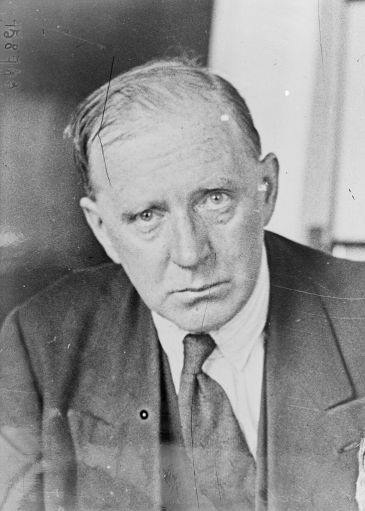
The General Council could have organised much more effective picketing of supplies, it could have advocated the dismantling and blockading of infrastructure, and used class arguments to fraternise with the troops sent to intimidate pickets, but to do so would have involved challenging the prerogatives of government. The trade union bureaucracy can be made, with hard work and vigilance, to implement some of the tactics necessary for workers to improve their lives. But ultimately its position is based on compromise within the system, and it will vacillate according to the major forces acting on it. While some members of officialdom have much better general politics, can be invited to support international solidarity and other progressive movements, and can encourage members with inspiring rhetoric, in the end they are subject to the same pressures, and in 1926 the trade union ‘lefts’ all succumbed to these when it mattered (even the outstanding miners’ leader, AJ Cook, ultimately muted his criticism and made peace with reformism).
The CPGB doubled its membership in the six months after the General Strike, a tribute to its activism and to the anger many felt at the strike’s betrayal. But if it had been clearer from the outset about the causes and risks of that treachery, it would have given the wider movement a better chance of averting it.
Recommended reading:
There is a wide literature on the strike, which has expanded significantly with this year’s anniversary. I’ve found the following particularly useful for this article:
Keith Laybourn, The General Strike: Day by Day, Alan Sutton (1996)
David Torrance, The Edge of Revolution: The General Strike that shook Britain, Bloomsbury (2026)
Charlie Kimber and Judy Cox, Revisiting the General Strike of 1926: when workers were ready to dare, Bookmarks (2026)
Julian Symonds, The General Strike, Shenval press (1957)
Tony Cliff and Donny Gluckstein, Marxism and Trade Union Struggle: The General Strike of 1926, Bookmarks (2015)
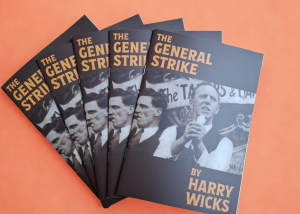
Harry Wicks, The General Strike, Revolutionary History (2026)
sfbbooks has copies of the books on the General Strike by Symonds, Cliff and Gluckstein, and Wicks and a number of other authors too. For details of how to order go to this site’s Books section.


0 comments