
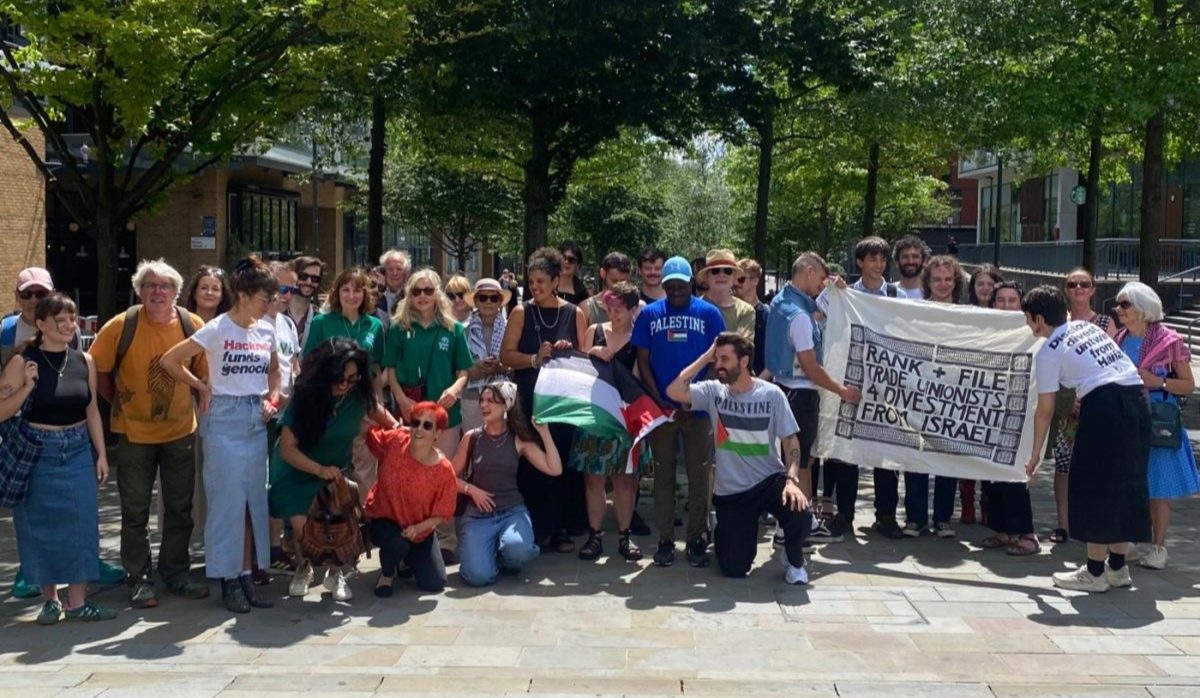
Hackney Votes Palestine? Insights from a grassroots electoral campaign
Gwen Jones •Gwen Jones argues that the upcoming local elections in Hackney present a historic opportunity, as a grassroots campaign seeks to unseat the long-dominant Labour Party by putting Palestine solidarity at the heart of the ballot.
We are now less than two months from local election day in London and many other areas of the country. In my borough of Hackney, it promises to be an interesting and potentially highly consequential race. After almost fifty years in power (notwithstanding one hung council from 1998-2002), Labour may be about to cede control to an insurgent Green Party in electoral partnership with the Hackney Independent Socialist Collective (HISC). Bolstered by the recent by-election result in Gorton and Denton, it’s a possibility that both parties are taking very seriously.
Headline issues on the ballot include school closures, low-traffic neighbourhoods and housing (Hackney Council’s track record on housing maintenance and repairs is diabolically poor). But aside from these vital bread-and-butter issues, Palestine stands out as significant.
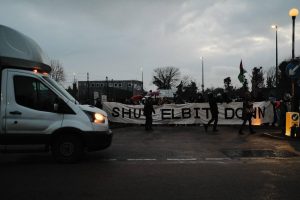
The dispute largely centres on two things: firstly, the council’s massive pension fund investments in companies complicit in Israel’s genocide and other war crimes in occupied Palestine, and secondly, Hackney’s twinning with the Israeli city of Haifa. Hackney’s complicit pension fund holdings have been valued at over £100 million, making them some of the largest in London. Haifa is home to Israel’s largest military port and the headquarters of weapons manufacturer Elbit Systems, and it enforces a system of apartheid against Palestinians.
The divide between Labour and its rivals on Palestine could hardly be starker. HISC itself is a product of this division: in May 2024, three councillors defected from Labour over its stance on the genocide to form what is now the new party.
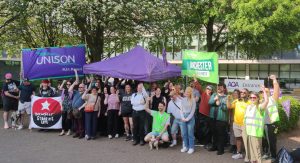
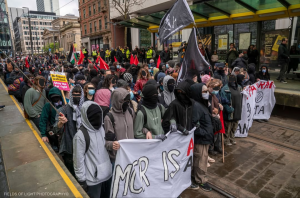
Hackney’s incumbent Labour council has been diametrically opposed to divestment at every turn. Residents, activists, and council workers have exhausted an array of tactics in an attempt to compel action, surveying workers, lobbying bosses, circulating petitions (one of which now stands at nearly 60,000 signatures), and holding regular demonstrations. In the summer of 2024, protestors set up a divestment camp outside the town hall, where it remained for more than two months. Both the Palestine Solidarity Campaign and the Greens/HISC have tabled divestment motions, both of which the council rejected.
If not ignored entirely, the council has branded each initiative as time-wasting, divisive, antisemitic, or all three. One HISC councillor, Fliss Premru, is currently facing disciplinary action for alleged antisemitism over her use of the phrase ‘Israel-friendly lawyers’ when critiquing the council’s receipt of legal advice on divestment from UK Lawyers for Israel.
Hackney Votes Palestine 2026 and ‘putting Palestine on the ballot’
Against this backdrop, we founded Hackney Votes Palestine 2026 in June of last year. It is our response to a council so used to winning that it is unmovable by any other achievable means. On paper, the campaign’s aims are two-fold: to divest Hackney’s pension funds from companies complicit in human rights abuses in Palestine, Congo, Sudan and elsewhere, and to untwin Hackney from Haifa – both to be achieved via the election of a Green/HISC majority to the council and a Green mayor.
It’s now one of many similar campaigns (currently 12 and counting) to emerge across London ahead of the elections. Many borough-level divestment campaigns have faced similar challenges and are looking to the elections to raise the political costs of complicity and/or oust key opponents altogether.
Likewise, at the national level, Palestinian Youth Movement (PYM) recently launched Vote Palestine 26 in partnership with PSC and other organisations. The campaign encourages voters to back candidates who have signed a ‘Pledge for Palestine’, committing them to divestment and ending other forms of complicity – for example, in procurement. As an electoral project, the campaign is light on substance – any councillor can sign the pledge, including Labour councillors, despite being actively whipped against divestment. But this is also arguably not the point. Vote Palestine 26 is primarily a consciousness-raising, community-building exercise, which crucially supports local groups in their base-building efforts.
Building communities of solidarity
The same is happening in Hackney. Aside from the formal aims of divestment and untwinning, Hackney’s electoral campaign is a vehicle for building community around Palestine solidarity. Most residents are unaware of the link between the genocide and local government, and making this explicit brings the issue closer to home. As a result of conversations on doorsteps and street stalls, as well as through the door-to-door distribution of literature, we’ve seen plenty of new faces at our organising meetings and action days, many of whom have gone on to become campaign organisers. It’s not massive, but it’s the start of something we hope can continue beyond election day.
The campaign is also about converting otherwise passive supporters into activists. We’ve prioritised recruiting canvassers by running monthly canvassing workshops to get people comfortable with door-knocking. Door-knocking in and of itself is an important community-building exercise. Talking to neighbours on the doorstep about Palestine in connection with local issues empowers people to identify their individual concerns as part of a broader political struggle and draws them into the movement.
Electoral politics as leftists – promises and pitfalls
Hackney Votes Palestine does, however, have substantive electoral objectives. It explicitly aims to get socialist candidates elected to a majority on the council. This is partly a push for divestment as a standalone end, but it also constitutes a genuine investment in the possibilities associated with winning council seats.
This is controversial, and for good reason. I argue, however, that some engagement with electoral politics is likely to be necessary in the current moment. Britain’s working class is less organised and more fragmented than it has been since the late 19th century. In contexts like these, working to rebuild this power and organisation must be a priority – without it, the ability to effectively conceive of longer-term revolutionary possibilities is limited. Insurgent national left formations, whether the Greens, Your Party, or something else entirely, may provide the apparatus necessary for this kind of reorganisation. Specifically, their successes can play a useful role in re-establishing shared culture, ideology, and experience of collective struggle, which necessarily predates revolutionary transformation. Socialist factions like Greens Organise stand out as promising early examples of this.
For these reasons, I think left-wing victories in the upcoming local elections – as Hackney Votes Palestine is campaigning for – are worth pursuing as part of a broader strategy of building new or insurgent parties into successful organisations capable of facilitating reorganisation en masse.
Wherever parties like HISC are successful, the results will also serve to legitimise these organisations and others like them. Small socialist parties are better able to retain an orientation ‘against the state’, as well as typically being more deeply embedded in local struggles. HISC, for example, is involved in multiple grassroots initiatives with the potential to generate real material impact: the Morning Lane People’s Space, a campaign which resisted the re-development of the Hackney Central Tesco site into unaffordable housing and office space and is now campaigning for a community-led redevelopment plan; the take-over of the Gascoyne One Community Centre by the Gascoyne Estate tenants and residents’ association to provide free community services, including fitness classes, homework sessions, and community lunches; several landlord disputes involving local businesses, including a recent campaign to resist the eviction of the long-standing Argun Stationers in Hackney Central; and local workers’ strikes at Hackney schools and Homerton Hospital.
Winning councillors can materially strengthen this kind of organising. Specifically, having accountable socialists elected to council positions provides protection and support for the movements they are involved in. For initiatives like Morning Lane People’s Space, this may mean that organisers who win seats use their positions to hold open contested sites and help shield other infrastructure – such as congregation spaces – that is necessary for the movement itself. The same is true for projects like Gascoyne One, which could be actively supported by an aligned council willing to protect and resource resident-controlled service provision. In short, council wins have the potential to create protected ground in which grassroots organisation can deepen, cohere, and expand. This is where real power ultimately lies.
In Hackney specifically, the formal alliance between HISC and the Greens also represents a promising development for the left more generally: a robust ecosystem in which multiple organisations co-exist, challenge, check, and support one another. The strategic benefit of electoral pacts is obvious, but successfully maintaining organisational separation is valuable too. Small but non-trivial disagreements compel and expand discourse. In Hackney, for example, both parties’ stances on Low Traffic Neighbourhoods have been shaped and re-shaped by a continuous back-and-forth.
This rosiness, however, is genuinely complicated by the context in which local councils operate. Like many councils across the country, Hackney is in dire financial straits. Its reserves are rapidly dwindling, and there is serious talk of a Section 114 – or an official declaration of bankruptcy – being issued here for the first time. Councils are extremely limited in their ability to raise revenue, with referenda required to increase council tax above a set government threshold of 4.99% per year. Devastating cuts have been issued to local authority budgets by successive governments since 2010. As a result, the proportion of council budgets derived from council tax income has ballooned from 34.1% in 2009/10 to 45.6% in 2024/25.
If a Green/HISC coalition does win in Hackney, they will be walking into a difficult situation – one that leaves them with very limited room for manoeuvre. Some genuinely meaningful change is possible within these constraints; the council’s poor record on housing, for example, is a product of negligence as much as underfunding. But to the question of whether local governments are capable of bringing radical transformation, the answer is no.
However, dismantling these constraints may also come from residents via their councils. Electing those prepared to take the fight to the national government, whilst making sure there is an activist base in place to both hold them accountable and support their defiance, is a good place to start. Election day should be where the real fight begins. We should treat the resulting confrontation as a means of politicising the system’s limits and, if possible, of mobilising greater resistance.
Divestment as an aim
Hackney Votes Palestine is, first and foremost, a divestment campaign. This is also not entirely uncontroversial. BDS (boycott, divestment, and sanctions) does not inherently reduce the power of capital. Here, it is important to differentiate between the politics of crisis and the politics of long-term transformation – divestment should be understood as one of many tactics relevant to the former. Of course, transformation is the goal, and capitalism will continue to produce crises of imperialism, state violence, and exploitation until this end is achieved. But this doesn’t delegitimise other interim goals.
Particular industries, such as the arms trade, the prison-industrial complex, or fossil fuels, are obvious immediate targets in pursuit of a more just world. Success in these areas is also more likely within the time horizons relevant to acute crises like genocide. Short-term objectives, such as the weakening or dismantling of particular industries, are more likely to involve pressuring institutions according to their own logic in order to reduce their social, political, or lobbying power. Divestment is a means to this end, and much like strike action, achieving divestment also requires extensive working-class organisation – albeit sometimes in communities rather than workplaces.
Crucially, divestment should never be about recognising companies as having a ‘human face’ or trying to give them one. We must make sure, as far as possible, that our messaging and approach when employing tactics like BDS do not serve to justify or prop up existing institutions, which is why retaining a clear focus on the longer-term horizon is so important.
This campaign, therefore, does not accept divestment as an end in itself or as ‘all we can do’. It is vitally important that the movement continues to pursue other avenues to build worker solidarity internationally and dismantle militarism at the state level. Divestment alone will not liberate Palestine. But it will disrupt and delegitimise one of capitalism’s most brutal axes – the military-industrial complex – on which the genocide in Gaza ultimately depends.
A historic win in Hackney this May is genuinely possible. Exactly what this means is undetermined, but I believe we should involve ourselves in trying to decide it.
Find out more about the campaign here: https://linktr.ee/HackneyVotesPalestine26




0 comments