
AI – aye right
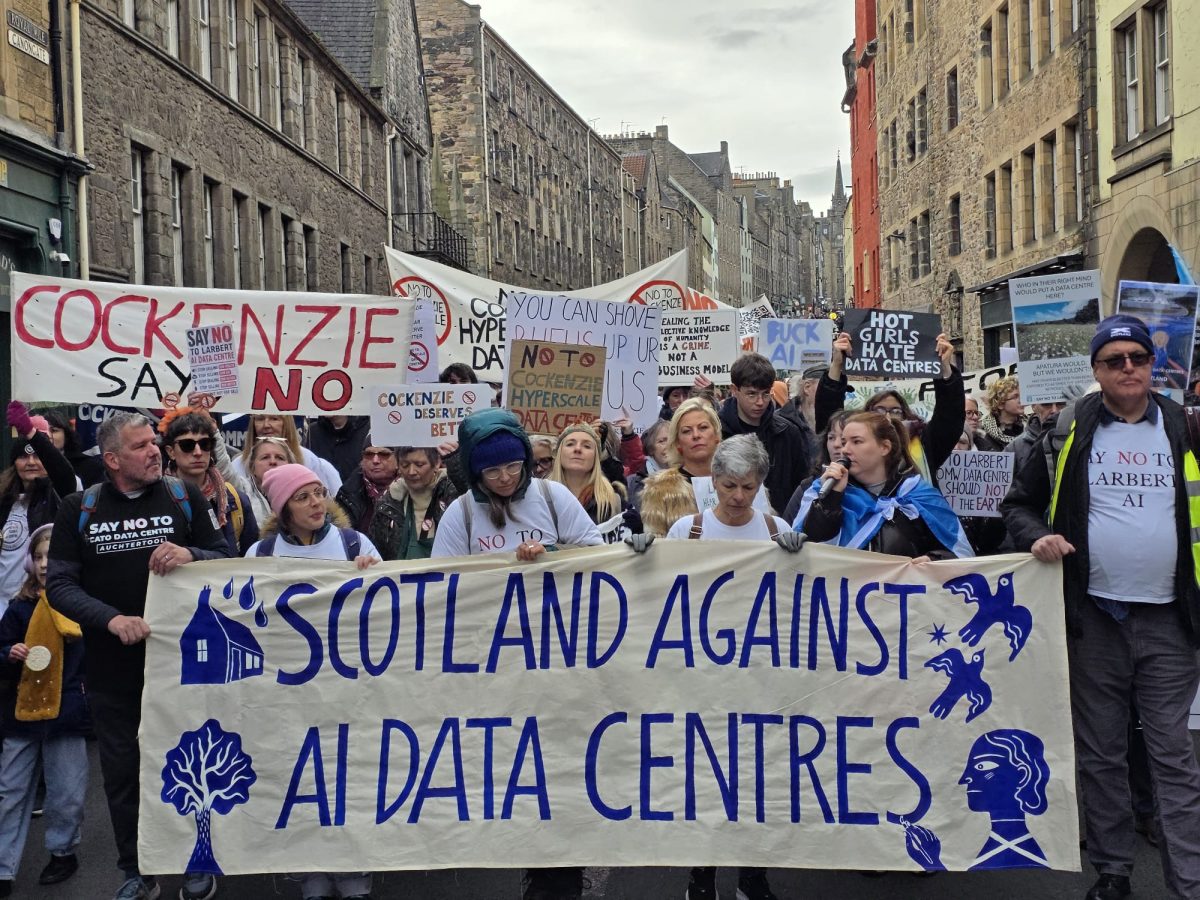
Edinburgh rs21 comrades •Edinburgh rs21 comrades were on the first Scottish national march against data centres.
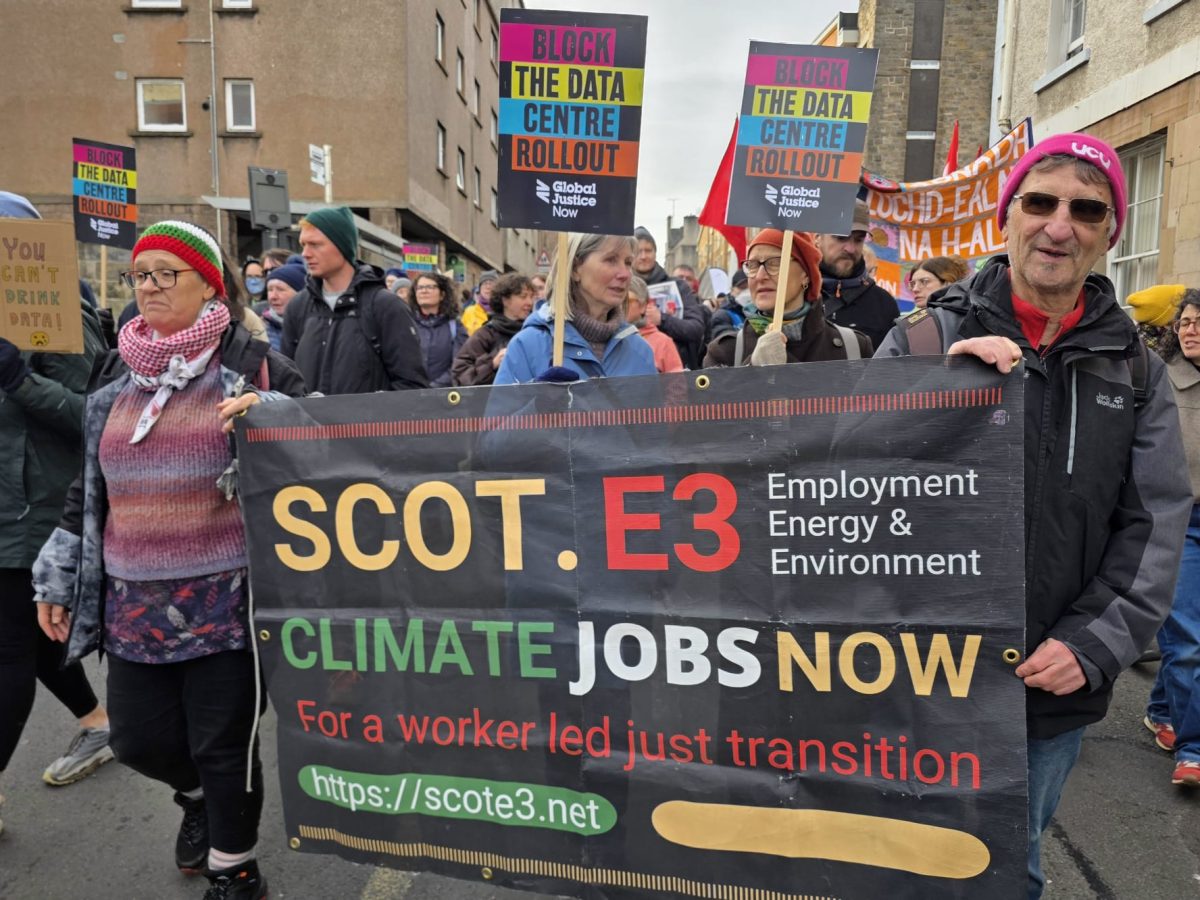
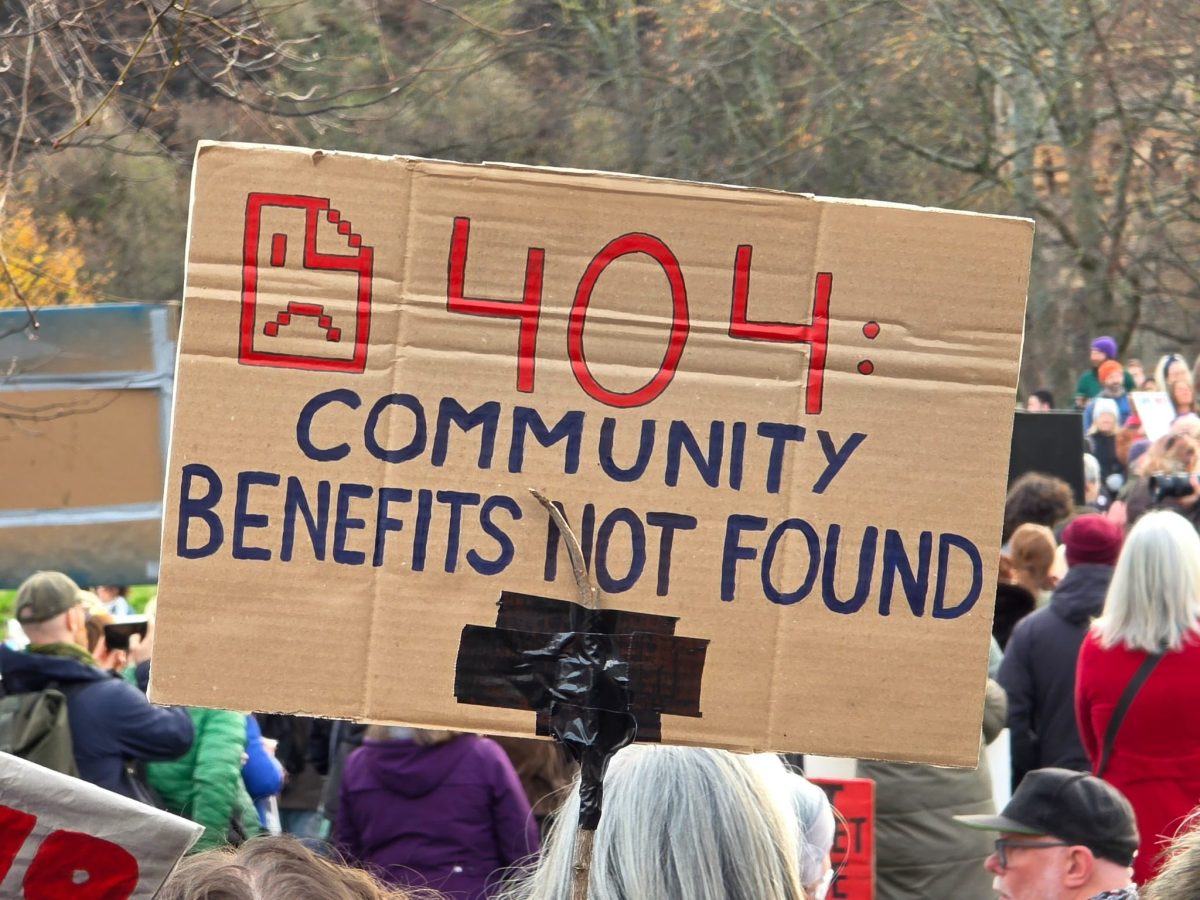
On Saturday 14th November around 6000 people marched through the centre of Edinburgh to the Scottish Parliament at Holyrood calling for a stop to the development of large-scale AI data centres in Scotland. There are at least 23 current proposals. The proposed centre at Chapelcross near Annan in Dumfries and Galloway would, if built, be one of the largest in the world using 1000 megawatts of energy. The march, organised by Friends of the Earth Scotland, included contingents from the local campaigns that have sprung up around the areas targeted for development. There was a wonderful display of creativity in the huge number of handmade placards which made it clear that this is not a “Not In My Back Yard” coalition, but a mobilisation of diverse constituencies concerned about jobs, the environment, commodification of data, human rights and freedom and the overweening power of unaccountable tech bro oligarchs.
At the concluding rally speakers linked the fight against data centre development to the campaign against the growth of the far right. Some far-right groups have tried to gain traction in the campaign against AI, but speakers made it clear that right wing arguments have not taken root. Indeed, they argued that building mass opposition to AI data centres is critical to taking on the ideas and the influence of the right and has the potential to undercut their support base.
There was a strong strand of support for Palestine running through the demo, and leaflets on Boycott, Divest and Sanction were well received. But there are challenges in building a wider movement that can win. Like many recent Scottish marches on Palestine there were few trade union banners – in this case just two. Both Palestine and AI are issues that can be raised and mobilised for at work and it’s important that this becomes a priority in both campaigns.
March organisers Friends of the Earth Scotland note that:
In Ireland, data centres now use a quarter of the entire country’s electricity and have increased household energy bills by an extra €360.
If only half of the proposed centres in Scotland become operational the impact will be greater than in Ireland. The implications for climate and for transition to a sustainable economy are profound. Most days energy from wind and hydro power meets more than 100% of electricity demand in Scotland. But the marketised energy system we have in Britain is riddled with distortions which featherbed big business profits, undermine potential reductions in carbon emissions and drive high prices for consumers. So, for example while new capacity is under construction the grid system is inadequate to distribute the additional supply – currently many of the wind turbines sit idle. This is likely to increase. Much of our energy infrastructure is old and wearing out and power cuts are common in our big cities. If the data centres come on line, the high cost and poor reliability of energy supply will be accentuated. Beware weasel words from the energy companies and politicians when they talk about so-called green data centres. There is a big debate to have about AI and whether there are forms of AI that could make a positive contribution to our lives – but there is no doubt at all that right now prioritising data centres reinforces the undemocratic power of big tech companies, supercharges the militarisation and centralisation of society and traps us in a high cost and unreliable energy system as the impact of climate breakdown grows around us.














0 comments