

London Trans+ Pride – a historic and radical protest
rs21 queer and trans members •Years of transphobic attacks – in the last year from the Labour government and the courts – have led to a historically unprecedented mobilisation, write rs21 queer and trans members.
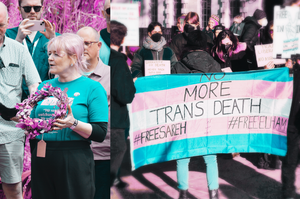
The numbers attending Trans+ Pride on Saturday were enormous – at 100,000, almost double the numbers last year. Huge numbers of trans people marched alongside cis queer and straight people. As well as trans flags, Palestine flags appeared throughout the demo – rs21’s bloc joined the large Palestine bloc called by Queers for Palestine. Theatre workers cheered the march. Shop workers improvised a trans flag in their window from blue, pink and white clothes.
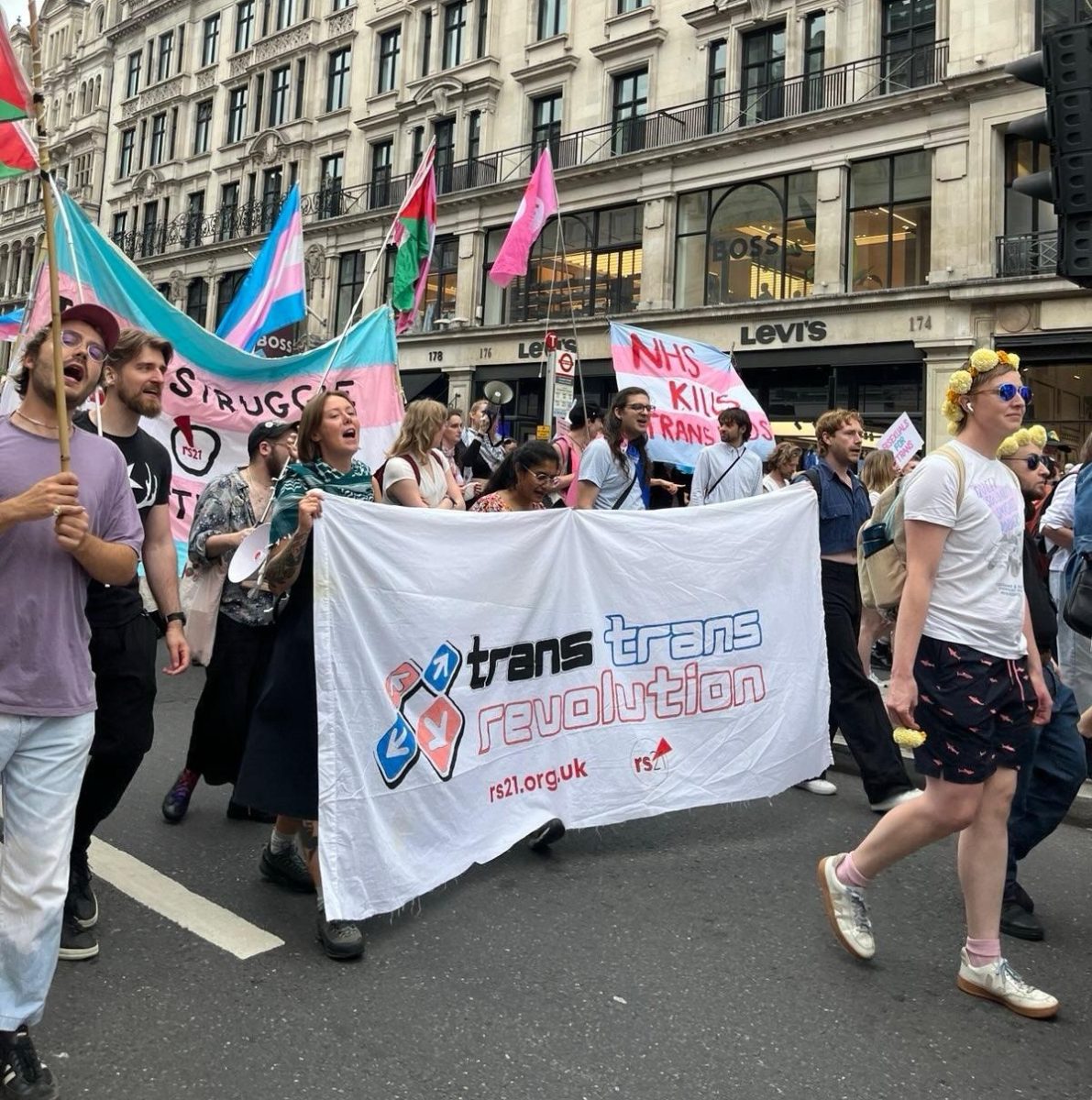
Marchers’ chants raised militant demands:
HRT, HRT
Over the counter and for free!
Gender affirming surgery
Over the counter and for free!
And there was in-your-face humour too:
We’re here, we’re fun
We’re gonna trans your mum!
We’re out, we’re mad
We’re gonna trans your dad!
It’s important to note that this was only one of many mass mobilisation for trans liberation this year in Britain, with 30,000 marching at Brighton Trans Pride on 19 July and 25-30,000 taking to the streets of London for an emergency protest in April against the Supreme Court ruling, with record-breaking turnouts in Sheffield, Manchester, and many other cities. Our movement is growing in the face of escalating attacks.
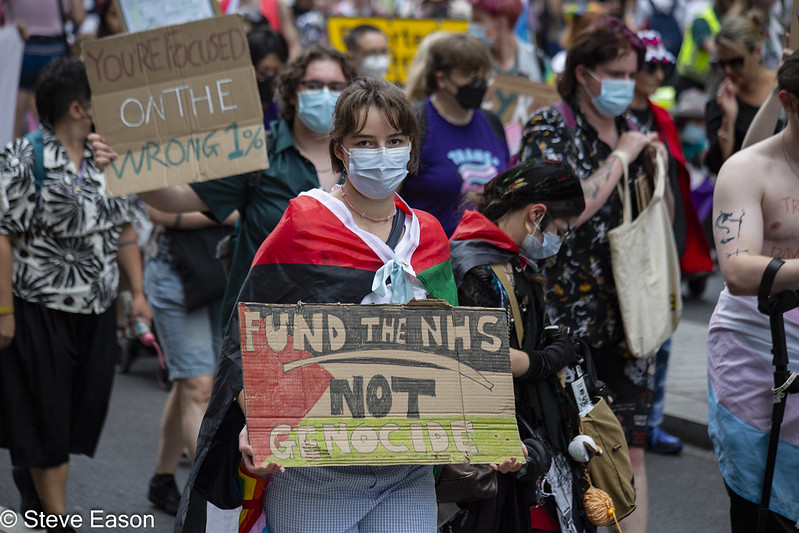
The march completely broke with the neoliberal politics which have dominated queer organising for the last two decades. Back in the 70s and early 80s, mobilisations like London Gay Pride – as it was then – were angry and radical. But they were also tiny, involving only a few thousand people. Then since 2000, Prides have grown hugely in number – many small towns now have one. But the biggest events – such as those in London, Manchester and Brighton – were and are staid affairs dominated by corporate floats. The size of London Pride was capped at 40,000 – participants had to apply for wristbands and people were encouraged to come and watch, not take part. These were the years when corporates told us that diversity was good for profits, and Tory leader David Cameron brought in same-sex marriage in an attempt to co-opt queer people into ‘respectable’ family structures. In that context, radical voices were sidelined.
The growing attacks on trans and other queer people internationally has seen the corporates vanish. A small number of queer people have even scabbed on our trans siblings – such as Wes Streeting, with his ban on puberty blockers. But it’s clear that while the transphobes have the courts, the MPs and the media, trans people have millions of supporters. Some of us are old enough to remember the years of AIDS and Section 28, and we are not going back. Many young people are determined to defend and extend what we’ve won since then.
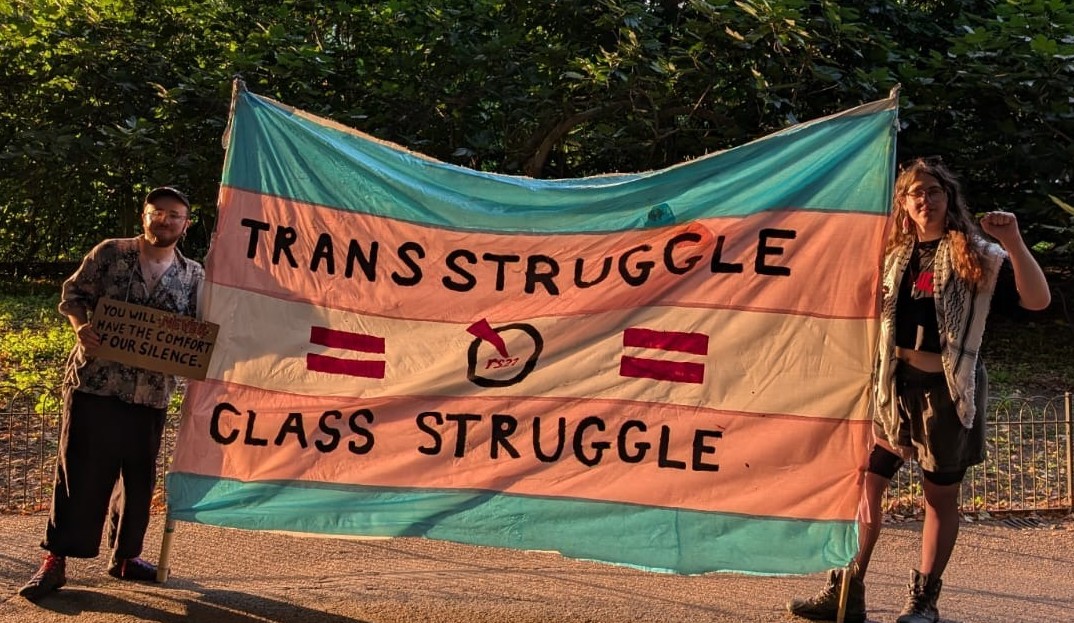
Union conferences have pledged support for trans people and union activists on the ground are working to defend trans workmates. In the 1980s we saw small and radical queer mobilisations in Britain, and recently larger ones, some community-based but the largest dominated by neoliberalism. For the first time in British history, we are seeing the potential for queer mobilisations which are both radical but also very large. The transphobes are determined and are winning victories. But this historic march shows that trans people and their allies have the strength to prevail.
0 comments