

A letter from Istanbul: Reflections on the recent protests
D.S Deniz •Hundreds of thousands of people have joined protests against the increasingly repressive Turkish government since March, following the trumped-up arrest of an opposition politician. A Turkish socialist writes from Istanbul.
On the evening of 18 March, the university diploma of Ekrem İmamoğlu, the Mayor of Istanbul Metropolitan Municipality and the strongest rival of Erdoğan during his 23-year rule, was unlawfully annulled. The next morning, İmamoğlu was arrested on charges of corruption and terrorism based on secret witnesses and without any concrete evidence.
Although Turkey’s political agenda is always dynamic, this moment has been even more turbulent. Waking up to new types of injustice every day became our new normal.
The main opposition party Republican People’s Party (CHP) of which İmamoğlu is a member, immediately began organising public speeches and calling on people to join these rallies from the very first day.
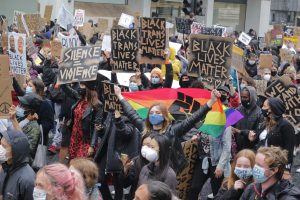
However, university students, who are overwhelmed by the regime’s authoritarian nature, deeply affected by unemployment and economic problems, took these protests beyond the injustice against İmamoğlu. For them, this was the final straw. They turned the rallies into a broader act of rebellion.
The opposition party’s rallies were not intense enough for the youth filled with anger and frustration. In this context, Gen Z shattered the ‘apolitical’ stereotype often associated with them by standing up for their rights, justice, and freedom, without fear of being arrested, injured, or even killed. The widely held belief in Turkey that young people are not interested in politics and only want to escape abroad began to fade. This generation, who grew up witnessing the Taksim Gezi Park protests of 2013, has now come forward with a rebellion.
I participated in protests in both Istanbul and Ankara, and each location had its own distinct atmosphere. Interestingly, moving between cities also meant experiencing a surprising variety of tear gases, almost like sampling regional specialities. It turns out, even state repression has its local flavours.
An organic order formed within the protests. Some angelic protesters walked around with the word ‘healer’ written on their backs, spraying others with concoctions to ease the effects of tear gas. There was always a backline ready to move forward the moment the front rows were hit. Makeshift medical tents were set up in parks, people created corridors through crowds for those escaping gas clouds, and strangers helped one another without hesitation.
Still, when looking at the broader organisation, there were clear logistical challenges. These protests were being organised independently by various university student committees, without a central authority or affiliation with any political party. For many of the people in charge, especially those leading the committees, this may have been their first direct encounter with police violence during a protest.
It’s also important to note that in Turkey, the groups traditionally familiar with direct confrontations with police have not typically been CHP supporters or centre-left wing. It has long been far-left groups, LGBTQ+ communities, feminists and ethnic minorities. One of the most striking aspects of the İmamoğlu protests is that they brought even those who usually stand at the centre, people who previously had no history with resistance. The violence inflicted upon students was so extreme that even for parts of the nationalist-conservative public, the long-standing narrative of the police as sacred began to unravel.
In Istanbul, small-scale protests took place around university campuses during the day – small only in terms of numbers, as police violence and arrests remained ever-present. In the evenings, however, student crowds from all universities began to gather near the historic Bozdoğan Aqueduct, just 300 meters from the Istanbul Metropolitan Municipality building, where CHP leader Özgür Özel addressed the public from atop a bus. These gatherings converged around a shared aim – to march to Taksim.
Taksim is not just a physical location, it is a powerful symbol of national civil resistance. Attempting to reach it is an act of reclaiming the right to protest in a space that has become increasingly restricted. Young people were not just protesting, they were clashing with police, pushing against barricades in an effort to break through and reach Taksim – for them, that was what made it a ‘real protest.’
Every evening around 8pm, Özgür Özel would begin his speech, often joined by various guest speakers, and typically wrap up around 11. Almost immediately after his speech ended and he got off the stage, the police who had until then mostly stood in place and fired tear gas would begin shooting rubber bullets and chasing down student protesters. As a result, the opposition faced criticism from the students, who felt abandoned and exposed once the speeches concluded.
If you had attended the Saraçhane protests, which lasted for ten days, you could have found yourself in two very different, yet equally packed spaces just 300 metres apart. Around the bus where Özgür Özel gave his speeches, the atmosphere was relatively safe and stable. People chanted slogans like ‘Rights, law, justice’ and ‘We are the soldiers of Mustafa Kemal,’ held up phone flashlights, listened to romantic leftist folk songs, and applauded the guest speakers.
But if you had walked just five minutes to the Bozdoğan Aqueduct, the mood changes entirely. There, you’d hear chants like ‘Özgür, come here and taste the tear gas!’ ‘We came for a protest, not a rally.’ Or my personal favorite slogan, which was directed at the police who are also known to work under poor conditions: ‘Police, why don’t you rebel too!’ And frankly, there wasn’t much room for phone lights or folk songs, students were too busy sampling the various flavors of tear gas.
In Ankara, I spent two days at the protests held on the campus of Middle East Technical University, known for its leftist culture and long-standing spirit of activism. In Turkey, university campuses are typically enclosed spaces, and entry is restricted to those with a student ID. Under ‘normal’ circumstances, police are not allowed to enter university grounds. However, in recent years, as Erdoğan’s government has grown increasingly aggressive, that boundary has been crossed. Here, police not only stepped onto campus but also carried out severe violent crackdowns.
There’s something almost funny about seeing hundreds of police officers, water cannon trucks, and armored vehicles pile up at a single university gate. It reminds me of a famous banner from the Gezi protests that perfectly captures the irony. Roughly translated into English, it says: ‘Chill bro, it’s just us. The people!’
Following the intense police violence and mass detentions of previous days, 27 March was relatively quiet on the METU campus, aside from a small press statement. No major protest took place, and there were no confrontations with police at the main gates. Yet that night, in a shocking move, police and anti-terror units launched a midnight raid on the campus with hundreds of officers. They detained unarmed students who were simply sitting on the lawn with friends by firing rubber bullets at them.
It was a clear and chilling message from the government: ‘You are not safe anywhere, at any time. I can do whatever I want, whenever and wherever I choose.’
If there’s one thing that’s certain, it’s that neither the opposition nor the government expected a rebellion of this scale, intensity, and persistence. As someone who witnessed the events firsthand, I can say that the driving force behind this unwavering fire has been the fearless university students. They are not afraid, because, in their eyes, they have no future left to lose.
There’s so much to say about street protests, but now I want to shift focus to a different kind of protest, one that echoed the spirit of ‘workers and students, hand in hand.’
On 20 April, in the famously conservative Central Anatolian city of Yozgat, where Erdoğan received 72% of the vote in the presidential elections and where the CHP barely reached 2% in the local elections that same year, a surprising show of support emerged for the pro-İmamoğlu rally. Farmers joined in with an unexpected scale of participation, forming a 6.5-kilometer-long tractor convoy.
Leading the convoy was farmer Abdullah Ceylan, who later received a fine of 1 million TL [over £18,000] for blocking traffic. Standing atop the bus where Özgür Özel was speaking, he addressed the crowd of farmers:
If this system continues like this, we won’t escape hunger, poverty, and incompetence. We will bring down this system – bring it down, bring it down!
This speech was particularly significant because it shattered a long-standing narrative. For years, a widely accepted and rarely questioned assumption has been reproduced: that certain segments of society, in this case, rural and conservative Erdoğan supporters, are inherently resistant to change. But this assumption is not just a superficial generalisation that overlooks social diversity, it is also an ideological tool that serves to sustain existing power structures. Beliefs like these offer political authority a seemingly natural foundation and make the idea of social transformation appear unrealistic, if not impossible.
Yet that shared spirit of resistance became visible once again in Yozgat, led by a convoy of tractors. It wasn’t just a rally or protest; it was a symbolic moment, proving that the desire for change cannot be silenced, no matter which part of society it comes from.
Throughout this period, countless painful events and legal scandals unfolded, far too many to fit into a single piece of writing. With each move it made, the Erdoğan regime effectively, if unofficially, declared that it no longer recognises the constitution.
Over 500 university students have been detained simply for exercising their constitutional right to protest by carrying signs, making social media posts, or participating in demonstrations. While many of the detained students have been released, arrests continue with each new wave of protests. Aside from the university students, many others have also been arrested. Particularly journalists, Istanbul Metropolitan Municipality employees, officials from other areas governed by the CHP and lawyers. We are at a point where people are being unjustly imprisoned every single day, and many are still behind bars without any legitimate reason, often held in poor and inhumane conditions.
Currently, although street protests are no longer happening every day as they did in the early days, they continue in various places and for various reasons. At the same time, the form of protest has shifted toward economic boycotts, particularly targeting companies profiting from public funds and taxpayer money. This movement has gained momentum from both the CHP and student groups. Naturally, the government did not remain silent in the face of this. As expected, it responded in the way it knows best, with arrests. Even social media posts calling for boycotts have become grounds for detention.
All of this – the unjust arrests, the police violence – is horrific. But at the same time, it makes you think – we must be doing something right, if they’re this afraid. They’re throwing everything they have at us just to keep their grip on power.
Yes, everything we’ve witnessed has shown us how far an authoritarian regime is willing to go. But it has also revealed something just as important – that we are not alone. From conservatives to seculars, from all walks of life, there are so many of us, fed up with this system, with poverty, with exploitation.
It’s hard to even find the time or the emotional space to reflect on what exactly we’re going through, to wonder whether we still have room for hope amid all this anger and resistance against injustice. There have been so many cruelties we need to remember, burned into our collective memory, that it feels overwhelming just to try to carry them all.
But when so many innocent people are enduring police brutality, when they are being unjustly imprisoned in the name of all our freedom struggles, feeling hopeless almost feels like the greatest betrayal to them. Just as we no longer have the luxury of staying silent in the face of Erdoğan’s regime, we no longer have the luxury of losing hope either. Today, for us, hope is not a romantic feeling. It is the cornerstone of our strategy for change.
Believing in change is not just a hopeful wish or an emotional desire, it is a necessity grounded in historical and social realities. Societies have never remained in a state of absolute stillness – every era has produced its own crises, its own acts of resistance, and its own potential for transformation.
Even groups that seem silent, passive, or fragmented today can rise up with a powerful sense of collective will at critical moments. This alone proves that the potential for change is still alive. Presenting the status quo as something natural, and portraying change as rare or extraordinary, only serves the interests of those in power. But transformation grows quietly, through small cracks, slow shifts, and steady pressure. Until one day, it lays the foundation for a new order. That is why change is possible, and why we must hold on to it, stubbornly and relentlessly.




0 comments