

Health workers at UCH in London striking in November 2014. Photo: Nick Evans
Reject the deal – restart the strikes
Mark Boothroyd •Mark Boothroyd, a nurse at St Thomas’ Hospital, on why health workers should restart the strikes for the sake of the NHS. This was originally posted on Mark’s blog. See also the Health Worker leaflet: Reject this rotten offer.
Last week UNISON and UNITE’s leaderships voted to call off NHS strike action in response to an offer from the government. The offer is outlined below and Jeremy Hunt’s full letter to NHS Staff Council can be read here
If agreed the deal will mean:
- abolishing pay point 1
- a new minimum pay point of £15,100
- 1% plus £200 flat rate, both consolidated, for pay points 3-8
- 1% consolidated pay rise for all staff up to point 42 from April 2015
- an increment freeze in 2015/16 for staff on pay point 34 and above for one year.
- urgent talks with a view to implement proposed redundancies charges from 1st April 2015, including a floor for calculation of redundancy payments of £23,000, and a ceiling for calculation of £80,000 with an end to employer top up for early retirement on grounds of redundancy.
What does this mean in practice?
This:

For the well behaved monkeys
Low paid workers (pay points 3-8, Band 1 and 2) will get 1% and £200, while those on higher pay points (everyone else up to Band 8B) will receive a 1% pay rise from April 2015. We don’t get a 1% pay rise for 2014, which is what we were actually striking for, and the £200 extra for low paid workers works out to just £4 extra per week.
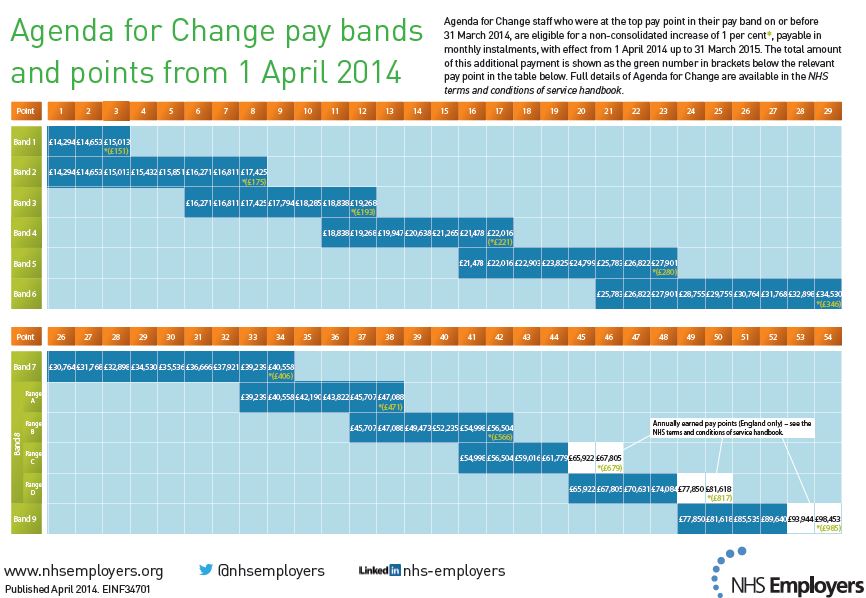
Table displaying NHS pay bands and pay points scale
Setting a ceiling like this will allow NHS Trusts to dispose of their more expensive and more highly skilled workers more cheaply. It will be much less costly to close down services, or make redundant more highly paid NHS workers like consultants, and it will close off the avenue of early retirement as a way out for those workers.
The deal, while giving extremely small benefits for the lowest paid, is rotten. We don’t even get the 1% pay rise we demanded last year, and the employers want to freeze increments, and cut redundancy payments. NHS workers have lost as much as 15% of the real value of our pay due to the pay freeze the last 5 years. This is all part of keeping the NHS workforce cheap to more easily facilitate privatisation and allow services to be closed down more easily. NHS workers should reject this paltry deal.
The leaderships of UNITE and UNISON have shown they are not willing to fight hard for the NHS or its workforce. There is no single reason, but a combination of negative publicity threats from the government, the ongoing NHS winter crisis, pressure from the Labour party, and an unwillingness to mobilise their memberships for a serious fight probably all played a part.
The deal does secure small improvements for low-paid staff, and for union leaderships keen to keep expectations low, calling off action rather than pushing for more makes a perverse sense. Minimal action secures minimal gains, enough to keep some members on board and paying subs, without risking energising and inspiring them to demand more than the government is willing to give, and potentially sparking a real fight.
Calling off action also means Labour doesn’t have to pick a side in the strike. The Labour leadership risk damaging their party, either by angering their big business supporters by siding with striking NHS workers, or alienating their working class support by opposing NHS workers legitimate demands.
It’s easier for Labour if the strikes don’t happen, and the Labour-loyal leaderships of the unions are happy to oblige.
NHS union Branches need to campaign to reject the deal and restart the strikes. UNISON has said they plan to restart strikes on 13 February if the deal is rejected. Workplace meetings need to be held to discuss the deal, and win members to a policy of rejecting it. Some, especially the low paid who benefit the most and make up the bulk of NHS unions memberships, may want to accept. But we would be selling ourselves far far short.
With an election looming, now is the best time to strike and put pressure on the government. This deal was offered with only two 4 hour strikes and the threat of a 12 hour strike. How much more could the unions have got if they had carried through the 12 hour strike, with the threat of a 24 hour stoppage looming, and more action planned?
Also the strikes are a way to keep the NHS in the headlines, and hit the government while they are vulnerable over the winter A&E crisis, the collapse of the Hinchingbrooke Hospital deal and the public rejection by NHS trusts of attempts to reduce their budgets further. While Labour seem to be doing their best to lose the election, NHS workers taking action can mobilise popular anger against the Tories and help ensure they are given the boot in the May election.
The strikes have allowed us to rebuild union and workplace organisation in health, which is much depleted. Vicious witch-hunts have driven many good militants out of the NHS and the unions, while others have been sacked by management for speaking out about cuts to services. The strikes were drawing union members into activity, and show a new generation of NHS workers that we can strike against the government. They are also a good way of scaring off private providers hoping to grab lucrative NHS contracts; the last thing they want is a mobilised, organised and politicised workforce. We may not be given this opportunity again so we must use it before the new government comes in.

Lively picket lines showed grass-roots support for strikes in November. Photo: Nick Evans
“it would demonstrate a commitment and signal the start of a period of negotiations to deliver long term pay reform in the NHS”.
The government have been clear that they regard Agenda for Change as a barrier to ‘reform’ (i.e. making NHS workers pay for NHS cuts). If calling off Thursday’s strike is the first step in the employers making savage attacks on the national pay scheme, then it’s a disaster.
Whoever is elected the policies for the NHS will be in practice much the same. The Tories are committed to further cuts and privatisation, and Labour are committed to maintaining Tory budget plans, with only a slight increase in NHS spending over the course of the parliament. Whatever their statements now about hiring more nurses and GPs and repealing the Health and Social Care Act, Labour will be constrained by the budget limits imposed by the previous government, the sweeping privatisations which have already been carried out, and an NHS which needs serious investment to escape from the dire state the Tories have left it in. The Efford Bill which Labour is proposing to do this with does not tackle the system of marketisation which will remain in the NHS even if the Health And Social Care Act is repealed.
So let’s campaign to reject the deal, restart the strikes and rebuild our power in the NHS so we make the most of this dispute, and are prepared for whatever the government throws at us next.
Further reading
- Health Worker leaflet: Reject this rotten offer
- How can we save the NHS? pamphlet






0 comments