

Photo: Steve Eason
Hundreds of thousands march against austerity in London
Amy Gilligan •Amy Gilligan reports from yesterday’s impressive anti-austerity demo.
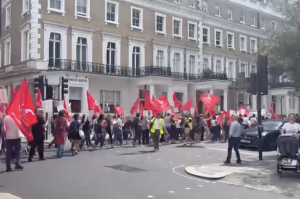
Hundreds of thousands of people marched through London from the Bank of England to Parliament Square yesterday on the “End Austerity Now” demonstration, organised by the People’s Assembly. The demonstration was so large that getting an accurate figure for the number taking part is difficult, but the organisers’ estimate of 250,000 is probably not far off. This makes it one of the biggest anti-austerity protests in recent times, and the largest that hasn’t been organised by the TUC. The mood seemed hopeful, and many people will have gone home feeling more confident, feeling they are part of a large movement.

Photo: Steve Eason
Trade unions did have some presence on the demonstration, but it was not organised into the same big, visually impressive blocks as has been seen on recent TUC demos. This is not to say there weren’t lots of trade unionists and workers on the demonstration, but it seems that the majority had come as individuals, with their friends and family or as part of other groups they were involved in. This gave the demonstration a community feel. Many people carried home made banners, including ones with references to the film Mean Girls, and several that simply said “Fuck the Fucking Fuckers”. There were lots of people who were demonstrating for only the first or second time. Some of this was because many of those attending were perhaps too young to have been on a demonstration before.

Photo: Steve Eason
The Green Party had a lively block that was young, vocal and organised, and the left of the Labour Party were there, building support quite successfully for Jeremy Corbyn’s leadership campaign. CND, Stop the War, Left Unity, Plan C, and Keep Our NHS Public were among other groups that had an organised blocks on the march.
A friend asked me as the demo was beginning why were so many people now mobilised when they hadn’t been before the election. This an important question to try and answer. The election of a Tory majority government, somewhat unexpectedly, I think means people have realised that we have little option but to organise and mobilise if we do not want to see welfare cut further, the NHS privatised, Trident renewed, migrants demonised, education marketised and our rights at work destroyed. The People’s Assembly have played a very important role by calling the demonstration nationally, and, through local groups, organising large meetings, protests and arranging coaches to actually get people to London. The People’s Assembly probably had less of a direct effect in mobilising people from London itself.
Well-known figures such as Charlotte Church and Russell Brand supporting the demonstration beforehand probably also played an important part in giving people the confidence the march wasn’t just the preserve of the far Left, and meant it got more publicity, both before and after, than other comparable demonstrations have, notably being showcased in the Daily Mirror earlier this week.

Photo: Steve Eason
The other question that we need to ask is what next? There are several dates that already seem obvious for various kinds of action, such as the budget on 8 July and at the Tory Party conference in the autumn, where protests and days of action have already been called. Several people I spoke to after the demonstration mentioned that there were people at the demonstration – not those they’d necessarily expected – from their workplaces. It will be important to remember in the coming months is that workplace organising isn’t simply about signing up union members. This is obviously important, but there is also space for trying to link the struggles both inside and outside of work. Locally, the political situation and potential are likely to be variable. We shouldn’t be too prescriptive. Many people are being radicalised by local campaigns around things such as housing, trying to save particular services and responding to racism. We should be seeking ensure there is support and solidarity between campaigns, and try to ensure there is unity in action.

2 comments