
The climate crisis has a picket line at London’s Arriva garages
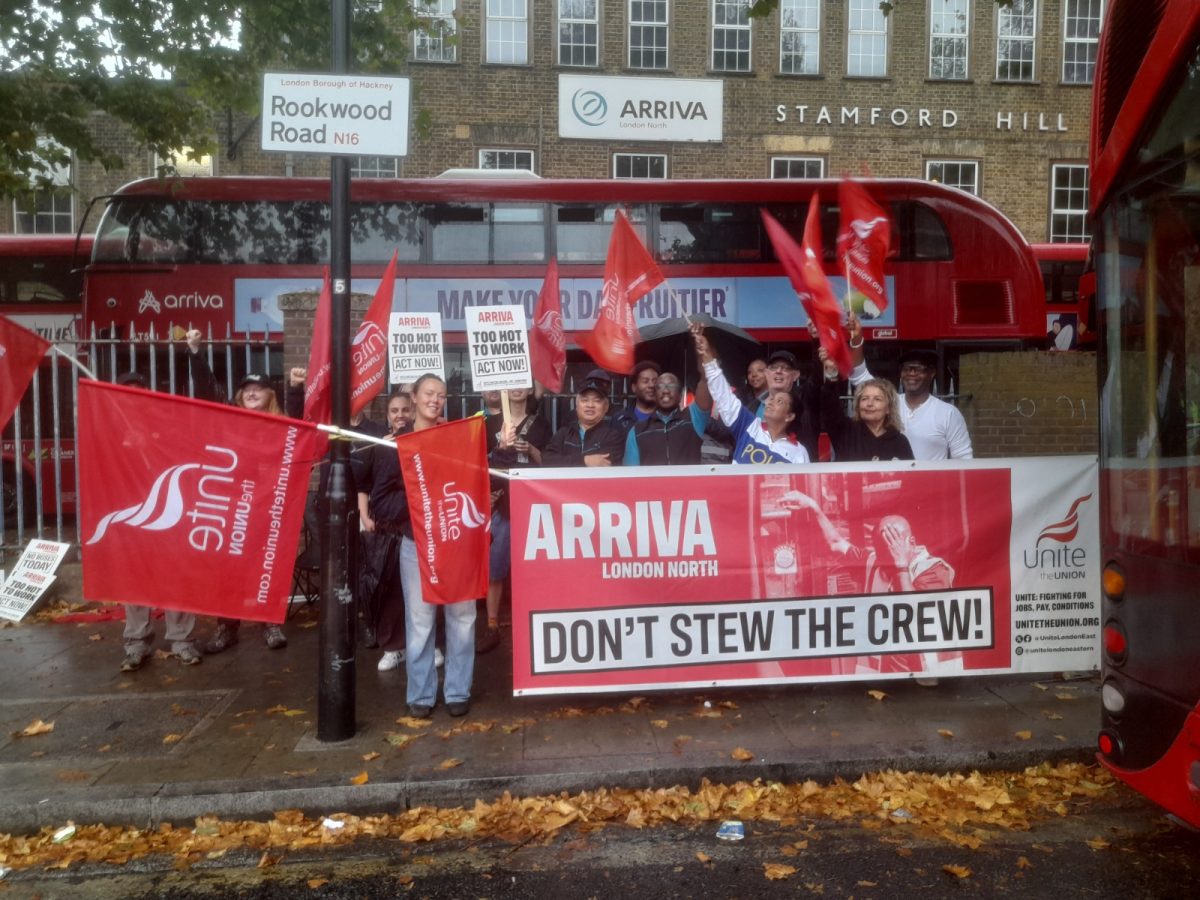
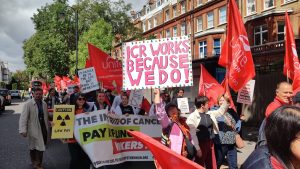
rs21 East London •rs21 members joined the picket at Stamford Hill garage and found a strike that sits squarely at the intersection of workers’ rights and the climate crisis, with the climate movement nowhere to be seen. Join us for our next visit this week!
London has seen record temperatures this summer, with back to back heatwaves punishing workers without access to temperature controls, water breaks, and other mitigating measures. Workers are now fighting back – including 1500 bus drivers across eight Arriva North London garages.
The Unite members are striking not just for pay but also over safety. Cab temperatures in buses regularly top 40°C, turning working vehicles into rolling ovens. This brings heat exhaustion, severe migraines and fatigue, all whilst the drivers are responsible for ensuring passenger safety. Arriva management offers little more than inadequate air cooling systems and small fans that do virtually nothing, reducing temperatures by only a couple of degrees.
On Thursday 27 August, a delegation of eight East London rs21 members joined the picket at Stamford Hill garage, Hackney. We discovered two things: the necessity of worker unity, and the urgent need to bridge the gap between rank-and-file union struggles and the broader climate movement.
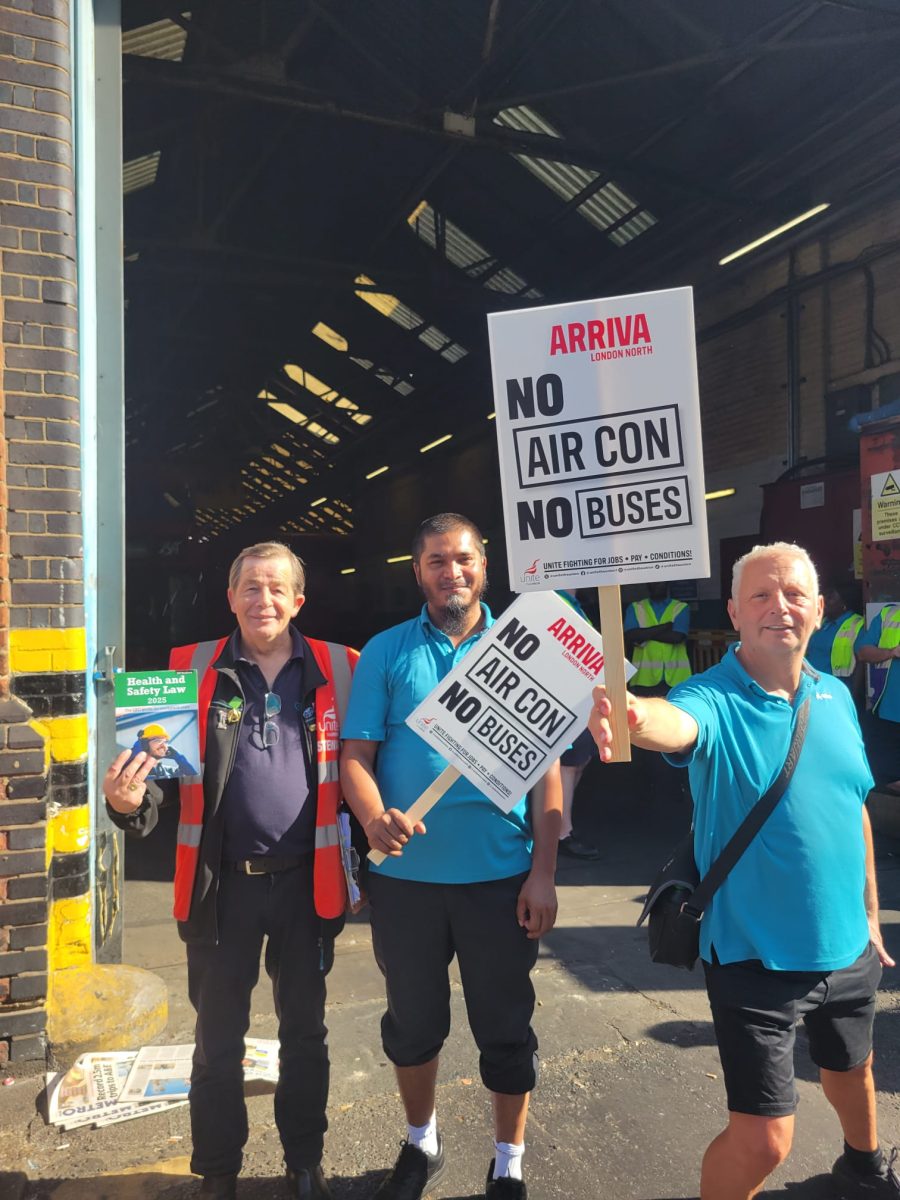
The strength of any strike is class solidarity. Yet the repeated current structure of suspending strikes for balloting and dispute management frays that edge. Arriva strikes were paused last week for members to vote on an improved but still unsatisfactory deal.
It was good that the ballot wasn’t segregated by garage. But garages that voted to accept management’s recent offer, such as Barking in East London (where there are different bus models to Stamford Hill), are in a tricky position where the outcome on the ground is uneven. As a result, Barking picket lines are thin and buses are creeping out of the garage. The class unity is fractured. By contrast, at Stamford Hill, where rejection was overwhelming, solidarity is thriving. Out of roughly 300 staff, only about 20 are crossing the picket line, and the line is vibrant, resolute and cheerful, with the occasional jeer at management behind the gates.
When workers feel a ballot outcome doesn’t reflect their garage’s specific vote, or when officers push management proposals without sufficient rank and file discussion, morale suffers. It’s campaigners and socialists however, who can offer solidarity on the pickets and give the message of class unity to workers in this position. But as the Unite officer told us, aside from a few online rep meetings across the garages, the workers are segregated garage by garage, bus by bus.
Unite officers say they are currently anticipating a revised management deal featuring a rumoured short, medium and long term plan, with retrofitted air conditioning across all cabs by May 2027. To win a deal that actually protects workers now, the rank and file must maintain pressure, ensuring that no single garage is left behind. As cliche as it sounds, unity is our greatest strength. But it must be built from the bottom up, not managed from above.
This strike is a key battle against the reality of the climate crisis. The dangerous heat inside these cabs is directly driven by rising global temperatures. Yet one thing is missing on the picket lines, where are the climate activists?
During the 2022–2023 strike wave we saw groups like Green New Deal Rising and Extinction Rebellion supporting striking rail workers on the pickets and protests because public transport is key to a sustainable future. Climate groups should be joining the pickets again. This is the first strike in my memory that clearly sits at the intersection of workers rights and the climate crisis. East London rs21 hopes to bridge this gap when we return to the picket this week. And with this solidarity we are in a better position to see these sorts of disputes spread to other sectors and workplaces.
Strikes over heat and climate change are spreading. In London, V&A museum workers recently voted to strike over pay and conditions related to the heatwave, demanding measures such as closing museums when temperatures hit 30°C, and for basic rights like being able to carry and drink water whilst working.
It is the task of socialists to build the bridge between the workplace and the climate movement. For workers, climate issues cannot be treated as a secondary concern. Workers must be at the fore of the transformation needed to avert catastrophic climate collapse. The heat in Arriva’s cabs is climate change entering the shop floor. To defeat bosses who prioritise profit, workers, socialists and climate activists must fight side by side.







0 comments