
China and the Iran war – a provisional assessment
Charlie Hore •Charlie Hore analyses the impact of the US–Iran war on China’s geopolitical and economic position, and argues that while Beijing faces real vulnerabilities, it is emerging as an early political beneficiary, exposing the limits of American power and accelerating the shift toward a multipolar world.
The late American war criminal Donald Rumsfeld, architect of the invasions of Afghanistan and Iraq, is probably best known for his doctrine of ‘unknown unknowns.’ In a 2002 press briefing at the Pentagon, he said:
…there are known knowns; there are things we know we know. We also know there are known unknowns; that is to say we know there are some things we do not know. But there are also unknown unknowns — the ones we don’t know we don’t know. And if one looks throughout the history of our country and other free countries, it is the latter category that tend to be the difficult ones.
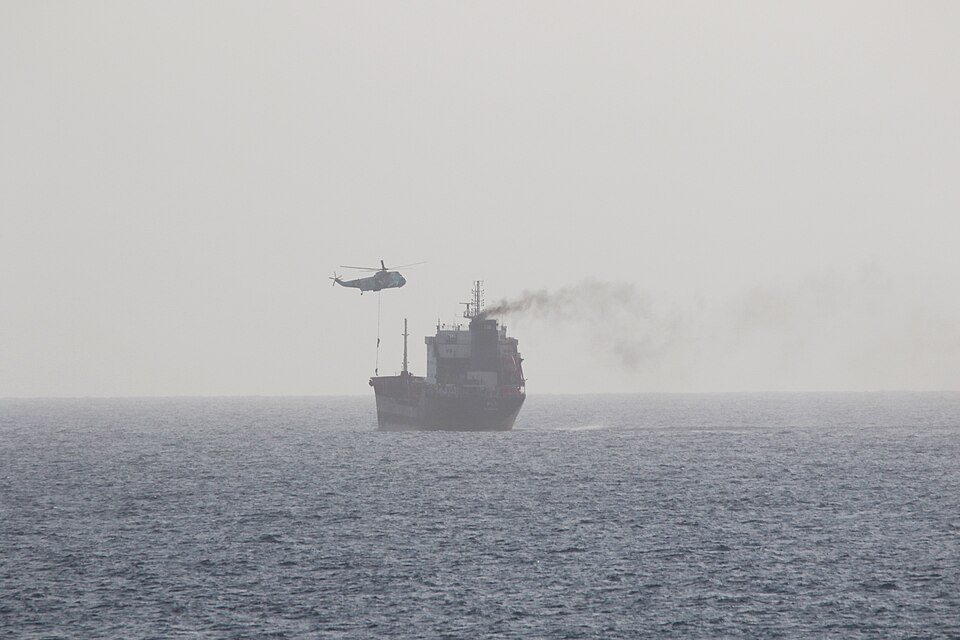
The brutal and chaotic American and Israeli war on Iran continues to produce a great many ‘unknown unknowns’: Iran’s resilience, Europe’s reluctance to follow Trump, and the lack of any clear American strategy for either winning or withdrawing. For America’s rulers, one of the most unwelcome is China’s emergence as an early political beneficiary of the conflict.
To understand the situation a little better, we need to look at how the war has impacted China, and draw out changes to the world imperialist system that Trump’s disaster has highlighted, in particular China’s changing relations with West Asia. In the long term, the following analysis may be a provisional assessment, but it is one which could prove useful in assessing the next round of ‘unknown unknowns’.
Immediate losses and gains
At the start, Trump’s war seemed focused purely on securing short-term gains as quickly as possible, a speed which would have been fueled by the belief that the US could repeat its surprise victory in Venezuela. But as with Venezuela, it is also driven by the central object of American foreign policy since Obama’s second term – containing the threat of China. As David McNally recently argued: ‘Recognizing that it trails China in building global supply chains and direct investments that secure access to crucial resources, the US state has leaned into its one great strength: military superiority.’
In an immediate material and economic sense, the war has obviously been damaging. Although China is now less dependent on exports than before, it is still one of the most trade-dependent major economies. Disruption of trade routes across Asia and beyond threatens the stability of the ‘Belt and Road Initiative’ (BRI), China’s ambitious infrastructure- and capital-exporting framework. And it has highlighted just how dependent China is on oil and other petrochemical products shipped through the Straits of Hormuz – though other Asian economies are far more dependent, as I detail below.
The longer the war and/or disruption to shipping continues, the worse the impact will be. This comes on top of many indicators showing that China’s growth has slowed in recent years. The economist George Magnus wrote last year that:
The working age and total population are now in relentless decline. The urbanisation rate, just over 60%, is flattening out. Productivity growth has stalled. The long surge in China’s share of global manufacturing exports and production has levelled off, and the external environment for China is now much harder and more hostile…China’s growth model, moreover, based on unrealistically high growth targets and uniquely high investment and savings rates, is becoming swamped by stagnant productivity, debt service difficulties and misallocation of capital.
Growth has slowed, not stopped. China’s GDP grew by five percent last year, faster than most major economies. And just before the war began, the government had announced a multi-billion-dollar package of subsidies to increase domestic consumption to offset the slump in exports.
Politically, the war threatens to disrupt China’s relations with other countries in the region, despite China’s best efforts to stay neutral between Iran and the Gulf countries. It has also postponed for the foreseeable future the Beijing summit meeting with Trump, originally planned for the end of March.
However, China’s influence has been demonstrated by its role in brokering the fragile ceasefire of early April, still just holding at the time of writing. According to the Guardian, ‘… China directly encouraged Iran to accept a ceasefire, promising to act as a guarantor of Iran’s safety in any talks. Among the assurances offered by China was that Iranian leaders would not be assassinated if they travelled for negotiations….’ Both Trump and Pakistan later confirmed China’s central role.
Iran’s readiness to take yuan payments for allowing shipping through the Straits has also positioned China as part of the solution rather than part of the problem. It also highlights that the yuan is the only world currency that the US cannot block or even accurately track. According to the South China Morning Post, payments through China’s cross-border banking system often do not show up on Western systems. This means that the yuan may now be the third-largest international payment currency, though still a long way behind the dollar and the euro. The crisis also seems to be boosting China’s shipbuilding industry, as shipping companies look to expand capacity and may well expand markets across Asia for Chinese-made electric vehicles. In a wider geopolitical sense, the US getting sucked into another quagmire in western Asia reduces the extent to which it can directly focus military resources on China. The US has already had to move anti-aircraft missiles from South Korea to the Persian Gulf, and more resources may follow.
Oil, Asia and war
China’s vulnerability to disruption in the Straits of Hormuz is very real, with a third of China’s crude oil supply dependent on that route. Over the last decade, China has followed a two-pronged strategy of diversifying its oil sources and moving towards renewables faster than any other major economy. The extent of this can sometimes be exaggerated, though. While China has more solar capacity installed than the rest of the world combined, coal still accounted for over 60 percent of total energy use in 2023, though 2025 saw a small drop, which is likely to continue.1
Renewables can’t replace everything, though. These are some uses for which oil is essential, especially military requirements. And crude oil is not the only vulnerability. China has enough fertiliser for this year, if it restricts exports, but it is reliant on the Gulf for key inputs, and for other petro-chemical products, in particular liquified natural gas (LNG).
That said, China is much better off than its major rivals in the region: Japan and South Korea. Japan gets 90 percent of all its oil from the Gulf, and South Korea 70 percent. China’s own oil industry adds extra resilience. The country only became a net oil importer in 1993, and as late as 2006 still produced the majority of its own oil consumption. In 2013, it became the biggest oil importer, but is still the sixth largest producer at the same time, producing over a quarter of its own oil needs. By contrast, South Korea produces just one percent of its oil needs, and Japan just 0.3 percent. Trump cannot use blocking the Straits of Hormuz as a weapon against China without doing serious damage to the US’s major East Asian allies.
China also has a far larger strategic oil reserve – around a billion barrels, equivalent to something like 200 normal days of shipments from the Gulf – and more refining capacity than needed for domestic consumption. It benefits from better access to South China Sea oil reserves than any of its rivals. The reserves are not huge and difficult to exploit, but if the oil price remains high and disruption persists, they become more attractive.[2]
Lastly, China is better placed to weather economic disruption because of state coordination and direction of China’s various oil companies, now some of the biggest in the world. Sinopec and the Chinese National Petroleum Corporation are the world’s two largest oil refining companies, for example. Both are state-owned and reflect a wider shift towards domination of the world’s oil market by mostly Asian national oil companies (NOCs). While we cannot yet know the full extent of the war’s economic impact, it is obvious that the pain will be very unequally distributed. This is primarily a crisis for Asia, and to a lesser extent, Africa and Australasia, rather than for Europe and the Americas. The Guardian quoted a United Nations report estimating that prolonged trade disruption could push over 32 million people into poverty: ‘Half of the global poverty increase would be concentrated in the group of 37 net energy-importing countries: in the Gulf region, Africa, Asia and small island developing states’.
India and Pakistan are already suffering fuel shortages, while the Philippines has declared a national energy emergency, and other governments have introduced four-day workweeks, closed universities and schools, and restricted fuel supplies for private cars. Japan and South Korea have already begun releasing supplies from their oil reserves, while Australia and Aotearoa (New Zealand) have seen diesel prices double. Most reports suggest that China is, for the moment, coping better than almost every other country, both because of deeper reserves and because of greater state direction of the economy, which allows it to centralise and direct resources.
China also has numerous ways to retaliate against the US. One example is soybean imports (for animal feed), where China was the primary market for American producers. Sales have been in decline since the imposition of tariffs in Trump’s first administration, and now look to decline further as China switches to Brazil and Argentina. China can also impact the US military more directly, through a rumoured ban on exports of sulphuric acid (essential to arms production), and controls on mineral exports, especially ‘rare earths’.
These are minerals also essential to arms production – not actually scarce, but rather very difficult to extract profitably and without serious environmental damage. As a recent Jacobin article noted:
… Western governments made a quiet calculation that the extraction of these minerals was too dirty and too toxic to inflict on their own citizens. Better to let China do it. Between 1990 and 2000, Chinese output rose 450 percent. The West shuttered its own mines and looked away… Today China mines roughly 70 percent of the world’s rare earths and refines 90 percent of the global supply, including nearly half of American ore, which crosses the Pacific to be processed and returns as finished material. (Emphasis added by the author).
There is a near-universal consensus that Trump lost the tariff war with China in his first administration. Having raised the stakes, he now runs the very real risk of both losing economically and boosting China’s global influence and prestige.
The shifting balance of global power
The economic historian Adam Tooze recently wrote in the Financial Times: ‘It is a truism of the moment that China is the last adult in the room. If Beijing chose to play the part, global leadership would be there for the taking.’
That is a very big ‘if’, however. China will undoubtedly seize whatever opportunities are going, but not as part of a bid for world domination. American policymakers are obsessed with the idea that China wants to replace the US as the world’s hegemonic power, as the US supplanted Britain between 1919 and 1945. However, this misunderstands the CCP’s ambitions. As the economist Ho-fung Hung noted:
The China boom has been dependent on the global neoliberal order, which is based on expanding, unfettered transnational flow of goods and capital, and it is in China’s vested interest to maintain the status quo, though China might seek to change the balance of power within this arrangement. More, China’s own imbalanced development path is a key source of rather than the solution to the global economic imbalance that led to the global financial crisis. (Emphasis added by the author).2
The US’s role as world policeman and underwriter of that global economic order has been a necessary condition of China’s expansion. But as the ‘isolationist’ wing of the American ruling class keeps insisting, that role has considerable costs. More importantly, it arose out of a unique set of circumstances – the end of WW2 in 1945 saw every major power apart from the US either devastated by war or near-bankrupt. American hegemony has weakened considerably since then, but the great majority of the world’s ruling classes would not want China to replace it. China’s ambition is rather to be one of a small number of major powers in a ‘multi-polar’ world.
However, this could never have been a peaceful process. Changing the balance of power necessarily means challenging US hegemony. In a slow-growing world economy, the expansion of China’s influence and economic reach means a diminution in US power and prestige. US corporations have experienced China changing from an export market to a competitor in world markets. And beyond a certain point, the global neo-liberal order becomes a constraint on China’s expansion rather than an enabling factor. Inter-imperialist friction is inevitable, whether or not it takes a military form.
The longer the conflict goes on, the more ‘the last adult in the room’ resonates. Xi Jinping’s prestige has taken several knocks in recent years, with the disastrous end to the Covid pandemic restrictions and the more recent purges at the top of the CCP. However, nothing can enhance it quite as much as the comparison with Trump and Putin right now. Three other longer-term factors add to China’s enlarged role in the global order.
The first is the growing split between the US and Europe. Italy has joined Spain and France in restricting American use of airspace and airfields, and even Keir Starmer has distanced himself from Trump. NATO countries have all refused to join Trump’s blockade of the Straits of Hormuz. With Viktor Orbán’s defeat in the Hungarian presidential election, Trump has lost his biggest European supporter. Trump has even managed to alienate the first pope from the US! And the Trump administration’s contemptuous attitude to European allies, and in particular to NATO, seems designed to further widen that split.
The second is the emergence of regional co-operation in Western Asia and North Africa, not under US auspices. The recent meeting between Egypt, Pakistan, Saudi Arabia and Turkey shows a growing dissatisfaction with the US, and even more so with Israel. All are countries that have long been American allies in the region, but trade more with China than the US. Whether or not the ceasefire holds, the fact that the US had to agree to it testifies to a shifting balance of power in the region.
Thirdly, China has been actively promoting such forms of co-operation since 2008, using its economic and political power to develop several Asian- or China-centric institutions which directly or indirectly challenge American hegemony. Key examples include the Asian Infrastructure Investment Bank (AIIB); the Regional Comprehensive Economic Partnership, covering much of Southeast Asia; and the Shanghai Co-Operation Organisation (SCO), a military and political alliance dating back to 1996, now includes most Central and South Asian countries. This is in addition to the BRICS partnership (Brazil, Russia, India, China, South Africa), a wider alliance of ‘emerging’ economies, now expanded to BRICS+, which includes both Iran and the UAE (with Saudi Arabia considering joining).
The combination of US aggression and economic weakness has accelerated China’s drive to change the economic balance of power. One key internal initiative is the ‘Made in China 2025’ programme, which seeks to replace imports with domestic production where possible. Not all targets have been met, but an American government report in 2025 concluded that ‘…after a decade of state support, China is more innovative, has moved up the global value chain, and has solidified its status as a global manufacturing powerhouse’.
One of the US’s remaining economic strengths is its newfound self-sufficiency in oil, which has led Trump to double down on fossil fuels and halt most investment in renewable energy. This has enabled China to take a probably unassailable lead in both renewable energy technology and electric cars – producing 90 percent of all solar panels, for instance. Unfortunately for Trump, the reality is that replacing fossil fuels where possible with renewables is now rational for capitalism as a system (if not for those capitals invested in fossil fuels), as the current crisis underlines.
Sun, wind and wave power cannot be blockaded, and solar power in particular has become very cheap to install and maintain. China’s motives are profit rather than any green altruism – fossil fuel capacity still makes up a high proportion of BRI investment. But China’s investment abroad in renewables far surpasses that of any other country. And a very high proportion of that renewable energy investment is in West Asia’s oil-producing states.
China and West Asia
Over the past 25 years, China’s economic connections with West Asia have hugely expanded. China is now the largest commercial trading partner with every country in the region except Israel; the largest source of imports for all countries except Israel and Qatar; and the largest export destination for all Gulf states plus Yemen and, crucially, Iran.3
China is also the largest or second-largest (sources differ) source of foreign investment, with Saudi Arabia alone receiving half of all BRI investment in 2024. The yuan is increasingly being used as an alternative to the dollar by both Saudi Arabia and the UAE, though almost entirely for trade with China. And China has been able to use this economic power to strengthen its political influence across the region. The 2023 agreement between Iran and Saudi Arabia to restore diplomatic ties was brokered by China.
The sudden rise of Chinese influence in the region has seriously worried the US. The Peterson Institute for International Economics, an influential neoliberal think-tank, in 2022 listed Saudi Arabia, the UAE, Bahrain, and Qatar among the five countries friendliest to China, with only North Korea ranking higher.
But China’s influence in the region is relatively new, and does not give it anything like the political and diplomatic hold that the US used to have. One of the consequences of a multipolar world is that it enhances the power of those ruling classes which balance between the major powers as against all of those powers. So Saudi Arabia is less dependent on the US, but that doesn’t make it more dependent on China. China’s very closeness to the major Gulf powers also puts serious constraints on the extent to which it can support Iran against the US and Israel. But while Iran is heavily economically dependent on China, that dependence does not mean that China can impose an agreement on Iran.
China’s relations with West Asia are quite different from those with Africa and Latin America, where the patterns of commodity extraction and economic dominance are very similar to ‘classic’ imperialism.4 West Asia is the only region of the world where China runs a trade deficit (importing more than it exports). It is also a growing source of FDI into China, despite overall investment in China dropping over the past few years. The relationship is thus less unequal, but far from frictionless. China is engaged in a series of complex balancing acts, with both Israel and, to a lesser extent, Iran acting as disruptors of the status quo. China’s rise in the region has not eclipsed the US but intensified competition between the US and China, and with the rising regional powers. The war is both a product of that savage competition and a harbinger of greater instability to come.
Conclusion
One recent analysis of imperialism’s evolution, written six months into the war on Gaza, highlighted
…the increasing assertiveness of lower-ranked powers in the global hierarchy of states. This phenomenon is based on the rise of independent centres of capital accumulation outside the historic core of the capitalist system… The fusion of economic and military competition, which characterises capitalist imperialism, is not confined to rivalries among the largest powers, but is also structured into how smaller states and capitals interact. The changing balance between the global powers and the retreat of old empires, far from creating opportunities for a more peaceful international order, has instead acted as a spur to even more frenzied competition as the middle-sized predators muscle in and fill the gap.
Israel’s attempts to destabilise the whole of West Asia, and Iran’s resistance to the American and Israeli assaults, have both demonstrated the truth of that. However, the war has also served as a reminder that the US remains the biggest military power on the planet, with a global reach no other state can match. For the Gulf states, it thus remains the best guarantor of their stability against both Iran and upsurges from below – the ‘Arab spring’ may have been defeated, but its memory remains strong.
For the US, its rivalry with China is the defining struggle of the 21st century. But for all the rhetoric, this is not a return to the classic Cold War era, where the world was essentially divided into two opposing blocs whose competition was primarily expressed in military terms. The rise of China, and other major economies in the Global South, means that economic, political and military competition are once again intertwined in ways that resemble the ‘classic’ Marxist accounts of imperialism as presented by Lenin, Bukharin and Luxemburg.
But the US’s military power is no longer matched by a corresponding economic power. At the height of their power, the US had carrots and sticks to keep allies on side, as well as a powerful ideological appeal. Now the US just has sticks – and a leader whose political acumen resembles that of King Midas in reverse.
In the 1960s, American liberals justified the war in Vietnam as an attempt to win ‘hearts and minds’, persuading the Vietnamese people that the free market and democracy were better than communism. Faced with the reality of a guerrilla war they couldn’t win, the US military coarsened this to ‘if you have them by the balls, their hearts and minds will follow’ – a phrase that could well sum up Trump’s adventure, and indeed his whole career.
Neither approach worked, and the US suffered its worst defeat of the 20th century. The parallel is not exact – Iran is not waging a national liberation struggle – but the lesson that American firepower is not omnipotent is still important.
At the time of writing, American strategy appears to have shifted from frontal military assault to economic siege, though that could change quickly. Any definite predictions about the scale, duration or outcome of this war would be foolish, though we can be certain that ruling classes across the world will try to inflict the costs on the poorest. The longer the war and disruption continue, the greater the risk of economic stagnation if not recession across the global economy. Inflation, higher energy prices, shortages and rising unemployment are all looming threats, in response to which governments will turn to austerity and greater repression. China will not be immune to that general tendency.
- Unless otherwise noted, all figures in this section come from the International Energy Agency website: https://www.iea.org/. ↩︎
- Ho-fung Hung, The China boom: why China will not rule the world, (New York, NY: Columbia University Press, 2015), p. 68. ↩︎
- All figures (2023) taken from the World Bank’s World Integrated Trade Solutions website https://wits.worldbank.org/Default.aspx?lang=en. For a visual representation of how China has overtaken the US as the largest trading partner across the region, see https://interactives.lowyinstitute.org/features/china-versus-america-on-global-trade/#map. ↩︎
- For Africa, see Lee Wengraf, Extracting profit; imperialism, neoliberalism and the new scramble for Africa, (Chicago, IL: Haymarket Books, 2018) and for Latin America, Chris Alden and Álvaro Méndez, China and Latin America: development, agency and geopolitics, (London: Bloomsbury Academic, 2023). ↩︎



0 comments