

credit: Rohin Francis/Flickr
Junior doctors strike: away from the table, back to the streets
Seb Cooke •Jeremy Hunt and the Tories were on the ropes. Now is the time to press the advantage, not return to negotiations, writes Seb Cooke.
The strike by junior doctors is of major importance. For people of my generation (I’m 29), it could be the biggest confrontation of workers on a national scale we’ve ever seen. A lot of the people who have been leading the strike are of a similar age, not put off by the defeats of the ’80s.
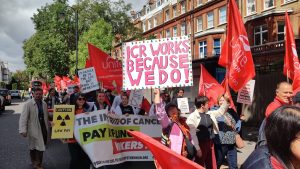
There has been magnificent rank and file militancy, which has grown as the dispute has gone on. The level of active participation on demos and pickets is also telling; in some cases, hundreds have taken part in the strike rather than simply not going to work. There has been little sense of routine or going through the motions. Workers have been picketing as a display of strength, unity and power.
The strike is political in its very nature, and credit to the BMA and junior doctors: they’ve kept it squarely about the whole NHS and patient safety. Other unions would have kept the focus much more narrow and would have been weaker for it. There is a great amount of determination among doctors, and for some the strike has become an all-or-nothing event. There is not yet fatigue. Doctors aren’t giving up, and they have the support of the public and a growing, active support in the wider labour movement.
Their strike matters, to our side and the Tories. If doctors win, other workers will be more likely to try and fight, especially in education. If the Tories win, the opposite is true.
At its heart is the NHS as we know it. Closely followed by Education, the NHS is the most important pillar of the post-war welfare state. It’s one of the few places left that genuinely cares, one of the last places you can point to a model based on human co-operation and say ‘look, it works!’. This is despite chronic underfunding and large levels of privatisation. Its loss would be practically and ideologically devastating.
For all of these reasons, the strike matters and everyone needs to get behind it.
But what to make of the news this week that the BMA and the government are re-entering talks? Could the strike now be over?
The junior doctors committee of the BMA, the body responsible for calling further strike action, met on Saturday 7 May to discuss their next steps. It was widely expected that they would call further strike action. One health journal even reported that some NHS trusts had been put on alert for indefinite strike. This would have represented a serious escalation.
Whether or not this kind of action would have been called after the BMA meeting on Saturday is unclear, but it anticipated that some form of further strikes would be announced, that the wheels of organising pickets, demos and solidarity would have been set in motion. The alliances and groups that had already been built would have been mobilised in support.
The last two strikes saw the biggest pickets, the largest demos and were 80% solid. There’s no reason to believe that further action wouldn’t have been even bigger. The Tories are divided over Europe, have been forced back over education and are recovering from a disastrous London mayoral campaign. The doctors still have high levels of popular support and Jeremy Hunt’s much flouted ‘Weekend effect’ has been discredited even further.
There is now a clear opportunity to force the government back and inflict a humiliating defeat. But instead, the junior doctor committee decided to re-enter talks with the government.
So what happened? In short, a supposedly neutral group of professional health bodies, such as the Royal Colleges, put together a last-minute proposal to get the two sides together and halt further strikes. They brokered a five-day window where everything would be on the table. This amounted to a climbdown by Jeremy Hunt, who had been acting like a spoilt brat, saying that he didn’t want to talk anymore, that doctors needed to be defeated, and the contracts would be imposed. It’s a sign of the strength of the strikes that he no longer felt he could hold that position.
But despite this, it still feels like it is the government, not the doctors, who stand to gain from these talks. Hunt had backed himself into a corner, and could only get himself out by smashing the doctors. He wasn’t in a position to do that, so he’s wriggled out. The doctors on the other hand had momentum, a divided opposition and an increasing sense of unity on their side.
The talks could dampen that. They were also organised by a group who take a moral objection to the strikes. Much like Labour’s Heidi Alexander, they refuse to take sides because they’re so disgusted by the idea of doctors withdrawing their labour. When the NHS is at stake, sitting on the fence in this way is inexcusable. If they aren’t prepared to lay the blame on the government and get behind the strikes, they should just get out of the way. The BMA shouldn’t let these people set the pace.
There is no point in trying to do deals with a lying health minister and save a contract that is inherently unsafe. Both need to be defeated. Only strikes, like the ones we’ve already seen, are capable of doing that.
To paraphrase Ed Milliband: these talks are wrong. Both sides need to get away from the negotiating table.


1 comment
I support JD,s to the moon and back but to refuse talks would of been detrimental to their cause. After all this is a fight against bullying and a bullying t**t. JD,s are the good guys, therefore should always be prepared to negotiate, not take advantage when in a position of power or they would appear no better. Don’t get me wrong I am a nurse and my heart and soul says ” crush them” I despise Hunt as I have despised no other MP and will revel in his shame and discredit but it is about what’s right and fair and JD,s represent this 100%. I love you Doctors for what you have done and achieved BRAVO!